


One of the most common questions patients ask before gynecomastia surgery is whether they really need to go under general anesthesia. For many men, the idea of being put to sleep, having a breathing tube placed, and spending hours in a groggy post-anesthesia haze is more intimidating than the surgery itself. The good news is that for a significant number of gynecomastia cases, general anesthesia is not necessary at all.
Awake gynecomastia surgery uses local anesthesia to numb the chest completely while the patient remains conscious throughout the procedure. Dr. Babak Moeinolmolki, MD, dual board-certified by the American Board of Cosmetic Surgery and the American Board of General Surgery, has performed hundreds of awake gynecomastia procedures at his Los Angeles facilities. He operates at Beverly Surgical Arts, an AAAHC-accredited surgical center, and also through Awake Lipo Centers, his practice dedicated specifically to awake liposuction procedures.
This page covers how the technique works, who qualifies, what the experience is like from the patient’s perspective, and how recovery compares to surgery performed under general anesthesia.
The tumescent technique explained
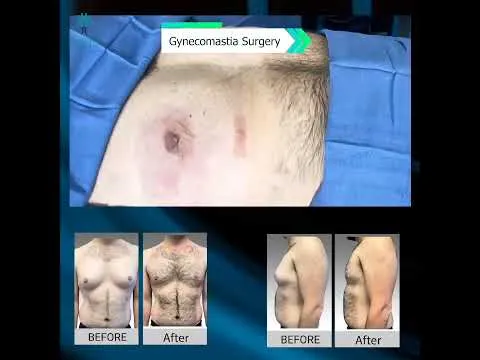
Awake gynecomastia surgery relies on a method called tumescent anesthesia. The surgeon infuses a dilute solution of lidocaine (a local anesthetic) and epinephrine (a medication that constricts blood vessels) directly into the chest tissue being treated. The solution is delivered through small cannulas or needles, and the total volume is carefully calculated based on the patient’s body weight and the size of the treatment area.
The lidocaine numbs the tissue completely. Patients cannot feel the surgical instruments working beneath the skin once the solution has taken effect, which typically takes about 15 to 20 minutes after infusion. The epinephrine constricts local blood vessels, which significantly reduces bleeding during the procedure. Less bleeding means better visibility for the surgeon and less bruising for the patient afterward.
The tumescent approach has a strong safety profile. A published review on tumescent anesthesia in the medical literature documents its safety across thousands of procedures when proper dosing guidelines are followed. The technique has been used for decades in liposuction and has been adapted for a wide range of body contouring procedures, including gynecomastia correction.
Why patients choose awake surgery
There are practical, medical, and financial reasons that lead patients to prefer the awake approach.
Avoiding intubation and general anesthesia risks is a major motivator. General anesthesia requires the placement of a breathing tube (endotracheal intubation) and carries its own set of potential complications, including sore throat, nausea, vomiting, and in rare cases, more serious respiratory events. For a procedure like gynecomastia surgery, which typically takes 1 to 2 hours, some patients feel that the risks of general anesthesia are disproportionate to what is being done.
Post-anesthesia grogginess is something many patients have experienced before and want to avoid. After general anesthesia, it is common to feel foggy, nauseated, and disoriented for several hours. Some patients feel off for a day or two. With tumescent local anesthesia, patients walk out of the operating room clear-headed. In many cases, patients can have someone drive them home the same day (or even drive themselves, though having a driver is always recommended).
The cost difference is real. General anesthesia requires an anesthesiologist, which adds a separate professional fee to the total surgical cost. It also typically requires a longer facility time and more monitoring equipment. Awake surgery eliminates the anesthesiologist fee and often reduces facility charges. For patients paying out of pocket, this can represent a meaningful savings. More information on gynecomastia surgery cost in Los Angeles is available on a dedicated page.
Some patients have medical reasons to avoid general anesthesia. Conditions like obesity, sleep apnea, difficult airway anatomy, or a history of adverse reactions to general anesthesia can make the awake approach a safer alternative. For these patients, tumescent local anesthesia allows them to have the surgery they want without taking on additional medical risk.
Who is a good candidate for awake gynecomastia surgery
Not every gynecomastia case can be handled under local anesthesia, but a large percentage can. The best candidates typically have Grade 1 or Grade 2 gynecomastia. These grades involve mild to moderate breast tissue enlargement without significant excess skin. The procedure for these cases usually involves liposuction (often VASER-assisted) and direct excision of the glandular tissue through a small periareolar incision.
Good candidates are generally healthy, without uncontrolled medical conditions. They should be comfortable with the idea of being awake during surgery. Most patients find that any initial anxiety fades quickly once the numbing takes effect and they realize they genuinely cannot feel the procedure. However, patients with severe anxiety about medical procedures may be better served by sedation or general anesthesia, and that is a perfectly valid choice.
Body weight matters from a dosing perspective. The maximum safe dose of lidocaine in tumescent solution is calculated based on body weight, so extremely lean patients or those with very large treatment areas may have dosing constraints that need to be considered.
During the consultation, Dr. Babak Moeinolmolki evaluates each patient’s anatomy, gynecomastia grade, medical history, and comfort level to determine whether the awake approach is appropriate. He is straightforward about recommending general anesthesia when the clinical situation calls for it.
When general anesthesia is the better choice
Grade 3 and Grade 4 gynecomastia cases often require general anesthesia. These higher grades involve significant skin excess that needs to be surgically removed, sometimes requiring skin excision patterns similar to those used in mastectomy procedures. The additional tissue handling, longer operative time, and the need for more extensive dissection make general anesthesia the safer and more comfortable option.
Complex revision cases, where a previous gynecomastia surgery produced an unsatisfactory result and needs correction, may also benefit from general anesthesia. Scar tissue from the prior surgery can make the tissue planes more difficult to navigate, and the additional operative time and precision required is better suited to a fully anesthetized patient.
Patients with severe needle phobia or significant anxiety that cannot be managed with mild oral sedation should consider general anesthesia as well. There is no advantage to forcing someone through an awake procedure if the stress of the experience will be overwhelming. Dr. Moeinolmolki discusses all options openly and lets each patient make the choice that feels right for them.
The patient experience step by step
Knowing what to expect on the day of surgery helps reduce anxiety. Here is what a typical awake gynecomastia procedure looks like from the patient’s perspective.
Patients arrive at the surgical facility, typically Beverly Surgical Arts in Los Angeles. After checking in and changing into a surgical gown, the surgical area is marked while the patient is standing. These markings guide the surgeon during the procedure and ensure symmetry.
The patient lies down on the operating table, and the chest is cleaned with an antiseptic solution. A mild oral sedative may be offered to help with initial relaxation, though this is optional. The tumescent solution is then infused into the chest tissue. The initial needle sticks for the infusion feel like small pinches, similar to getting a dental injection. Within 15 to 20 minutes, the entire treatment area is completely numb.
Once numbness is confirmed, the actual surgery begins. For most patients, the VASER liposuction and tissue removal takes between 1 and 2 hours. During this time, patients are fully awake. Many listen to music through headphones or talk with the surgical team. Some patients watch videos on a phone or tablet. The experience is far more casual than most people expect.
Patients feel pressure and movement but no pain during the procedure. They may hear the sounds of surgical instruments, which can be unfamiliar but is not alarming once they understand what is happening. The surgical team communicates with the patient throughout, checking comfort level and explaining what is being done.
When the procedure is finished, the incisions are closed, dressings are applied, and a compression garment is placed over the chest. The patient sits up, gets dressed with assistance, and walks out of the facility. There is no recovery room stay needed for emergence from anesthesia because there is no general anesthesia to emerge from. Total time at the facility is typically 2 to 3 hours from arrival to departure.
Recovery after awake gynecomastia surgery
Recovery after awake surgery tends to be faster than recovery after the same procedure performed under general anesthesia. The primary reason is that the body does not need to metabolize systemic anesthetic drugs. Patients avoid the nausea, grogginess, and fatigue that commonly follow general anesthesia.
The tumescent solution remains in the tissue for several hours after surgery, continuing to provide pain relief. Many patients report that the first 6 to 12 hours after the procedure are surprisingly comfortable because of this lingering anesthetic effect. When the numbness wears off, oral pain medication manages the discomfort effectively.
The compression garment is worn continuously for the first several weeks. Detailed aftercare instructions are provided to every patient. Most men return to desk work within 2 to 4 days. Light walking is encouraged starting the day after surgery. More strenuous activity and upper body exercise are restricted for 4 to 6 weeks.
Swelling peaks around day 3 to 5 and gradually decreases over the following weeks. Bruising varies from patient to patient but typically resolves within 2 to 3 weeks. Final results become apparent over 3 to 6 months as residual swelling resolves and the skin contracts to its new contour.
Follow-up appointments with Dr. Babak Moeinolmolki, MD, are scheduled at regular intervals after surgery to monitor healing and address any concerns. These visits are an important part of the process, and patients should attend all scheduled follow-ups.
Is awake gynecomastia surgery right for you?
The awake approach is a genuine option for many men with gynecomastia, not a compromise. The gynecomastia surgery guide on this site covers the full range of surgical approaches. For patients who qualify, awake surgery offers real advantages in terms of safety, comfort, recovery speed, and cost.
The only way to know whether you are a candidate is through an in-person evaluation. During a consultation at the Los Angeles office, Dr. Moeinolmolki examines the chest, reviews medical history, discusses goals, and recommends the approach that will produce the best result with the least risk.
Frequently asked questions about awake gynecomastia surgery
Does awake gynecomastia surgery hurt?
No. The tumescent solution numbs the chest tissue completely before any surgical work begins. Patients feel pressure and movement during the procedure but not pain. The initial numbing injections feel similar to dental injections, with a brief pinching sensation that subsides quickly. If a patient feels any discomfort during the procedure, additional local anesthetic can be administered immediately.
How long does the procedure take?
The surgical portion typically takes 1 to 2 hours, depending on the amount of tissue being removed and whether VASER liposuction is used. Total time at the facility, including preparation and post-procedure monitoring, is usually 2 to 3 hours.
Can I drive myself home after awake gynecomastia surgery?
Some patients are physically able to drive themselves home because no general anesthesia was used. However, Dr. Moeinolmolki recommends having someone else drive. Even without general anesthesia, the body has been through a surgical procedure, and having a driver is a simple safety measure. If an oral sedative was given before the procedure, driving is not permitted that day.
Is the result different compared to surgery under general anesthesia?
No. The surgical technique is the same regardless of the anesthesia method. VASER liposuction, direct gland excision, and any skin tightening procedures are performed identically. The choice of anesthesia affects the patient’s experience and recovery, not the surgical result itself.
What if I get anxious during the procedure?
Mild anxiety is normal and usually resolves once the numbing takes effect and the patient realizes they are comfortable. For patients who need additional help relaxing, oral anti-anxiety medication can be given before the procedure. Music, conversation with the surgical team, and distraction with a phone or tablet also help. If at any point a patient becomes too anxious to continue comfortably, the surgical team can adjust the approach.
How much cheaper is awake surgery compared to general anesthesia?
The savings come primarily from eliminating the anesthesiologist fee and reducing facility time. The exact amount varies, but patients typically save several hundred to over a thousand dollars compared to the same procedure under general anesthesia. Dr. Moeinolmolki’s office provides specific pricing during the consultation based on each patient’s individual case.