


Inverted nipples in men are far more common than most people think. If your nipple sits flat against the areola or pulls inward rather than projecting outward, you are not alone. Many men live with this condition for years without realizing that a straightforward outpatient procedure can fix it. I see patients in my Los Angeles practice every week who assumed nothing could be done, or who did not know the condition had a name.
As a surgeon who is dual board-certified by the American Board of Cosmetic Surgery (ABCS) and the American Board of General Surgery, I have corrected inverted nipples both as a standalone procedure and in combination with gynecomastia surgery. On this page, I will explain the grades of nipple inversion, what causes them, how the surgery works, and what recovery looks like.
What Is an Inverted Nipple?
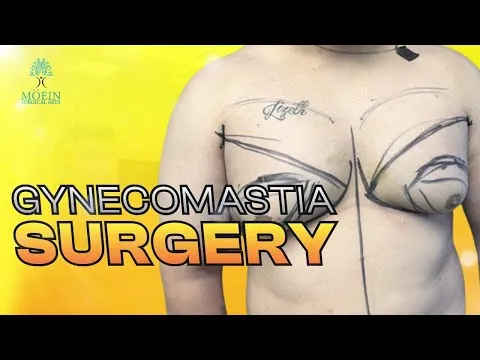
A normal nipple points outward from the surface of the areola. An inverted nipple does the opposite. It retracts inward, sometimes sitting level with the areola and sometimes pulling deep beneath the skin surface. The degree of inversion varies from person to person, and doctors classify it into three grades based on how easily the nipple can be coaxed outward and whether it stays there.
Grades of Nipple Inversion
Grade 1 (Mild)
The nipple can be pulled out manually, and it stays out for a period of time before gradually retracting. This is the mildest form. Men with Grade 1 inversion may notice their nipple looks normal in certain situations, such as when they are cold or when the nipple is stimulated, but it eventually settles back into a flat or slightly inverted position. The milk ducts (which exist in male breast tissue too, though they are nonfunctional) are not significantly shortened.
Grade 2 (Moderate)
The nipple can be pulled out with gentle traction, but it retracts immediately once you let go. There is more fibrosis in the underlying tissue, and the ducts are moderately shortened. Grade 2 inversion tends to be more noticeable and more bothersome to patients.
Grade 3 (Severe)
The nipple is completely inverted and cannot be pulled out at all, no matter how much traction you apply. The milk ducts are significantly shortened and fibrosed, creating a tight band that holds the nipple in a permanently retracted position. This grade requires the most involved surgical correction.
What Causes Inverted Nipples in Men?
Several factors can lead to nipple inversion. The most common cause in men is congenital. You were simply born with shortened ducts or fibrous tissue that tethers the nipple inward. Many men with congenital inversion have had the condition since birth or early adolescence.
Gynecomastia is another frequent cause. When excess breast tissue develops behind the nipple, it can pull the nipple inward as the tissue grows. In these cases, the inversion may develop gradually during puberty or later in life.
Other causes include infection (particularly if it damaged the tissue around the nipple), scarring from a prior chest surgery, and, rarely, an underlying malignancy. If your nipple inversion is new, appeared on only one side, or developed without an obvious explanation, you should have it evaluated by a physician. New unilateral inversion in an adult male warrants diagnostic workup to rule out breast pathology.
Who Is a Candidate for Inverted Nipple Correction?
Most men with Grade 1, 2, or 3 nipple inversion are good candidates for surgical correction, as long as they are in generally good health and do not have an active infection. I evaluate each patient individually during a consultation. If gynecomastia is also present, I often recommend addressing both issues in the same operation. Combining nipple correction with breast reduction saves you from having two separate recovery periods and typically produces a better overall aesthetic result.
How Inverted Nipple Surgery Works
The goal of the procedure is to release the tethered tissue and shortened ducts that pull the nipple inward. I perform this as an outpatient procedure under local anesthesia, which means you are awake but the area is completely numb.
Through a small incision at the base of the nipple, I identify and divide the fibrotic bands and shortened ducts that are responsible for the retraction. For Grade 1 and Grade 2 cases, a suture technique holds the nipple in its new everted position while the tissue heals. For Grade 3 cases, where the fibrosis is more extensive, I may use a small internal splint or a dermal flap technique to provide additional structural support and prevent the nipple from pulling back inward during the healing period.
The entire procedure typically takes 30 to 60 minutes per side. If we are combining it with gynecomastia surgery, that adds to the total time but does not significantly change the recovery timeline for the nipple correction component.
Recovery After Inverted Nipple Correction
Recovery is quick. Most patients experience mild soreness and swelling for the first few days, which responds well to over-the-counter pain medication. I place a small protective dressing over the nipple to keep it supported during the initial healing phase. You will want to avoid direct pressure on the chest for about two weeks.
Most of my patients return to desk work within two to three days. Exercise and heavy lifting should wait until I clear you at a follow-up visit, usually around two weeks after the procedure. The sutures I use are typically absorbable, so there is no separate appointment needed for suture removal in most cases.
Results and Longevity
For Grade 1 and Grade 2 inversions, the results are generally permanent. The released tissue heals in a way that keeps the nipple projecting outward. Grade 3 cases have a small recurrence risk because the fibrosis is more severe and the tissue has a stronger tendency to contract. Even with Grade 3, though, recurrence rates are low when the surgery is performed by a surgeon experienced in this specific procedure.
The cosmetic outcome is natural-looking. Incision scars are hidden at the base of the nipple and fade significantly over the months following surgery.
Risks and Potential Complications
All surgery carries some risk, and inverted nipple correction is no exception. The most commonly discussed risk is a change in nipple sensation. Some patients notice temporary numbness or reduced sensitivity after surgery. In the large majority of cases, sensation returns to normal within a few weeks to months. Permanent loss of sensation is uncommon but possible.
There is also a small chance of recurrence, especially in Grade 3 cases as mentioned above. Infection, bleeding, and poor scarring are possible but rare with proper technique and postoperative care.
Why Choose Dr. Babak Moeinolmolki for Inverted Nipple Correction
I have performed hundreds of male nipple procedures in my Los Angeles practice. My dual board certification by the American Board of Cosmetic Surgery and the American Board of General Surgery means I bring both cosmetic precision and a strong foundation in general surgical principles to every case. I understand the anatomy of the male chest in a way that comes only from specializing in this area.
Every patient receives a personalized treatment plan. If your inverted nipple is related to gynecomastia, we discuss the option of combining procedures. If it is an isolated concern, we plan accordingly. My goal is always a result that looks natural and lasts.
Frequently Asked Questions
Can inverted nipples in men fix themselves without surgery?
Grade 1 inversions occasionally improve on their own, but this is uncommon in adults. If you have had inverted nipples since puberty and you are now in your 20s or older, spontaneous correction is very unlikely. Surgery is the reliable solution for a permanent fix.
Is inverted nipple surgery painful?
The procedure is performed under local anesthesia, so you will not feel pain during surgery. Afterward, most patients describe the discomfort as mild. Over-the-counter pain relievers are usually sufficient for the first few days.
Will I lose nipple sensation after the surgery?
Some temporary changes in sensation are common during the healing period. Most patients report that normal sensation returns within a few weeks to a few months. Permanent sensation loss is rare.
Can inverted nipple correction be combined with gynecomastia surgery?
Yes, and I often recommend this when both conditions are present. Combining the procedures means one recovery period instead of two, and it allows me to optimize the overall chest contour and nipple position at the same time.
How much does inverted nipple correction cost?
The cost depends on whether the procedure is standalone or combined with other surgery, and on the complexity of the inversion. During your consultation, I provide a detailed cost breakdown that includes the surgeon fee, anesthesia, and facility fees.
What is the recovery time for inverted nipple surgery?
Most patients return to normal daily activities within two to three days and resume exercise at about two weeks. Full healing takes a few months, but you will see the improved nipple projection immediately after surgery.