




Table of Contents
- Why Do Lean Men Get Gynecomastia?
- Why Hormones Ignore Your Body Fat Percentage?
- The "Skinny-Fat" Paradox and the Gym Frustration
- The Self-Diagnosis: Is it Fat or Gland?
- The Bodybuilder Factor: Performance Enhancing Drugs
- The Role of Supplements in Gyno
- Surgical Solutions for Men Skinny with Gyno
- The Path to Recovery: Getting Back to Your Life
- Eliminating the Physical Flaw: Surgery for Gynecomastia
- Dr. Moein: Expert for Skinny with Gyno

Many people think that male breast enlargement only happens to those who are overweight. In reality, even lean men with low body fat can have a persistent chest protrusion, which can be very frustrating.
For thin men, having gynecomastia can be especially tough because the chest does not match the rest of the body’s look. This can cause a unique psychological burden.
This article examines the causes of this condition, why exercise alone might make it more noticeable, and the best clinical solutions for lean men.
Why Do Lean Men Get Gynecomastia?
To understand why a thin person can still have gynecomastia, it helps to know the difference between fat and glandular tissue. True gynecomastia means there is extra breast gland tissue in males. In contrast, extra chest fat is called pseudogynecomastia. Gynecomastia refers to enlarged mammary glands. Even very lean people have hormonal receptors in their chest.
If the balance between testosterone and estrogen changes, these receptors can cause glandular tissue to grow. In thin men, this growth often stands out more. The tissue usually feels firm and rubbery behind the nipple and areola. Because there is little fat around it, the gland’s edges can cast shadows, making the chest look pointed and hard to hide under a thin T-shirt. Knowing your gynecomastia grade is important, since even a mild Grade 1 case can look more obvious on a slim body.
Why Hormones Ignore Your Body Fat Percentage?
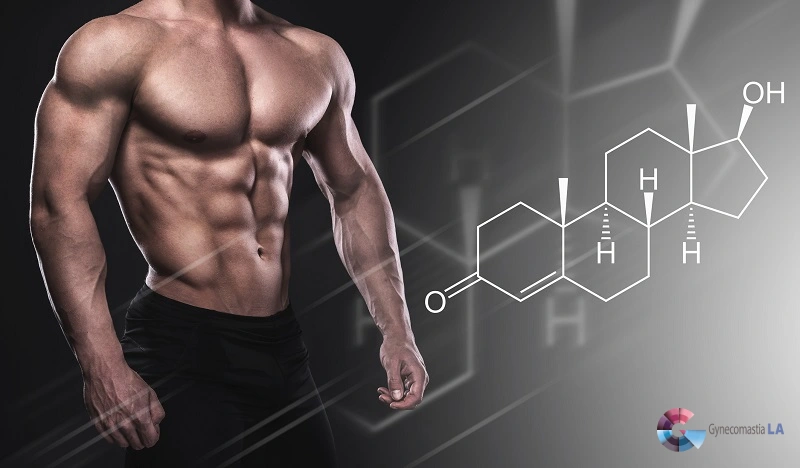
The primary driver for a man being skinny with gyno is almost always hormonal. Testosterone is the hormone that keeps male breast tissue in check, while estrogen encourages its growth. When this ratio is disrupted, the body responds by building tissue.
1. The Puberty Connection
For many, the tissue develops during the hormonal chaos of adolescence. While most cases resolve on their own, some men are left with permanent glandular “buds” that do not regress. They grow up to be fit, healthy adults, but that structural tissue remains, unaffected by diet or exercise.
2. Medication and Chemical Influences
Modern life is filled with endocrine disruptors. We often see patients who lead very healthy lives but are unaware that their medications are working against them. For example, men dealing with hair loss may find that Finasteride can cause gynecomastia by altering the way testosterone is converted in the body. Similarly, those who have sought medical help for hormonal optimization should understand that while certain drugs are used to manage estrogen, the question of whether Anastrozole can reduce gynecomastia is complex—once the tissue is fibrous and “set,” medication rarely offers a total fix.
3. Recreational Habits
Even “natural” habits can have an impact. In our Los Angeles practice, we frequently discuss how marijuana and gynecomastia are linked through the suppression of testosterone. For a man who is already lean, even a small hormonal dip can be enough to trigger or maintain glandular growth.
The “Skinny-Fat” Paradox and the Gym Frustration
A common term used in the fitness community is “skinny-fat.” This refers to a person who has a low amount of muscle mass but a relatively high percentage of body fat for their weight. When a man is skinny with gyno, he often falls into this trap. He may try to “bulk up” to hide the tissue with muscle, or “cut down” to starve the tissue off.
The tragedy of the gym approach is that working out does not help gynecomastia when the issue is glandular. In fact, many men find that building a strong pectoral muscle actually pushes the gland further out, making the nipple protrusion look even more pronounced. This creates a cycle of frustration where the more you focus on your chest in the gym, the worse the aesthetic becomes.
The Self-Diagnosis: Is it Fat or Gland?
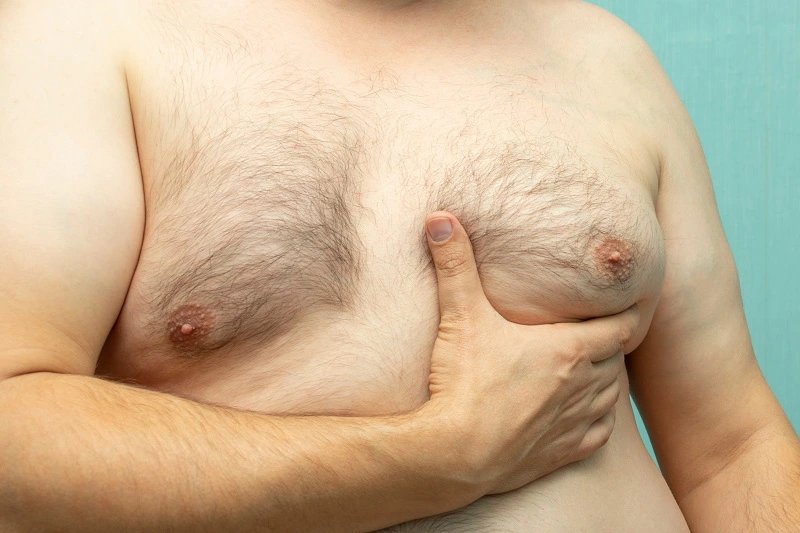
One of the most frequent questions we hear during consultations is: “How do I know if I just need to lose more weight?” For someone who is skinny with gyno, the answer is usually found in the texture of the tissue.
Fat is soft, pliable, and moves easily under the skin. Glandular tissue is different. It is firm, often sensitive to the touch, and feels like a distinct disc or knot behind the areola. Diagnosing the difference between chest fat and gynecomastia is the turning point for most men. Once you realize you are dealing with a physical mass of tissue rather than a metabolic failure of your diet, the path to a solution becomes clear. Surgery isn’t “the easy way out”—it’s the only way to remove a physical structure that shouldn’t be there.
The Bodybuilder Factor: Performance Enhancing Drugs
In high-level fitness and bodybuilding, being very lean but still having gynecomastia is a common side effect of certain cycles. Using some supplements or performance enhancers can cause a significant increase in estrogen as the body tries to balance excess testosterone. The connection between steroids and gynecomastia is well-documented. For these athletes, the tissue is usually dense and fibrous, so surgery is often necessary to restore the flat, firm look of the chest that their sport requires.
The Role of Supplements in Gyno

For many men who are skinny with gyno, the journey often begins in the supplement aisle. In an effort to build muscle or lose that last bit of chest tissue, you might turn to pre-workouts, “test-boosters,” or protein powders. However, it is crucial to understand that not all supplements are created equal. Some low-quality supplements may contain hidden ingredients or pro-hormones that can actually exacerbate hormonal imbalances.
According to research published by the Mayo Clinic, certain herbal supplements and medications can mimic estrogen or block testosterone, leading directly to glandular growth. For a lean individual, even a minor disruption can make a significant visual difference. This is why we always recommend a thorough review of your current supplement regimen during your consultation.
Surgical Solutions for Men Skinny with Gyno
For lean patients, surgical precision is essential because every chest contour is visible. Techniques suitable for larger patients may result in visible irregularities or “nipple cratering” in lean individuals.
1. The Gland Excision (The Core Solution)
For lean patients, direct excision of the gland is the most important step. Through a small incision at the base of the areola, the surgeon removes the glandular tissue to ensure permanent correction. We offer various gynecomastia surgery options in Los Angeles and tailor the procedure to your specific anatomy.
2. High-Definition Sculpting
Even in thin patients, small amounts of fatty tissue around the gland can obscure muscle definition. We use advanced VASER liposuction to refine these areas, creating a defined transition from the pectoral muscle to the ribcage.
3. Skin Tightening and Contouring
Lean patients may be concerned about loose skin after tissue removal. Although thin individuals typically have good skin elasticity, we often use J-Plasma Renuvion technology, which applies cold plasma to tighten the skin from underneath and help it conform closely to the muscle.
The Path to Recovery: Getting Back to Your Life
Active men often worry most about how long they will need to rest. The first thing they usually ask is, “When can I lift again?” Lean men tend to have less tissue removed than larger patients, so their recovery often goes smoothly. Still, it is important to be patient.
We provide every patient with a detailed guide on how to work out after gynecomastia surgery. During the first two weeks, the primary goal is to reduce swelling and help the skin adhere to the chest wall. By week four, you can usually start using light weights again. Most men return to their full chest workouts by week six, now feeling proud of their results.
Eliminating the Physical Flaw: Surgery for Gynecomastia
We understand that for many, this is a decision years in the making. It’s about more than just aesthetics; it’s about the freedom to wear what you want, go to the beach, and stop “posture-slumping” to hide your chest. The cost of gynecomastia surgery in Los Angeles is an investment in your mental well-being and long-term confidence. At our clinic, we provide transparent pricing and customized plans that reflect the specialized care required for high-definition results.
Dr. Moein: Expert for Skinny with Gyno
If you are currently skinny with gyno, you need a surgeon who views the procedure through an artistic lens. In the competitive environment of Los Angeles and Beverly Hills, the standard for “perfection” is incredibly high. You aren’t just looking for “less” tissue; you are looking for a chiseled, natural, and athletic chest.
Dr. Moein is a well-known gynecomastia surgeon in Los Angeles who focuses on male body contouring. He knows that lean patients need a precise approach with small incisions, no visible scars, and careful attention to chest anatomy. Our clinic offers a private and comfortable setting for men who want top results, along with the privacy and luxury you expect in Beverly Hills.
Being skinny with gyno is a biological quirk, not a character flaw or a failure of your fitness routine. It is a physical condition with a proven surgical solution. Whether your tissue was caused by puberty, lifestyle factors, or medication, we have the technology and the expertise to help you finally achieve the physique you’ve been working for.
Your transformation can begin with just one conversation. You don’t have to hide under extra clothing anymore. Start living with the confidence you deserve. Reach out today to book a private consultation with Dr. Moein and take your first step toward a flatter, more masculine chest.
Dr.Babak Moeinolmolki
LA Cosmetic Surgeon Dr. Moein is board-certified by the American Board of General Surgery.