


Table of Contents

Five years ago, gynecomastia surgery in most US practices meant traditional excision: an incision around the areola, removal of glandular tissue, sometimes with a smoothing pass of standard liposuction at the end. The results were good but not consistent — the post-op contour often looked flat rather than naturally athletic, and some patients ended up with subtle indentations or asymmetry that needed revision.
VASER liposuction changed the technique conversation, and by 2026 it’s become the standard for male chest contouring at high-volume practices. Here’s what VASER actually adds, where it fits versus traditional excision, and why patient outcomes have improved meaningfully.
What VASER actually does differently
VASER stands for Vibration Amplification of Sound Energy at Resonance — ultrasound energy delivered through a thin probe that selectively breaks down fat cells while preserving the surrounding tissues. Traditional liposuction uses a cannula and suction; VASER pre-treats the fat with ultrasound before the suction pass.
The practical difference for the male chest:
Selective fat removal. The ultrasound energy targets fat specifically while leaving connective tissue, blood vessels, and nerves largely intact. The chest area has more of these structures than other body regions, so the selective removal preserves the architecture that gives the chest its natural shape.
Better skin retraction. The thermal effect of the ultrasound energy stimulates collagen contraction in the overlying skin. This helps the chest skin retract more cleanly after fat removal, which matters especially for patients with pseudo-gynecomastia after weight loss.
Less bruising and edema. Because surrounding tissue is preserved more cleanly, post-operative bruising and swelling tend to be less than with traditional liposuction. Patients are typically presentable in a t-shirt by week 2 rather than week 3-4.
More definition. The technique allows surgeons to selectively reduce some areas while preserving definition over the underlying muscle. The result tends to look athletic rather than smoothed-flat.
Where VASER replaces excision, and where it doesn’t
VASER is excellent for the fatty (lipomatous) component of male chest enlargement. It’s not a replacement for surgical excision when actual breast gland tissue is present.
The decision tree for the typical gynecomastia consultation:
Pure fatty enlargement (pseudo-gynecomastia): VASER alone, often combined with skin tightening (Renuvion or radiofrequency) for patients with weight-loss-related skin laxity.
Mixed fat + small gland tissue: VASER for the fatty component plus a small periareolar incision to remove the gland tissue. Combined approach gives the cleanest result.
Predominantly glandular tissue (true gynecomastia): Surgical excision is still primary. VASER may be added at the end for contour smoothing of the surrounding fat, but it can’t replace the gland-removal step.
Severe gynecomastia with significant skin excess: Skin excision is required, often with the chest sometimes resembling a small mastopexy in technique. VASER plays a supporting role for the fat component.
The patient profile that benefits most
The patients who get the largest improvement from VASER vs traditional liposuction:
- Men with chest enlargement that’s predominantly fatty
- Patients who lost significant weight on a GLP-1 medication and have residual chest contour issues
- Patients who have good skin elasticity and want a defined athletic-looking result
- Athletes or active patients who want minimal recovery downtime
- Patients in their 20s-40s with naturally good skin retraction
Patients with extensive skin laxity, very large gland tissue volumes, or significantly compromised skin elasticity often need a more involved combined operation than VASER alone can provide.
The credentialing piece
VASER is a technique, not a board specialty. The relevant credentialing for the surgeon performing it is the same as for any cosmetic surgery: certification by the American Board of Cosmetic Surgery (ABCS) or the American Board of General Surgery, plus specific training and high-volume experience with the VASER device and male chest anatomy.
The technique itself takes practice. Surgeons performing VASER for the first few dozen cases are still learning the rhythm of the ultrasound energy and the optimal extraction approach. For male chest specifically, finding a surgeon who routinely performs VASER for gynecomastia (rather than occasional general lipo cases) is what predicts the best result.
Recovery vs traditional liposuction
The recovery profile is meaningfully better than traditional lipo for most patients:
- Days 0-3: Compression vest, soreness manageable with over-the-counter or short-course prescription. Drains usually not needed.
- Days 4-7: Most patients return to desk work; vest stays on 23 hours/day.
- Weeks 2-3: Light cardio cleared, t-shirt presentable, vest part-time.
- Week 4-6: Most weight training resumes; final swelling resolution begins.
- Months 3-4: Final contour visible.
The reduced bruising and edema mean most patients return to social and work activities about a week earlier than with traditional liposuction.
Combining with other body work
For men addressing chest contour as part of a broader post-weight-loss transformation, the chest work often combines with abdomen and flank contouring in a single operation. Combined male body contouring procedures at our affiliated cosmetic surgery practice cover the broader patient profile — chest plus tummy plus VASER lipo of the flanks in one operation when it fits.
Frequently asked questions
Is VASER more expensive than traditional liposuction?
Slightly. The technique requires specialized equipment and longer operating time, so VASER procedures typically cost 15-25% more than traditional liposuction for the same area. For most patients, the result quality justifies the difference.
Can VASER alone fix my gynecomastia?
If your enlargement is primarily fatty (pseudo-gynecomastia), often yes. If you have actual breast gland tissue, VASER alone won’t address the gland and a combined approach is needed. The pinch test in consultation is what tells us which category you’re in.
Will I have visible scars?
VASER entry points are small (3-5mm) and typically hidden in the chest crease, areola border, or natural skin folds. Combined with periareolar excision when needed, the visible scarring is usually minimal once healing is complete.
How is VASER different from SmartLipo or laser-assisted lipo?
SmartLipo uses laser energy; VASER uses ultrasound. Both target fat selectively but through different mechanisms. For male chest specifically, VASER is generally considered the gold standard for the combination of selective fat removal and skin retraction.
What happens if I gain weight after surgery?
VASER permanently reduces the number of fat cells in the treated area. If you gain weight, the remaining fat cells throughout the body enlarge, which can affect chest appearance but typically less than the pre-treatment pattern. Stable weight before surgery and afterward gives the most durable results.
Is the result permanent?
The fat cells removed don’t regenerate. The result is durable, though aging and weight changes affect the chest like the rest of the body. Most patients are satisfied with their result a decade after surgery.
The conversation worth having
If you’re considering male chest contouring and trying to figure out whether VASER or another technique fits your situation, the answer depends on what’s actually present in your chest — fat, gland, skin laxity, or combinations of all three. Schedule a virtual consultation and we’ll do the assessment together.
Gynecomastia LA is a male chest contouring practice in Los Angeles, specializing in VASER liposuction for gynecomastia, gynecomastia surgery with combined techniques, and post-weight-loss male chest reconstruction.
* Illustrative images on this page are models, not actual patients. Real patient results are shown in our Before & After gallery.
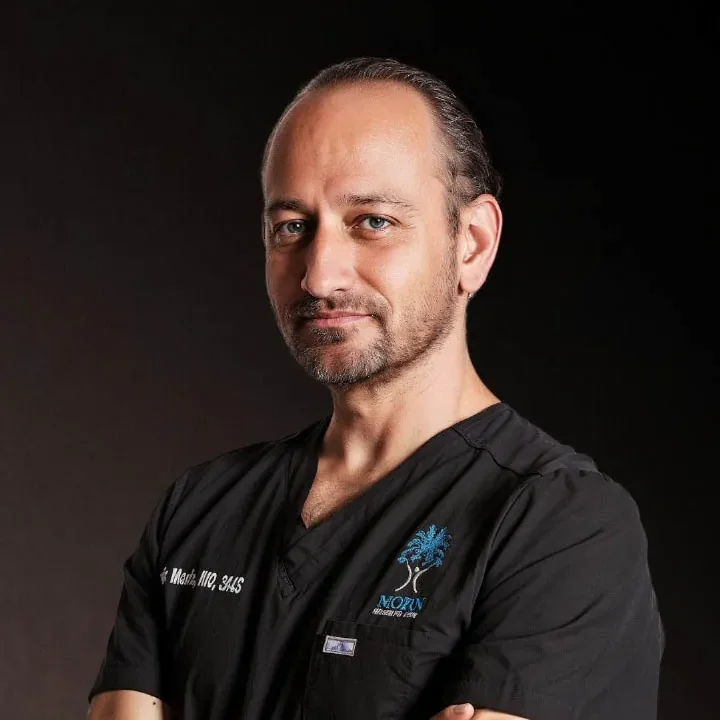
Dr.Babak Moeinolmolki
LA Cosmetic Surgeon Dr. Moein is board-certified by the American Board of General Surgery.