


Table of Contents
Whether natural treatment can work for gynecomastia depends entirely on what type you have and how long you have had it. That answer frustrates people who want a simple yes or no, but it is the honest one. Some men can resolve their chest issues without surgery. Others cannot, no matter how many supplements they take or how many hours they spend in the gym. The difference comes down to biology, timing, and tissue type.
I want to lay out the situations where natural approaches have a genuine chance of helping, the lifestyle changes that are backed by evidence, and the point at which it becomes clear that surgery is the only reliable option. This is not about pushing anyone toward a particular decision. It is about giving you accurate information so you can make a good one.
When Natural Approaches Have a Real Chance of Working
There are four scenarios where non-surgical treatment can produce meaningful results.
Puberty-related gynecomastia in teenagers. About 50 to 70 percent of adolescent boys develop some degree of breast tissue during puberty. The hormonal fluctuations of that period create temporary imbalances between testosterone and estrogen. For roughly 90 percent of these boys, the tissue resolves on its own within one to three years as hormone levels stabilize. If your son has developed gynecomastia at 13 or 14, watchful waiting is usually the right first step. Surgery is rarely considered in teenagers unless the gynecomastia persists past age 17 or 18.
Medication-induced gynecomastia caught early. Certain medications cause breast tissue growth as a side effect. If you developed gynecomastia after starting a new medication and you catch it within the first few months, stopping or switching the medication may allow the tissue to recede. The key word is early. The longer glandular tissue has been present, the less likely it is to reverse after medication changes. Talk with your prescribing doctor before stopping any medication.
Pseudogynecomastia. This is chest enlargement caused by excess fat rather than glandular tissue. There is no firm disc behind the nipple. The chest is soft throughout. Losing body fat through a sustained caloric deficit combined with exercise can reduce the chest significantly. It is not always a complete fix, especially if the skin has stretched, but many men see substantial improvement from fat loss alone.
Very early stage true gynecomastia. In the first few months of glandular development, the tissue is still in an active growth phase and has not yet undergone fibrosis. During this narrow window, correcting the underlying hormonal imbalance through lifestyle changes or medical intervention might slow or stop progression. This window closes faster than most people expect.
Lifestyle Changes That Can Help
These are not miracle cures. They are evidence-based adjustments that can shift your hormonal environment in a favorable direction, particularly for pseudogynecomastia and very early-stage glandular cases.
Reduce alcohol consumption. Alcohol increases aromatase activity. Aromatase is the enzyme that converts testosterone into estrogen. Regular heavy drinking creates a hormonal environment that favors breast tissue growth. Reducing or eliminating alcohol will not shrink established glandular tissue, but it removes one factor that may be contributing to the problem. This is especially relevant for men who drink regularly and also carry excess body fat.
Lower your body fat percentage. Fat tissue contains aromatase. The more body fat you carry, the more testosterone gets converted to estrogen. Aiming for a body fat percentage below 20 percent can meaningfully improve your testosterone-to-estrogen ratio. For men with pseudogynecomastia specifically, getting lean is the single most effective natural approach. A combination of resistance training and moderate caloric restriction works better than extreme dieting, which can actually drop testosterone levels further.
Prioritize sleep. Poor sleep disrupts the hormonal cascade your body relies on to maintain healthy testosterone levels. Most testosterone production happens during deep sleep. Men who consistently sleep fewer than six hours per night have measurably lower testosterone than men who get seven to nine hours. This alone will not cure gynecomastia, but chronically poor sleep can contribute to the hormonal environment that allows it to develop or persist.
Manage stress. Chronic stress elevates cortisol. Elevated cortisol suppresses testosterone production and can promote fat storage, particularly in the midsection and chest. Stress management is not about meditation apps and deep breathing, though those can help. It is about addressing the structural sources of stress in your life, whether that is workload, sleep deprivation, relationship issues, or overtraining in the gym.
Limit exposure to estrogen-mimicking compounds. BPA in plastic containers, parabens in personal care products, and certain pesticides can act as xenoestrogens in the body. The individual exposure from any single source is small, but cumulative exposure matters. Switching to glass food containers, choosing personal care products without parabens, and washing produce thoroughly are reasonable steps. I should note that the soy-estrogen connection is weaker than internet forums suggest. Moderate soy consumption has not been shown to cause gynecomastia in clinical studies.
Exercise consistently. Resistance training boosts testosterone production. Compound movements like squats, deadlifts, and bench presses are particularly effective. But I want to be clear about something that confuses a lot of men: chest exercises will not reduce breast tissue. You cannot target fat loss or glandular tissue reduction in a specific area by exercising that area. Bench presses build the pectoral muscle underneath the breast tissue. If you have true gynecomastia, a bigger pec muscle can actually push the tissue outward and make it more prominent. Exercise helps through systemic hormonal improvement and overall fat loss, not through spot reduction.
Supplements That Claim to Help But Lack Evidence
A quick search online will produce dozens of supplements marketed for gynecomastia reduction. Here is an honest assessment of the most common ones.
Turmeric and curcumin. Some proponents claim turmeric acts as a natural aromatase inhibitor. While curcumin does show some anti-estrogenic activity in laboratory studies, the doses used in those studies far exceed what you would absorb from a supplement capsule. No clinical trials have demonstrated that turmeric supplementation reduces established gynecomastia in humans.
Zinc. Zinc plays a role in testosterone production, and zinc deficiency can lower testosterone levels. If you are actually deficient in zinc, supplementation can restore normal levels. But supplementing zinc above normal levels does not boost testosterone further, and there is no evidence it affects breast tissue.
Fish oil and omega-3 fatty acids. These have general anti-inflammatory benefits and may support healthy hormone metabolism. They will not shrink glandular breast tissue.
DIM (diindolylmethane). DIM comes from cruciferous vegetables and is marketed as an estrogen metabolizer. It does appear to shift estrogen metabolism toward less potent forms, but the clinical significance of this for gynecomastia is unproven. Some men report subjective improvement, but controlled studies are lacking.
Tribulus terrestris. Despite decades of marketing as a testosterone booster, tribulus has consistently failed to raise testosterone levels in clinical trials. It will not help with gynecomastia treatment.
None of these supplements have been shown in published clinical research to reduce established gynecomastia. If you want to try them, they are generally safe, but set your expectations accordingly.
The Honest Truth About Glandular Tissue
This is the part people do not want to hear, but I think it is important to be straightforward about it.
Once glandular breast tissue has been present for approximately 12 to 18 months, it undergoes a process called fibrosis. The tissue becomes scarred and hardened. At that point, it behaves more like scar tissue than active glandular tissue. No amount of diet, exercise, hormonal optimization, or supplementation will make fibrosed glandular tissue disappear. The blood supply, the fibrous structure, and the tissue itself are firmly established.
This is why timing matters so much. A man who notices gynecomastia developing and addresses the hormonal cause within the first few months has a much better chance of natural resolution than a man who has had stable breast tissue for three years. The research supports this timeline consistently. Clinical overviews of gynecomastia confirm that longstanding glandular tissue does not regress spontaneously.
If you have had firm breast tissue behind your nipples for more than a year and a half, natural approaches can still improve your overall chest appearance by reducing surrounding fat and improving muscle definition. But they will not eliminate the glandular component. At that point, surgical excision is the only reliable solution for removing the tissue itself.
A Realistic Approach
Dr. Babak Moeinolmolki, who is dual board-certified by the American Board of Cosmetic Surgery and the American Board of General Surgery, does not push surgery on everyone who walks through his door. When a patient presents with recent-onset gynecomastia, pseudogynecomastia, or a clear medication-related cause, he often recommends trying natural approaches first. He wants to see patients give lifestyle modification a genuine effort for three to six months before considering surgical options.
But he is also honest with patients whose tissue has been present for years and shows clear signs of fibrosis on examination. For those patients, he explains that continued natural efforts will improve their overall physique but will not eliminate the glandular tissue. That conversation allows patients to make informed decisions about whether to continue waiting or pursue definitive treatment.
The goal should be informed choice, not false hope. Natural approaches work in specific situations. Surgery works in situations where natural approaches do not. Understanding which category you fall into saves time, money, and frustration.
Frequently Asked Questions
Can chest exercises reduce gynecomastia?
Chest exercises build pectoral muscle but do not reduce breast tissue. You cannot spot-reduce fat or glandular tissue by working the muscles underneath it. In some cases, building the pectoral muscles can actually push gynecomastia tissue outward and make it more prominent. Exercise helps through systemic fat loss and hormonal improvement, not through direct reduction of chest tissue.
How long should I try natural methods before considering surgery?
For pseudogynecomastia, give diet and exercise at least 6 to 12 months of consistent effort. For true gynecomastia that developed recently (within the past few months), try addressing the underlying cause for 3 to 6 months. If glandular tissue has been present for more than 18 months, natural methods are very unlikely to eliminate it, and waiting longer will not change that outlook. A specialist can help you determine what type of tissue you have.
Does losing weight always reduce chest size in men?
Weight loss reduces chest size when the enlargement is from fat (pseudogynecomastia). If you have true gynecomastia with glandular tissue, weight loss will reduce the fatty component around the tissue but leave the firm glandular disc intact. Some men actually report that their gynecomastia looks more obvious after losing weight because the firm tissue stands out more against a leaner chest.
Are there prescription medications that can treat gynecomastia without surgery?
Tamoxifen and raloxifene, both selective estrogen receptor modulators, have shown some effectiveness in reducing gynecomastia when used within the first 12 months of tissue development. However, these are prescription medications with side effects and are not FDA-approved specifically for gynecomastia. They are most effective during the active growth phase and become much less effective once fibrosis has occurred. Discuss these options with a physician if you are interested.
Does soy consumption cause or worsen gynecomastia?
Normal dietary soy consumption does not cause gynecomastia in most men. Soy contains phytoestrogens, which are plant compounds that can weakly bind to estrogen receptors, but their effect is far weaker than actual estrogen. Clinical studies have not found a consistent link between moderate soy intake and breast tissue growth in men. Extreme soy consumption, meaning very large daily quantities, has been associated with gynecomastia in a few case reports, but these involved intake levels far beyond what a normal diet includes.
Will gynecomastia from puberty go away on its own?
In about 90 percent of cases, yes. Pubertal gynecomastia typically develops between ages 12 and 14 and resolves within one to three years as hormone levels stabilize. However, the remaining 10 percent of cases persist into adulthood, especially if the tissue becomes fibrosed. If gynecomastia from puberty has not resolved by age 17 or 18, it is unlikely to go away on its own and may warrant evaluation by a specialist.
* Illustrative images on this page are models, not actual patients. Real patient results are shown in our Before & After gallery.
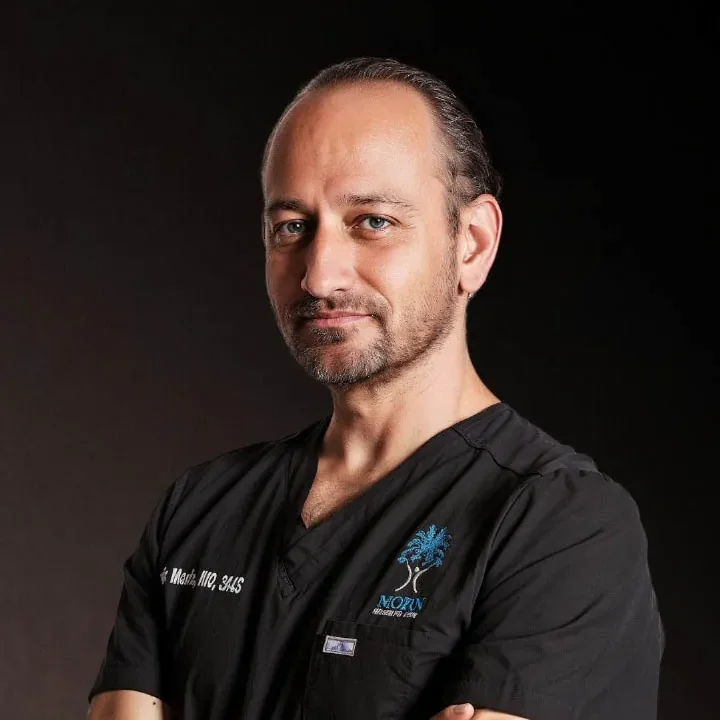
Dr.Babak Moeinolmolki
LA Cosmetic Surgeon Dr. Moein is board-certified by the American Board of General Surgery.