


Table of Contents
- How Anabolic Steroids Cause Gynecomastia
- Prevention During Cycle — What Actually Works
- When Surgery Becomes the Only Option
- Steroid-Induced Gynecomastia Surgery — What the Procedure Looks Like
- Cost of Steroid-Induced Gynecomastia Surgery in Los Angeles (2026)
- Frequently Asked Questions About Steroid-Induced Gynecomastia
- Ready to Discuss Your Gynecomastia Treatment Options?
- About Dr. Babak Moeinolmolki, MD
Anabolic-androgenic steroid use is one of the most common causes of gynecomastia in adult men who present for cosmetic evaluation. The mechanism is well-documented: exogenous androgens are converted to estrogen via the body’s aromatase enzymes, and elevated estrogen drives proliferation of breast gland tissue. Clinical reviews indexed on PubMed describe steroid-induced gynecomastia in roughly 30 to 50 percent of long-term anabolic-androgenic steroid users, with the highest rates in users who run cycles longer than 12 weeks, stack multiple compounds, or skip post-cycle therapy. This guide explains exactly how it develops, what works to prevent it during cycle, when surgical removal becomes the only answer, and what surgery costs in Los Angeles in 2026.
| Stage of Steroid-Induced Gynecomastia | What’s Happening | What Actually Works |
|---|---|---|
| Early (weeks 1-12 of onset) | Mostly inflammation + ductal proliferation; tissue still soft | Aromatase inhibitors (under physician supervision); SERMs (tamoxifen) |
| Intermediate (3-12 months) | Glandular tissue developing; firm disc behind nipple | SERMs may still partially reverse; surgical consultation advised |
| Established (over 12 months) | Fibrotic glandular tissue + surrounding fat; will not regress | Surgical gland excision ± liposuction is the only reliable option |
| Post-cycle “gyno” | Estrogen rebound after stopping; rapid onset | Aggressive SERM protocol; surgery if tissue remains after 6-12 months |
How Anabolic Steroids Cause Gynecomastia
Exogenous testosterone and most anabolic compounds are substrates for the body’s aromatase enzyme, which converts androgens to estradiol (the primary female estrogen). When a user takes 500 mg of testosterone weekly — a common cycle dose — serum estradiol can rise dramatically above normal male reference range. Breast gland tissue contains estrogen receptors that respond predictably to that elevation.
The compounds most commonly implicated:
- Highly aromatizable — testosterone (all esters), dianabol/methandrostenolone, boldenone (Equipoise). Highest gynecomastia risk.
- Progestins / 19-nor compounds — nandrolone (deca, NPP), trenbolone. Cause gynecomastia through progesterone-receptor activation rather than estrogen elevation, which is why estrogen blockers alone may not prevent it.
- Selective Androgen Receptor Modulators (SARMs) — LGD-4033, RAD-140 have been associated with gynecomastia in case reports, particularly with high doses or extended cycles.
- Testosterone Replacement Therapy (TRT) — men on legitimate TRT can develop gynecomastia if estrogen is not monitored, particularly at supraphysiological doses or in patients with high baseline aromatase activity (often higher in patients with elevated body fat).
Note: this article is medically informational and not an endorsement of non-prescribed anabolic-androgenic steroid use. Patients pursuing TRT under physician supervision should work with their prescriber on estrogen management; patients using non-prescribed compounds should consult a qualified endocrinologist and consider cessation independent of any cosmetic surgery decision.
Prevention During Cycle — What Actually Works
For patients on legitimate physician-supervised TRT or hormone therapy, gynecomastia prevention typically involves one of two pharmaceutical approaches:
- Aromatase inhibitors (anastrozole, letrozole) — reduce conversion of testosterone to estradiol. Dose titration matters; over-suppression of estrogen causes joint pain, low libido, and bone density loss. Should always be monitored with bloodwork.
- Selective Estrogen Receptor Modulators (tamoxifen, raloxifene) — block estrogen at the breast tissue receptor without lowering systemic estrogen. Often preferred for first-line gynecomastia prevention because the cardiovascular and bone side-effects of fully suppressing estrogen are avoided.
The key point: these are prescription medications that should be managed by a physician, with bloodwork monitoring estradiol, testosterone, and hematocrit. Self-management with underground-sourced AIs and SERMs is a major source of the cases that ultimately end up in cosmetic surgery offices.
When Surgery Becomes the Only Option
Once gynecomastia has progressed past the early inflammatory stage and the glandular tissue has become fibrotic — usually after 12 months — no medication will reliably reverse it. At that point the firm rubbery disc of tissue behind the nipple does not respond to:
- Stopping the offending compound
- SERM therapy (tamoxifen, raloxifene)
- Aromatase inhibitors
- Diet and exercise (will reduce surrounding chest fat but not the gland)
- Chest training (will tighten pectoral muscle but make the gland more visible, not less)
For these patients, surgical removal is the only reliable solution. The good news: when performed by a high-volume gynecomastia surgeon, the procedure is well-tolerated, recovery is rapid, and the result is permanent — provided you do not resume the behavior that caused it.
Steroid-Induced Gynecomastia Surgery — What the Procedure Looks Like
Steroid-induced gynecomastia almost always requires combined glandular excision plus liposuction, because the typical presentation involves both proliferated gland tissue (which must be cut out) and increased surrounding fat (which liposuctions out smoothly). The procedure runs 1.5 to 2.5 hours under general anesthesia or deep sedation, through a small incision (3-4 mm) along the lower edge of the areola.
Severity is typically graded:
- Grade I — small enlargement, no skin excess. Standard gland excision + liposuction. Excellent outcome.
- Grade II — moderate enlargement, no significant skin excess. Same approach; slightly larger excision.
- Grade III — moderate-to-severe enlargement with skin excess. May require staged or combined skin tightening (Renuvion / VASER) to allow skin retraction.
- Grade IV — severe enlargement with significant skin excess (common in patients who had heavy gynecomastia for years before seeking treatment). Often requires skin excision in addition to gland removal.
Most patients return to desk work within 5 to 7 days, resume lower-body gym training at 3 to 4 weeks, and resume chest workouts at 6 weeks. Compression vest is worn for 3 to 4 weeks. Final cosmetic result is visible at 3 to 6 months as residual swelling resolves.
Cost of Steroid-Induced Gynecomastia Surgery in Los Angeles (2026)
All-inclusive 2026 pricing in Los Angeles typically runs:
- Grade I-II gynecomastia — $6,500 to $9,500
- Grade III gynecomastia — $8,500 to $12,500 (may include skin-tightening adjunct)
- Grade IV gynecomastia — $10,500 to $16,500 (skin excision adds time and complexity)
- Revision surgery after botched primary case — $12,000 to $20,000 (significantly more complex due to scar tissue and anatomic distortion)
Insurance does not cover gynecomastia surgery for adult men when the cause is exogenous steroid use, since the condition is considered self-induced from a coverage standpoint. Financing through CareCredit or medical-specific lenders is standard.
Frequently Asked Questions About Steroid-Induced Gynecomastia
Will my gyno go away if I stop the steroid cycle and take SERMs?
Sometimes, if you catch it early. Soft, inflammatory, newly-developed gynecomastia (less than 6 months) often responds to tamoxifen 10 to 20 mg daily for 3 to 6 months. If a firm fibrotic disc has already developed under the nipple — the hallmark of mature glandular tissue — SERMs will not eliminate it. The window for medical management closes around 12 months from onset. Beyond that point, surgical removal is the only reliable option.
Can I keep cycling steroids if I have gynecomastia surgery?
Surgically removed gland tissue does not grow back — that part of the result is permanent. However, the small amount of residual gland always left behind can re-stimulate and create recurrence if you return to aromatizing compounds without proper estrogen management. Most surgeons recommend either ceasing exogenous steroid use entirely after surgery or working with a physician on a medically supervised TRT protocol with bloodwork-monitored estrogen control. Returning to underground-sourced high-dose cycles is the most common cause of recurrence.
Is gynecomastia surgery for steroid users different from puberty-onset cases?
The basic procedure is the same — gland excision through periareolar incision combined with liposuction of surrounding fat. Steroid-induced cases tend to involve thicker, more fibrotic glandular tissue and frequently more significant fat component than puberty-onset cases. Patients are also typically older and may have skin laxity considerations that puberty-onset patients do not. A high-volume gynecomastia surgeon will adapt technique to your specific presentation rather than using a one-size-fits-all approach.
How soon after stopping steroids can I have gynecomastia surgery?
Most surgeons require you to be off exogenous androgens for at least 3 to 6 months before operating, ideally with a recent comprehensive lab panel showing testosterone, estradiol, hematocrit, and liver function in normal range. Reasoning: operating while serum estradiol is still elevated risks the residual gland tissue continuing to proliferate and creating recurrence. Some surgeons will operate at 3 months with documented normal labs; others prefer 6 months for surety. Discuss your specific timeline with your surgeon.
Will gynecomastia from TRT (testosterone replacement) require surgery?
Not necessarily — well-managed TRT with monitored estrogen rarely causes meaningful gynecomastia. The cases that do occur usually involve patients with elevated body fat (more aromatase activity), supraphysiological dosing, or providers not monitoring estradiol. If you develop gynecomastia on TRT, the first step is usually dose adjustment and estrogen management with your prescribing physician, not surgery. If a firm disc develops despite optimization, surgery becomes appropriate.
What should I look for in a gynecomastia surgeon?
Verify board certification through the American Board of Cosmetic Surgery (ABCS), a recognized standard for cosmetic surgery certification. Look for high gynecomastia case volume (a meaningful subspecialty focus, not occasional cases). Ask to see at least 20 before-and-after photographs of gynecomastia patients similar to your grade and body type. Verify the surgical facility is AAAASF, AAAHC, or Joint Commission accredited. Ask what percentage of their practice is gynecomastia surgery specifically; high-volume specialists deliver more consistent results and handle revision cases competently.
Ready to Discuss Your Gynecomastia Treatment Options?
Gynecomastia Centers of Los Angeles is a subspecialty practice focused exclusively on male breast reduction. Dr. Babak Moeinolmolki has performed a high volume of gynecomastia procedures including steroid-induced cases, post-massive-weight-loss skin excision, VASER-assisted contouring, and revision surgery for patients dissatisfied with prior gynecomastia surgery elsewhere. Review the gynecomastia grades to understand which category fits your case, or read more about gynecomastia causes.
Schedule a confidential consultation: gynecomastiala.com/contact-us · (310) 455-8020
Medically reviewed by Dr. Babak Moeinolmolki, MD, board-certified cosmetic surgeon (ABCS), Gynecomastia Centers of Los Angeles. Last updated 2026-06-28.
* Illustrative images on this page are models, not actual patients. Real patient results are shown in our Before & After gallery.
A Note About Pricing You See Online
National-average figures quoted in articles — including some on this site — are typically bare-bones estimates: the surgeon's fee alone. They usually exclude the operating facility, anesthesia, pre-op preparation, and aftercare, and they average in every market and every level of experience nationwide.
At Gynecomastia Centers of Los Angeles, your quote is all-inclusive: pre-operative preparation and clearance, the accredited surgical facility, anesthesia, every post-operative follow-up visit, and our scar-management program — performed personally by a double board-certified surgeon in Los Angeles. One price, no surprise add-ons.
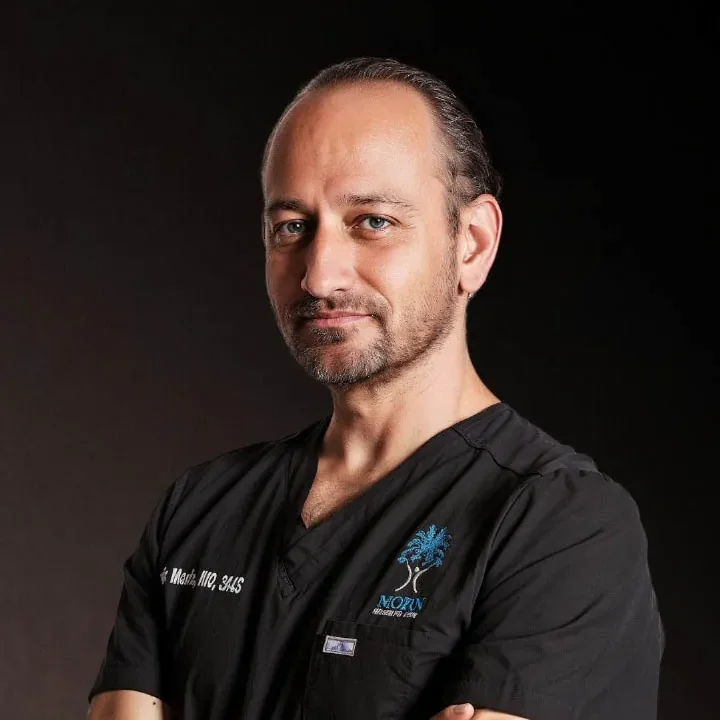
Dr.Babak Moeinolmolki
LA Cosmetic Surgeon Dr. Moein is board-certified by the American Board of General Surgery.