


Table of Contents
- What that lump under your nipple probably is
- Gynecomastia: the most common cause by far
- Other benign causes of a lump behind the nipple
- When to worry: signs that could point to male breast cancer
- How Dr. Moeinolmolki evaluates a lump under the nipple
- What happens after a gynecomastia diagnosis
- Frequently asked questions
What that lump under your nipple probably is
Finding a lump under your nipple is unsettling. I get it. Most of Dr. Moeinolmolki’s patients at Moein Surgical Arts describe the same moment: they were in the shower or getting dressed, felt something firm behind the nipple, and immediately thought the worst. If that sounds like you, take a breath. In the vast majority of cases, a lump behind the nipple in a male is gynecomastia, not cancer.
But “probably not cancer” is not the same as “definitely not cancer,” and you should not diagnose yourself. This page will walk you through the most common causes of a lump under the nipple in men, the red flags that do warrant urgent attention, and how we evaluate these lumps in the office.
Gynecomastia: the most common cause by far
Gynecomastia is the medical term for enlarged male breast tissue. It is caused by an imbalance between estrogen and testosterone, and it is extremely common. Studies estimate that 50 to 65 percent of men worldwide have some degree of gynecomastia at some point in their lives.
What does a gynecomastia lump feel like? Typically, it is a firm, rubbery disc of tissue centered directly behind the nipple. It may be tender to the touch, especially in the early stages. The lump is usually symmetrical and mobile, meaning it moves slightly when you press on it. Many men notice it on both sides, though it can appear on just one.
A simple way to check at home is the pinch test. Lie flat and pinch the area around your nipple between your thumb and forefinger. If you feel a firm mound of tissue at least 2 centimeters across, that is consistent with gynecomastia. A mound of only soft, squishy tissue is more likely chest fat (pseudogynecomastia).
Common triggers for gynecomastia include puberty (the hormonal shifts of adolescence cause temporary breast growth in up to 70 percent of boys), aging (testosterone declines while estrogen remains relatively stable), medications like spironolactone and certain anti-androgens, anabolic steroid use, and conditions like liver disease or hypogonadism.
Other benign causes of a lump behind the nipple
Not every lump is gynecomastia. Several other benign conditions can produce a palpable mass in the male breast area.
Lipoma. A lipoma is a slow-growing fatty lump that sits between the skin and the underlying muscle. It feels soft and doughy, moves easily when you push on it, and is almost never painful. Lipomas can appear anywhere on the body, including behind the nipple. They do not require treatment unless they bother you cosmetically or grow large enough to cause discomfort.
Cyst. A fluid-filled sac can form in the breast tissue. Cysts tend to feel round, smooth, and slightly squishy compared to the firmer consistency of glandular gynecomastia tissue. They may fluctuate in size. An ultrasound can confirm whether a lump is solid or fluid-filled.
Fat necrosis. If you have had a chest injury, a car accident, or even vigorous sports contact, the damaged fat cells can form a firm, sometimes painful lump. Fat necrosis can look suspicious on imaging, so it sometimes requires a biopsy to rule out other causes. It is benign and often resolves on its own over several months.
Abscess or infection. Rarely, a bacterial infection can cause a painful, red, warm lump near the nipple. This is more common in men with nipple piercings or skin conditions. It usually comes with obvious signs of infection and responds to antibiotics or drainage.
When to worry: signs that could point to male breast cancer
Male breast cancer is real, but it is rare. The American Cancer Society estimates that about 2,800 new cases of invasive breast cancer are diagnosed in men each year in the United States. For context, that compares to roughly 310,000 cases in women annually. The average age of diagnosis in men is 72.
Gynecomastia itself does not increase your risk of developing breast cancer. That is a common misconception worth correcting. Having enlarged breast tissue does not make the cells more likely to become malignant.
That said, certain features of a lump should prompt you to see a doctor promptly:
- The lump is hard, irregular in shape, and does not move when you press on it (feels “fixed” to the chest wall or skin)
- The skin over the lump is dimpled, puckered, or has an orange-peel texture
- Your nipple has recently retracted (pulled inward) or changed direction
- You have discharge from the nipple, especially if it is bloody or clear
- You feel swollen lymph nodes in your armpit on the same side
- The lump is off-center, not directly behind the nipple
Any single one of these findings does not automatically mean cancer. But the combination of a hard, fixed, off-center mass with skin changes or nipple retraction is the pattern that concerns us most. If you notice any of these, schedule an appointment with your doctor within a week. Do not wait months hoping it will go away.
How Dr. Moeinolmolki evaluates a lump under the nipple
When a patient comes to see me about a lump in the chest area, here is what happens during the evaluation.
First, I take a detailed history. I ask about when you first noticed the lump, whether it has changed in size, any medications you take (including supplements and anabolic steroids), your family history of breast cancer, and any associated symptoms like pain, discharge, or skin changes.
Next comes the physical exam. I palpate both sides of the chest to assess the size, consistency, location, and mobility of the tissue. In most cases, I can distinguish gynecomastia from other types of lumps based on the exam alone. Gynecomastia has a characteristic feel and location that is quite recognizable after you have examined thousands of chests.
If there is any uncertainty, I order an ultrasound. Ultrasound is the first-line imaging study for evaluating male breast lumps. It tells us whether the mass is solid or cystic, shows its borders clearly, and can identify features that suggest further workup. For men over 40, or when the ultrasound findings are inconclusive, I may also recommend a diagnostic mammogram. Yes, men can get mammograms too.
In the rare instance where imaging raises concern, the next step is a needle biopsy. A small sample of tissue is taken and sent to a pathologist for analysis. This gives us a definitive answer about what the lump is.
The vast majority of men who come through Dr. Moeinolmolki’s door with a lump behind the nipple leave with a diagnosis of gynecomastia. That is simply what the numbers show.
What happens after a gynecomastia diagnosis
Once we confirm that the lump is gynecomastia, we discuss your options. The approach depends on how much the condition bothers you, how long you have had it, and the composition of the tissue (glandular, fatty, or mixed).
For mild cases with mostly fatty tissue, lifestyle changes and observation may be reasonable. For more on non-surgical approaches, see how to get rid of gyno. If hormonal imbalance is suspected, blood work and potentially medical management with your primary care doctor or endocrinologist can be explored.
For established gynecomastia with significant glandular tissue, surgery is the most reliable way to achieve a flat, masculine chest contour. The procedure typically involves direct excision of the gland, sometimes combined with liposuction for contouring. Recovery takes about one to two weeks for most daily activities, with full results visible after a few months once swelling resolves.
The important thing is that you now have an answer. You know what the lump is, and you know your options. That alone removes a lot of the anxiety.
Frequently asked questions
Is a lump under the nipple in a male always gynecomastia?
No, but it usually is. Gynecomastia accounts for the majority of male breast lumps, especially in younger men. Other possibilities include lipomas, cysts, fat necrosis, and rarely, breast cancer. The only way to know for sure is to have it evaluated by a doctor who can perform a physical exam and, if needed, order imaging.
Can gynecomastia turn into cancer?
Gynecomastia does not increase your risk of breast cancer. The two conditions are separate. However, because both can present as a lump, it is worth having any new or changing breast lump examined professionally. Getting a proper diagnosis gives you peace of mind and a clear path forward.
How can I tell if my lump is gynecomastia or just chest fat?
Gynecomastia involves actual glandular breast tissue, which feels firm and rubbery, usually centered right behind the nipple. Chest fat (pseudogynecomastia) feels soft and does not have that firm disc-like quality. The pinch test can help at home, but imaging like ultrasound gives the clearest answer. Read more about how to distinguish between different types of chest lumps.
At what age should I be concerned about a lump under my nipple?
Teenage boys between 12 and 17 commonly develop gynecomastia due to puberty. This usually resolves on its own within one to two years. In men over 50, the risk of male breast cancer increases, so lumps in older men warrant prompt evaluation. That said, men of any age should get new lumps checked rather than waiting and wondering.
Do I need surgery to remove a gynecomastia lump?
Not necessarily. If the lump is small and does not bother you, observation is a perfectly valid choice. But gynecomastia that has been present for more than 12 to 18 months has typically developed fibrotic tissue that will not respond to diet, exercise, or hormonal changes. At that point, surgery is the most effective option. Learn more about the surgical process and what to expect.
What kind of doctor should I see for a lump behind my nipple?
You can start with your primary care physician, who can do an initial exam and order imaging. If the lump is confirmed as gynecomastia and you are considering treatment, a board-certified surgeon who specializes in gynecomastia is the right next step. Dr. Babak Moeinolmolki, MD, FACS, is dual board-certified by the American Board of Cosmetic Surgery (ABCS) and the American Board of General Surgery, with extensive experience in gynecomastia evaluation and surgery at his Los Angeles practice.
* Illustrative images on this page are models, not actual patients. Real patient results are shown in our Before & After gallery.
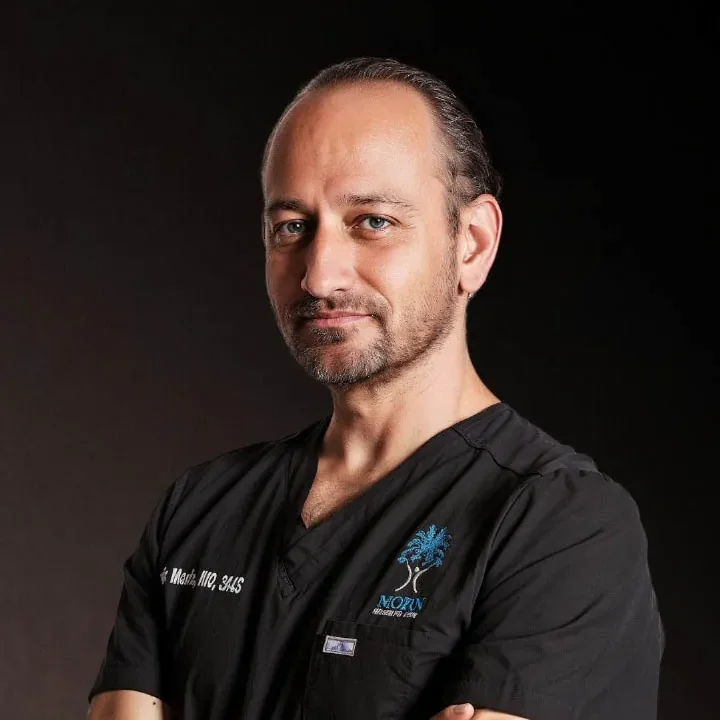
Dr.Babak Moeinolmolki
LA Cosmetic Surgeon Dr. Moein is board-certified by the American Board of General Surgery.