


Table of Contents
- The Clinical Foundation of Gynecomastia Grading
- Grade 1 and Grade 2 Gynecomastia Explained
- Grade 3 and Grade 4 Gynecomastia Explained
- Surgical Techniques Tailored to Each Grade
- How Your Grade Influences Procedure Complexity and Cost
- Frequently asked questions
- Talk to a Los Angeles surgeon
- About Dr. Babak Moeinolmolki, MD
Gynecomastia is clinically categorized into 4 distinct grades based on tissue volume, glandular density, and the presence of excess skin. At Gynecomastia Centers of Los Angeles, understanding your specific grade helps our board-certified surgeons select the precise surgical technique required to restore a firm, masculine chest contour. Whether dealing with localized glandular tissue or significant skin redundancy, your grade directly dictates the complexity of the surgical procedure and the overall cost structure.
The Clinical Foundation of Gynecomastia Grading
Medical professionals categorize male breast enlargement using a standardized diagnostic framework originally developed by Dr. Simon in 1973. This system classifies the condition into 4 distinct stages based on anatomical changes within the chest wall. Studies show that up to 65% of men experience some degree of tissue growth during pubertal or adult hormonal fluctuations, but the presentation varies dramatically from patient to patient.
Accurate grading is essential because gynecomastia is rarely a one-size-fits-all condition. The chest wall consists of two primary tissue types: firm, rubbery glandular breast tissue and soft adipose fat. As the condition advances through the 4 grades, both the volume of these tissues and the laxity of the overlying skin increase. Determining your precise grade allows our surgical team to plan an individualized surgical approach that addresses both tissue excision and skin contraction.
Why Tissue Composition Matters
True gynecomastia involves a high ratio of dense glandular tissue, often around 70% gland to 30% fat, which cannot be removed through diet or exercise alone. Pseudogynecomastia, by contrast, consists mostly of fatty tissue often seen in patients with a BMI over 25. Most clinical cases presented to our Los Angeles practice involve a combination of both. Grading allows us to evaluate whether simple liposuction, direct gland excision, or skin reconstruction will be necessary for an optimal cosmetic outcome.
Grade 1 and Grade 2 Gynecomastia Explained
The lower stages of gynecomastia are characterized by localized enlargement without significant skin laxity. These cases are highly responsive to targeted, minimally invasive surgical protocols.
Grade 1: Localized Glandular Prominence
Grade 1 represents the mildest form of gynecomastia. In this stage, there is a small, localized button of firm glandular tissue concentrated directly behind the nipple-areolar complex. There is no excess fat tissue spread across the chest and zero skin redundancy. Patients with Grade 1 often notice a puffy nipple appearance, particularly through thin shirts, even if their body fat percentage is under 15%.
Treatment for Grade 1 typically requires a small micro-excision performed through a tiny incision along the lower half of the areola. The procedure usually takes less than 60 minutes, leaving a minimal scar concealed within the natural border of the areola.
Grade 2: Moderate Chest Enlargement
Grade 2 is subdivided into two clinical categories based on how the tissue is distributed across the chest wall:
- Grade 2A: Moderate tissue enlargement spread across the pectoralis muscle without excess skin. The chest takes on a fuller appearance, but the skin remains tight.
- Grade 2B: Moderate tissue enlargement accompanied by mild skin redundancy. The chest shows noticeable swelling, and the skin begins to show early signs of laxity.
For Grade 2 cases, treatment almost always involves a combination approach. High-definition liposuction is utilized to contour the surrounding fatty tissue, while direct periareolar excision removes the dense glandular disc sitting beneath the nipple. This dual technique creates a smooth, flat transition across the entire pectoral complex.
Grade 3 and Grade 4 Gynecomastia Explained
Higher grades of gynecomastia present greater surgical complexity due to substantial tissue mass and stretched chest skin. These stages require specialized reconstructive techniques to recontour the torso successfully.
Grade 3: Severe Enlargement with Skin Laxity
Grade 3 gynecomastia involves significant breast enlargement combined with moderate skin redundancy. At this stage, the chest tissue sags noticeably, causing the lower crease of the breast, known as the inframammary fold, to become distinct. The volume of tissue in Grade 3 can exceed 300 grams per side, creating visual similarities to female breast tissue.
Correcting Grade 3 requires removing both adipose and glandular tissue while addressing the stretched skin envelope. While extensive liposuction and direct glandular removal are core components, some Grade 3 patients also benefit from circumareolar skin reduction to tighten the lower chest wall and elevate the nipple complex slightly.
Grade 4: Advanced Enlargement with Severe Ptosis
Grade 4 represents the most advanced stage of male breast tissue growth. It is characterized by severe tissue volume and pronounced skin ptosis (drooping). The nipple-areolar complex hangs well below the lower pectoral border, and significant skin folds are present.
Treating Grade 4 gynecomastia requires advanced surgical repositioning similar to a specialized male mastopexy or reduction mammoplasty. In addition to thorough tissue excision, the surgeon must remove 2 to 5 centimeters of redundant skin and relocate the nipple higher on the chest wall. Recovery for Grade 4 takes somewhat longer, but it provides a complete physical transformation for men suffering from severe chest deformity.
Surgical Techniques Tailored to Each Grade
At Gynecomastia Centers of Los Angeles, we customize every surgical plan to match the patient’s anatomical grade. Because tissue composition shifts as the grade advances, surgical modalities must adapt accordingly.
Liposuction and Micro-Incision Excision
For Grade 1 and Grade 2A cases, liposuction is performed through 1 or 2 small puncture sites measuring less than 4 millimeters. A specialized cannula emulsifies and removes fatty deposits surrounding the breast bud. Following liposuction, a semi-circular incision measuring under 1.5 centimeters is made along the bottom border of the areola to manually excise the tough fibrous gland. This leaves virtually invisible scars once fully healed over 3 to 6 months.
Skin Resection and Nipple Elevation
For Grade 3 and Grade 4 cases, liposuction alone is insufficient. When the skin envelope has lost its natural elasticity, removing the underlying volume without addressing the skin leaves a hollow, sagging chest wall. In these advanced procedures, formal surgical incisions are placed strategically around the areola or within the natural inframammary fold to excise excess skin folds. The nipple-areolar complex is elevated to a aesthetically masculine position on the mid-pectoral muscle.
Regardless of grade, most patients are able to return to light desk work within 3 to 7 days, though full physical exertion and heavy weightlifting must be paused for 4 to 6 weeks to ensure optimal internal tissue healing.
How Your Grade Influences Procedure Complexity and Cost
Patients frequently ask how surgical costs are calculated. Because gynecomastia surgery is highly tailored, total cost directly correlates with the clinical grade, operating time, surgical technique, and type of anesthesia required.
Factors Dictating Procedure Investment
Lower grade procedures, such as Grade 1 micro-excisions, involve shorter operative times, often lasting 1 to 1.5 hours. These procedures can sometimes be performed under local anesthesia with oral sedation, which lowers overall facility and anesthesia expenses.
Conversely, Grade 3 and Grade 4 procedures require extended operating room times ranging from 2.5 to 4 hours, general anesthesia administered by a board-certified anesthesiologist, and advanced tissue tailoring techniques. The increased complexity, specialized equipment, and intensive post-operative care monitoring contribute to higher overall surgical fees.
- Operating Room Time: Ranges from 60 minutes for Grade 1 up to 240 minutes for complex Grade 4 cases.
- Anesthesia Protocol: Local anesthesia with twilight sedation versus full general anesthesia.
- Technique Requirements: Single-modality excision versus multi-modality liposuction, gland excision, and skin removal.
- Post-Operative Management: Specialized compression garments and extended follow-up care for complex skin resections.
During your confidential consultation in Los Angeles, your surgeon will physically evaluate your chest wall, assign your formal clinical grade, and present a clear, custom surgical plan with transparent pricing structures.
Frequently asked questions
Can exercise or weight loss fix Grade 1 or Grade 2 gynecomastia?
Exercise can reduce overall body fat, which may improve the appearance of pseudogynecomastia caused purely by weight gain. However, actual glandular breast tissue present in true Grade 1 or Grade 2 gynecomastia is unresponsive to exercise or diet and requires surgical removal.
What is the average recovery time for gynecomastia surgery?
Most patients taking on lower-grade corrections return to light work within 3 to 5 days. Full recovery across all grades takes about 4 to 6 weeks, during which heavy lifting and vigorous exercise must be avoided while wearing a compression garment.
Will I have visible scars after Grade 3 or Grade 4 surgery?
Grade 3 and 4 surgeries require skin removal, which results in permanent scars. However, surgical incisions are placed discreetly along the border of the areola or within natural chest folds, and they typically fade significantly over 12 to 18 months.
Does health insurance cover gynecomastia surgery based on grade?
Most insurance carriers consider gynecomastia correction to be a cosmetic procedure and do not cover it regardless of grade. However, coverage may occasionally apply if severe Grade 3 or 4 tissue causes documented physical pain or medical impairment.
Can gynecomastia return after surgical removal?
Once glandular tissue is surgically excised, it cannot grow back because the physical gland cells are removed. However, gaining significant weight or using anabolic steroids can cause remaining fat cells in the chest to expand.
How do I find out my exact gynecomastia grade?
An exact grade can only be determined through an in-person physical evaluation with a board-certified surgeon. During your assessment at Gynecomastia Centers of Los Angeles, your surgeon will examine tissue density, skin elasticity, and overall volume to determine your precise classification.
Talk to a Los Angeles surgeon
If this sounds like your situation, a focused consultation gives you a clear, personalized answer. Learn more on our the Moeinolmolki gynecomastia classification page, review gynecomastia surgery guide, or book a consultation.
Sources: NIH StatPearls: Gynecomastia; American Board of Cosmetic Surgery.
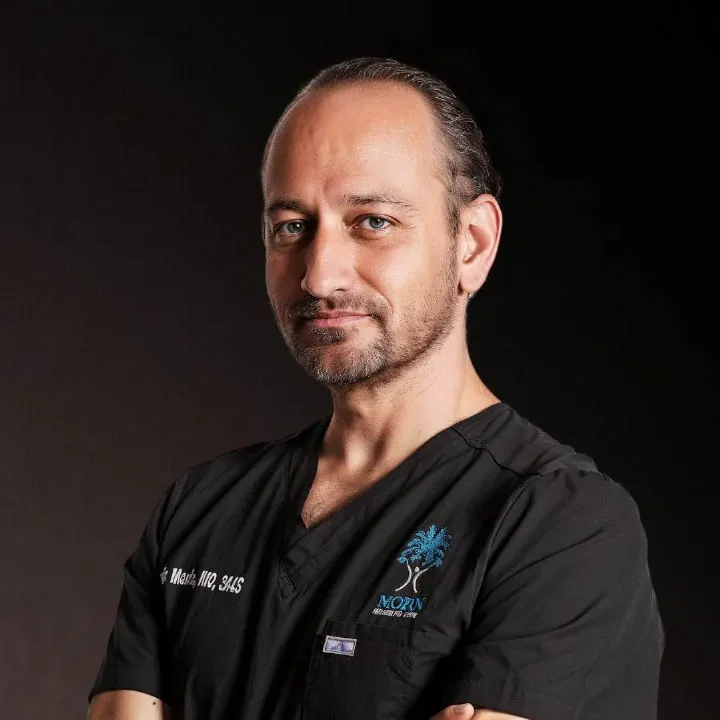
Dr.Babak Moeinolmolki
LA Cosmetic Surgeon Dr. Moein is board-certified by the American Board of General Surgery.