


Table of Contents
- Does spironolactone cause gynecomastia?
- How common is gynecomastia on spironolactone?
- Why does spironolactone cause breast tissue growth in men?
- Will gynecomastia from spironolactone go away?
- Should I stop spironolactone if I notice breast tissue?
- What Are the Options for Spironolactone-Related Gynecomastia?
- When Is Surgery an Option for Medication-Related Gynecomastia?
- How Do I Know the Medication Is the Cause?
- What Can You Do While You Wait?
- What to Do Next
Spironolactone can cause gynecomastia. In the large trial that tested it in men with severe heart failure, breast enlargement or breast pain was reported by 10 percent of men taking it, compared with 1 percent on placebo. If you are a man on this medication and you have noticed a firm lump behind a nipple, this page explains what is going on and what your options are.
I am Dr. Babak Moeinolmolki, and I see this question from men whose cardiologist, dermatologist, or primary care doctor prescribed spironolactone and who then found a tender button of tissue under one or both nipples. Nothing below is a reason to stop a prescribed drug on your own. Spironolactone is prescribed for real conditions, and the decision to change it belongs with the doctor who prescribed it.
Does spironolactone cause gynecomastia?
Yes. Spironolactone is one of the better-documented medication causes of gynecomastia. It blocks androgen receptors and lowers testosterone activity in breast tissue, which leaves estrogen less opposed. The result is growth of the glandular tissue behind the nipple, often with tenderness, in a minority of men who take it.
Reviews of the condition list spironolactone among the drugs that can drive male breast enlargement, and the Nature Reviews Endocrinology review of gynecomastia names it directly as a medication that may need to be discontinued when it is the cause (PubMed 25112235). Our broader guide to medications that cause gynecomastia places it alongside several other drug classes.
How common is gynecomastia on spironolactone?
In the Randomized Aldactone Evaluation Study, 10 percent of men with severe heart failure taking 25 mg of spironolactone daily reported gynecomastia or breast pain, versus 1 percent on placebo. Rates in other patients and at other doses differ, so that figure describes one trial population, not a prediction for any individual man.
The trial was published in the New England Journal of Medicine and followed 1,663 patients for a mean of 24 months (PubMed 10471456). Notice the wording: gynecomastia or breast pain were counted together, so the figure includes men who had tenderness without a palpable lump. Most men on spironolactone never develop either.
Why does spironolactone cause breast tissue growth in men?
Male breast tissue grows when estrogen action outweighs androgen action at the tissue level. Spironolactone interacts with sex steroid receptors beyond the one it was designed to block, which tips that balance. The effect is on the receptors and hormone ratio, so it can occur even when blood testosterone is within the normal range.
Spironolactone was developed to block the aldosterone receptor. It is not selective, and its action at other steroid receptors is what produces breast tenderness, gynecomastia, and sexual side effects (PubMed 12713678). The same mechanism is behind the pattern described in our article on high estrogen and gynecomastia in men.
Will gynecomastia from spironolactone go away?
Often it improves after the drug is stopped or switched, particularly when the tissue is recent and tender. Tissue that has been present for a year or longer tends to become fibrous and is less likely to shrink. The timeline depends on how long the tissue has been there and how much of it is glandular.
A review of the adverse effects of mineralocorticoid receptor antagonists reports that sex-related effects occur mainly with spironolactone and that switching to eplerenone could attenuate them (PubMed 30799782). Whether a switch is appropriate for you is a prescriber decision, because eplerenone differs from spironolactone in cost, dosing, and the conditions it is approved for.
Recent tenderness with a soft, rubbery disc under the nipple is the picture most likely to settle. A hard, fixed, or one-sided lump that is not tender needs a proper exam, since male breast cancer, though uncommon, presents differently. See how gynecomastia is diagnosed for what that evaluation involves, and whether gyno goes away on its own for the natural history.
Should I stop spironolactone if I notice breast tissue?
No, not without talking to your prescriber. Spironolactone treats heart failure, resistant hypertension, and other conditions that carry far greater risk than gynecomastia. Stopping abruptly can worsen blood pressure or fluid retention. The right step is to report the change and let the prescriber weigh alternatives.
Some men take spironolactone off-label for acne or hair loss. In that setting the calculation is different, and a dermatologist may have reasonable alternatives. That is still a conversation to have with the prescriber, not a decision to make alone.
What Are the Options for Spironolactone-Related Gynecomastia?
The right path depends on why you take the drug, how long the tissue has been present, and how much it bothers you. This table summarizes the usual choices. What fits varies by case.
| Option | Best fit | Main limitation |
|---|---|---|
| Continue and monitor | Mild, recent tissue; drug is essential | Tissue may persist or grow |
| Switch to a different drug | Prescriber agrees an alternative is suitable | Alternative may not suit your condition |
| Hormone-directed treatment | Recent, tender tissue in selected men | Limited benefit for long-standing tissue |
| Surgical removal | Established tissue that has not resolved | Surgery carries risks and a recovery period |
Medical options such as tamoxifen are sometimes used off-label for recent, painful tissue. They are less effective once the tissue has matured.
When Is Surgery an Option for Medication-Related Gynecomastia?
Surgery is considered when glandular tissue persists after the cause has been addressed, usually after several months to a year, and it still bothers the patient. Removal of the gland, often with liposuction, is the only treatment that reliably removes established fibrous tissue. Candidacy depends on health and the underlying condition.
If you must stay on spironolactone, surgery is still possible, though the risk of recurrence is a fair question to raise before the operation, and your cardiologist should be part of that planning. Our overview of gynecomastia surgery options in Los Angeles covers technique, and the gynecomastia grades page explains how tissue amount affects the approach.
How Do I Know the Medication Is the Cause?
Timing is the best clue. Breast tenderness or a new lump that appears within the first months of starting spironolactone, or after a dose increase, points toward the drug. A lump that predates the prescription points elsewhere. Gynecomastia has many causes, and the Nature Reviews Endocrinology review lists hypogonadism, hyperthyroidism, liver disease, and testicular tumors among them. A doctor may check hormone levels and examine the testes before settling on the medication as the explanation.
Weight gain can also mimic the problem. Soft, even fullness across the chest without a firm disc behind the nipple is usually fat, a separate condition covered in our guide to gynecomastia versus pseudogynecomastia. The two can coexist, and an exam sorts out the proportions.
What Can You Do While You Wait?
Keep taking the medication as prescribed and keep the follow-up appointments that go with it, since spironolactone requires potassium and kidney monitoring. Note when the tenderness began and whether it is changing. Avoid adding other things that raise estrogen action, such as anabolic steroids or unregulated supplements, because they stack with the medication effect. If the lump grows quickly, becomes hard, bleeds, or produces discharge from one nipple, get it examined promptly rather than waiting.
What to Do Next
Tell your prescriber about the breast change, and ask whether an alternative is reasonable for your condition. Do not stop the drug on your own. If the tissue has been there for a year or more, or it bothers you, a consultation can establish how much is glandular and whether surgery makes sense. No two chests are alike, and results vary by case. You can request a consultation with Dr. Moeinolmolki through this site.
* Illustrative images on this page are models, not actual patients. Real patient results are shown in our Before & After gallery.
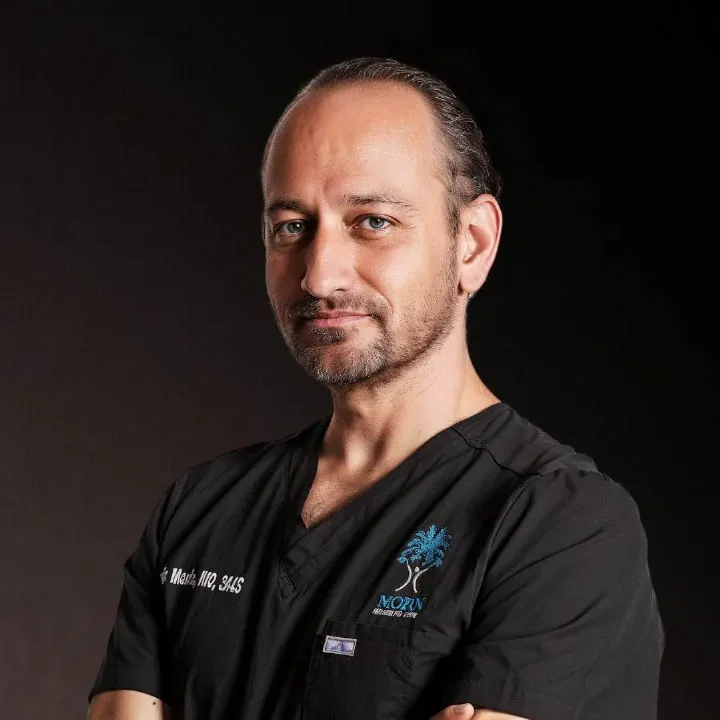
Dr.Babak Moeinolmolki
LA Cosmetic Surgeon Dr. Moein is board-certified by the American Board of General Surgery.