


Table of Contents
After cost, scars are the question men research hardest before gynecomastia surgery. Usually at midnight, usually on forums full of worst-case photos. Let me give you the version I show patients in my Los Angeles consultation room instead: where the incisions actually go, what the scar honestly looks like at 1, 6, and 12 months, and which factors (some yours, some your surgeon’s) decide whether it disappears into the anatomy or announces itself.
Where the Incisions Actually Go
Standard gynecomastia surgery in my practice uses two kinds of access. The liposuction ports are 3–4 mm nicks placed in the armpit crease and at the lower chest border. After a year, most men genuinely cannot find them. The gland comes out through a periareolar incision: a curved line along the lower border of the areola, deliberately placed at the junction where the darker areolar skin meets chest skin, because a scar sitting exactly on a natural color transition is the closest thing surgery has to camouflage. Bigger corrections change the map: men with significant loose skin after major weight loss may need skin excision patterns that extend the incisions, which is a candid pre-op conversation, never a surprise. The American Society of Plastic Surgeons describes the same incision hierarchy: the smaller the tissue and skin problem, the smaller the access.
What Gynecomastia Scars Look Like, Month by Month
| Timepoint | What the scar looks like | What to do about it |
|---|---|---|
| Weeks 1–3 | A fine red line, slightly raised; incisions sealed | Keep taped/protected per aftercare; no sun |
| 1 month | Pink-to-red, most noticeable phase begins | Start scar massage and silicone once cleared |
| 3 months | Peak redness passing; texture flattening | Continue silicone; strict SPF on any exposed scar |
| 6 months | Fading toward pink-white; blends at the areolar edge | Massage as advised; photos start looking “done” |
| 12 months | Thin pale line inside the color transition; most men can’t point to it quickly | Judge the final result now, not sooner |
The counterintuitive part: scars look their worst around weeks 4 through 10: redder and more obvious than in week 1. That’s normal collagen remodeling on schedule, and it’s precisely when men panic and start doubting the operation. The scar you should judge is the 12-month scar. When patients bring me forum photos of “terrible gyno scars,” the majority turn out to be month-2 pictures of a completely normal healing curve, posted by men who never uploaded the month-12 follow-up where the line quietly vanished into the areolar border.
What Determines How Good Your Scar Gets
Half the outcome is set in the operating room: incision placement exactly on the areolar border, closure in layers so the skin edge carries no tension, and respecting the tissue during excision. The other half is biology and behavior. Skin tone matters. Men with deeper skin tones carry a higher risk of hyperpigmentation or keloid tendency and get a modified protocol from day one. Sun is the biggest self-inflicted wound: UV on an immature scar sets darkness that takes years to fade, so a healing chest and a shirtless Santa Monica summer need a 6-month negotiation. Nicotine impairs healing in every form, vape included. And genetics deal the base hand, which is why I ask about how your previous cuts and piercings healed, and why anyone with keloid history gets proactive management rather than wishful thinking. Complication-driven scarring after a hematoma or infection is rare but real, per the NIH’s StatPearls review of gynecomastia, and it’s another reason early post-op rules exist.
Scar Care That Actually Works (and What’s Marketing)
The evidence-backed short list: silicone sheets or gel applied daily from about week 3 through month 4 or later; scar massage once incisions are fully sealed (my aftercare instructions cover the technique), and disciplined sunscreen or clothing coverage for 6 months. The marketing list: exotic oils and creams with heroic price tags mostly perform at the level of “moisturizer,” which is fine, but silicone is what the data supports. For the minority whose scars thicken anyway, escalation exists and works: steroid injections flatten hypertrophic segments, and laser treatment settles stubborn redness. If a previous surgeon’s scars are the problem you’re starting from, whether misplaced incisions, crater deformity or wide lines, that’s revision territory, and my revision surgery practice sees exactly those cases.
Frequently Asked Questions
Are gynecomastia surgery scars noticeable?
By 12 months, most periareolar scars mature into a thin pale line hidden in the color transition at the areola’s edge. It is visible if someone inspects at close range and invisible in normal life, gym included. Lipo port scars generally vanish into skin creases entirely.
How long do gynecomastia scars take to fade?
Expect redness to peak between 1 and 3 months, meaningful fading by 6 months, and the mature result at 12 months. Judging the scar before month 6 is judging a half-finished process. The mid-phase always looks worse than the destination.
Do liposuction-only gynecomastia cases leave scars?
Only the 3–4 mm port nicks, placed in the armpit crease and lower chest border. These typically fade to near-invisibility. Remember, though: lipo-only surgery suits fat-dominant chests. Removing true gland still requires the periareolar incision.
What if I’m prone to keloids?
Tell your surgeon before surgery. You remain a candidate; the surgical plan simply changes. Proactive measures such as early silicone, tension-minimizing closure and a low threshold for steroid injection manage keloid tendency far better than reacting after a scar has thickened.
When can I be shirtless in the sun after surgery?
Swimming and sun exposure can resume within weeks, but the scar itself needs SPF 50 or clothing coverage for a full 6 months. UV on an immature scar causes hyperpigmentation that can take years to fade. The cheapest scar treatment is simply sunscreen.
Can bad gynecomastia scars be fixed?
Usually, yes. Thickened scars respond to steroid injections and lasers; misplaced or widened scars, and crater deformities from over-resection, are correctable with revision surgery. A significant share of my revision patients come specifically for scar-related outcomes from elsewhere.
The Bottom Line
A well-planned gynecomastia scar is a design decision: placed on a natural border, closed without tension, and defended from sun for a full 6 months. By month 12 most men have to hunt for the line. Fear of scarring shouldn’t keep you in a compression shirt for another decade. Come see actual healed results at every timepoint: book a confidential consultation or call (310) 455-8020.
* Illustrative images on this page are models, not actual patients. Real patient results are shown in our Before & After gallery.
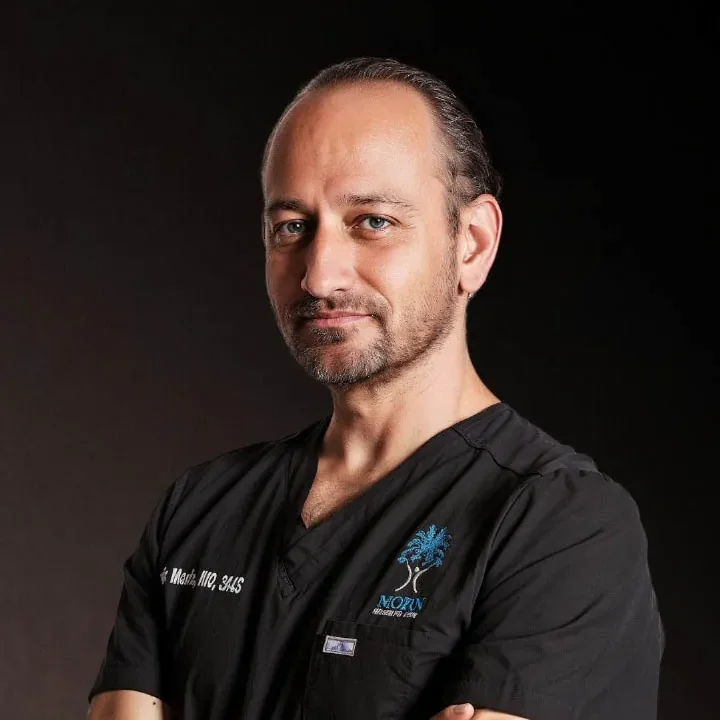
Dr.Babak Moeinolmolki
LA Cosmetic Surgeon Dr. Moein is board-certified by the American Board of General Surgery.