


Table of Contents
SARMs have been marketed for years as the smarter, safer alternative to anabolic steroids. The pitch goes something like this: you get the muscle-building benefits of androgens without the side effects because SARMs selectively target muscle and bone tissue while leaving everything else alone. It sounds clean and logical. It is also incomplete, and the part that gets left out is the part that matters for gynecomastia.
I am seeing more men develop gynecomastia from SARMs than at any point in the past. Many of them took SARMs specifically because they thought they were avoiding the breast tissue problems associated with traditional steroids. Understanding how SARMs can trigger gynecomastia requires looking at what they actually do to your hormonal system, not just what the marketing materials say.
How SARMs Cause Gynecomastia
The mechanism is different from how traditional steroids cause gyno, and that difference is part of why people get caught off guard.
With anabolic steroids like testosterone, the process is relatively straightforward. Excess testosterone gets converted to estrogen by the aromatase enzyme. That extra estrogen stimulates breast tissue growth directly. Men who use steroids know about this pathway and often take aromatase inhibitors alongside their cycles to prevent it.
SARMs work differently. Most SARMs do not directly aromatize into estrogen. That is technically true, and it is the fact that gets used in marketing. But here is what actually happens.
When you introduce a SARM into your body, it binds to androgen receptors and provides anabolic signaling to muscles. Your body’s hypothalamic-pituitary-testicular (HPT) axis detects this external androgen activity and responds the way it always does to exogenous androgens: it reduces its own testosterone production through negative feedback. Your natural testosterone drops.
During the SARM cycle, this suppression might not cause obvious problems because the SARM itself is providing some androgenic activity. But after the cycle ends, you are left in a hormonal gap. The SARM is clearing your system. Your natural testosterone production has not recovered yet because the HPT axis takes time to restart. During this window, your testosterone is low while your estrogen levels may remain relatively normal or even elevated by comparison. That ratio is what triggers breast tissue growth.
This post-cycle period is where most SARM-related gynecomastia develops. Men finish their cycle feeling good, expecting the gains to hold, and then a few weeks later they notice tenderness behind their nipples. By the time they connect the dots, breast tissue has already started forming.
Which SARMs Carry the Highest Gyno Risk
Not all SARMs suppress testosterone equally. The more suppressive the compound, the greater the risk of post-cycle hormonal imbalance and gynecomastia development.
RAD-140 (Testolone). This is one of the most potent SARMs available and also one of the most suppressive. Blood work from RAD-140 users consistently shows significant testosterone suppression, often dropping total testosterone by 50 percent or more during a cycle. The rebound period after stopping RAD-140 is where gynecomastia risk peaks. Men who use RAD-140 without proper post-cycle therapy are running a real risk.
LGD-4033 (Ligandrol). Ligandrol is another heavily suppressive SARM. Studies have confirmed dose-dependent testosterone suppression, meaning higher doses cause greater suppression. Even at moderate doses, LGD-4033 can push testosterone levels low enough to create a meaningful imbalance with estrogen.
MK-677 (Ibutamoren). MK-677 is not technically a SARM. It is a growth hormone secretagogue, but it gets grouped with SARMs in online communities and supplement stacks. Its gynecomastia risk comes from a different pathway: MK-677 increases prolactin levels. Elevated prolactin can directly stimulate breast tissue growth independent of the estrogen pathway. It also increases growth hormone and IGF-1, both of which can contribute to tissue development in the chest. Men who stack MK-677 with an actual SARM are hitting breast tissue from two different hormonal directions simultaneously.
Ostarine (MK-2866). Ostarine is considered one of the milder SARMs. Its suppressive effects are less dramatic than RAD-140 or LGD-4033. However, it still causes measurable testosterone suppression, particularly at higher doses or during longer cycles exceeding eight weeks. The gynecomastia risk is lower than the other compounds listed here, but it exists. Dismissing it because Ostarine is “mild” is a mistake I see men make frequently.
YK-11. YK-11 is structurally a steroid, not a traditional SARM, despite being marketed as one. It is highly suppressive and carries a gynecomastia risk comparable to actual anabolic steroids. Men using YK-11 should approach it with the same caution they would apply to a steroid cycle, including full post-cycle therapy.
Why People Get Blindsided
The marketing around SARMs creates a false sense of security. When someone reads that SARMs “don’t aromatize,” they interpret that as “SARMs can’t cause gyno.” That interpretation is wrong. The aromatization pathway is only one of several mechanisms through which breast tissue can develop.
There is also a quality control problem. SARMs are not FDA-approved for human use. The FDA has explicitly warned against using SARMs in body-building products. What you buy online may not contain what the label says. Independent lab testing has found that some products labeled as SARMs actually contain prohormones, which do aromatize into estrogen directly. You might think you are taking a SARM with no aromatization risk when you are actually taking a compound that converts to estrogen.
Additionally, many SARM users are young men who have never had blood work done. They have no baseline testosterone, estrogen, or prolactin levels to compare against. When symptoms appear, they cannot tell whether the SARMs caused a hormonal shift or whether they had a pre-existing imbalance that the SARMs made worse. By the time they get tested, the damage to breast tissue is already done.
Prevention: What to Do If You Choose to Use SARMs
I am not here to tell anyone what to take or not take. But if you are going to use SARMs, these precautions can significantly reduce your gynecomastia risk.
Get baseline blood work. Before starting any cycle, get a comprehensive hormone panel that includes total testosterone, free testosterone, estradiol, LH, FSH, and prolactin. This gives you a reference point to compare against during and after your cycle. Without baseline numbers, you are flying blind.
Plan your post-cycle therapy before you start. Do not figure out PCT after you finish the cycle. Have a SERM like Nolvadex (tamoxifen) or Clomid (clomiphene) on hand before day one. The standard PCT protocol for SARMs involves starting the SERM within a few days of ending the cycle and continuing for 4 to 6 weeks. This helps your HPT axis restart testosterone production faster and prevents the hormonal gap that leads to gynecomastia.
Use the lowest effective dose. Testosterone suppression from SARMs is dose-dependent. Higher doses cause more suppression. Using 10mg of RAD-140 instead of 20mg still provides a training benefit while creating less hormonal disruption. The returns diminish at higher doses while the risks keep climbing.
Keep cycles short. Eight weeks is a reasonable maximum for most SARMs. Longer cycles cause deeper suppression that takes longer to recover from, extending the post-cycle window where gynecomastia can develop. Twelve-week SARM cycles are common in online recommendations but carry substantially more risk than eight-week cycles.
Monitor during the cycle. Get blood work at the midpoint of your cycle. If testosterone is already severely suppressed or if estradiol or prolactin are climbing, you have information you can act on. You can shorten the cycle, adjust the dose, or begin supportive measures. Monitoring costs money, but so does gynecomastia surgery.
Do not stack multiple suppressive compounds. Running RAD-140 and LGD-4033 together doubles the suppressive load on your HPT axis without doubling the benefit. Adding MK-677 to that stack introduces prolactin elevation on top of testosterone suppression. These combinations dramatically increase the likelihood of hormonal problems including gynecomastia. Understanding how different compounds cause gyno helps you make smarter choices about what to combine.
When It Is Too Late for Prevention
If breast tissue has already formed and feels firm behind the nipple, post-cycle therapy alone will not remove it. PCT can help restore hormonal balance and prevent further growth, but existing glandular tissue that has become established does not regress when hormones normalize. The tissue has its own blood supply and fibrous structure at that point.
This is the reality that men who develop gynecomastia from SARMs have to face. The tissue is there, and no supplement, PCT protocol, or training regimen will make it go away. Gynecomastia from performance-enhancing substances, whether steroids or SARMs, requires surgical excision once the tissue has solidified.
The surgery itself is typically straightforward for SARM-related gyno. Most cases involve moderate glandular tissue without significant excess skin, which means a relatively simple procedure with a short recovery. The outcomes are excellent when performed by a surgeon who specializes in gynecomastia.
What Dr. Babak Moeinolmolki Is Seeing
Dr. Babak Moeinolmolki, who is dual board-certified by the American Board of Cosmetic Surgery and the American Board of General Surgery, has noticed a clear increase in SARM-related gynecomastia cases in his Los Angeles practice over the past several years. The typical patient is a man in his 20s or 30s who used SARMs purchased online, did not use PCT, and developed breast tissue that persisted after stopping the cycle.
Many of these patients tell him they assumed SARMs were safe because they read that SARMs do not aromatize. Some had no idea that testosterone suppression could lead to breast tissue growth. Others knew about the risk but thought it would not happen to them. The consistent pattern is a gap between the marketing of SARMs and the biological reality of how they affect the hormonal system.
For men currently using SARMs who notice puffy nipples or nipple tenderness, early intervention matters. Getting blood work, starting PCT if appropriate, and consulting with an endocrinologist or gynecomastia specialist can prevent mild early-stage growth from becoming established tissue. For men who already have firm, established breast tissue from a previous SARM cycle, a consultation with a gynecomastia surgeon experienced with bodybuilders and fitness enthusiasts is the most direct path to resolution.
Frequently Asked Questions
Can SARMs cause gynecomastia even though they don’t aromatize?
Yes. SARMs cause gynecomastia through a different mechanism than aromatization. They suppress your body’s natural testosterone production through HPT axis negative feedback. When you stop the SARM, your testosterone is low while estrogen remains relatively normal, creating the hormonal imbalance that triggers breast tissue growth. The fact that SARMs themselves do not convert to estrogen is irrelevant to this mechanism.
How soon after starting SARMs can gynecomastia develop?
Gynecomastia from SARMs most commonly develops during the post-cycle period, typically 2 to 6 weeks after stopping the SARM. However, some men notice nipple tenderness or puffiness during the cycle itself, particularly with highly suppressive SARMs like RAD-140 or when stacking multiple compounds. If you notice any breast tenderness during a cycle, get blood work immediately to assess your hormone levels.
Will post-cycle therapy prevent gynecomastia from SARMs?
Proper PCT significantly reduces the risk but does not eliminate it entirely. PCT with a SERM like Nolvadex or Clomid helps restart natural testosterone production faster, which shortens the hormonal gap that allows gynecomastia to develop. Men who use PCT consistently have lower rates of SARM-related gynecomastia than men who skip it. However, individual responses vary, and some men develop breast tissue despite using PCT.
Is MK-677 safe from a gynecomastia standpoint?
No. MK-677 carries gynecomastia risk through prolactin elevation, which is a separate pathway from the testosterone-estrogen imbalance caused by true SARMs. Elevated prolactin can directly stimulate breast tissue growth. MK-677 also increases growth hormone and IGF-1, which may further contribute. If you use MK-677, monitoring prolactin levels through blood work is important. If prolactin rises significantly, reducing the dose or stopping the compound is advisable.
Can I reverse gynecomastia from SARMs without surgery?
It depends on timing. If you catch breast tissue development very early, within the first few weeks of noticing changes, restoring hormonal balance through PCT may allow the tissue to regress. Once breast tissue has been present for several months and has undergone fibrosis, it will not reverse on its own or through any medication. At that point, surgical excision is the only reliable method for removing the tissue.
Are SARMs legal?
SARMs occupy a legal gray area. They are not FDA-approved for human use and cannot legally be sold as dietary supplements. However, they are sometimes sold as “research chemicals” and are widely available online. The FDA has issued multiple warnings about SARMs and has taken enforcement action against some sellers. Beyond the legal question, the lack of regulation means you cannot verify what you are actually getting in a product labeled as a SARM without independent lab testing.
* Illustrative images on this page are models, not actual patients. Real patient results are shown in our Before & After gallery.
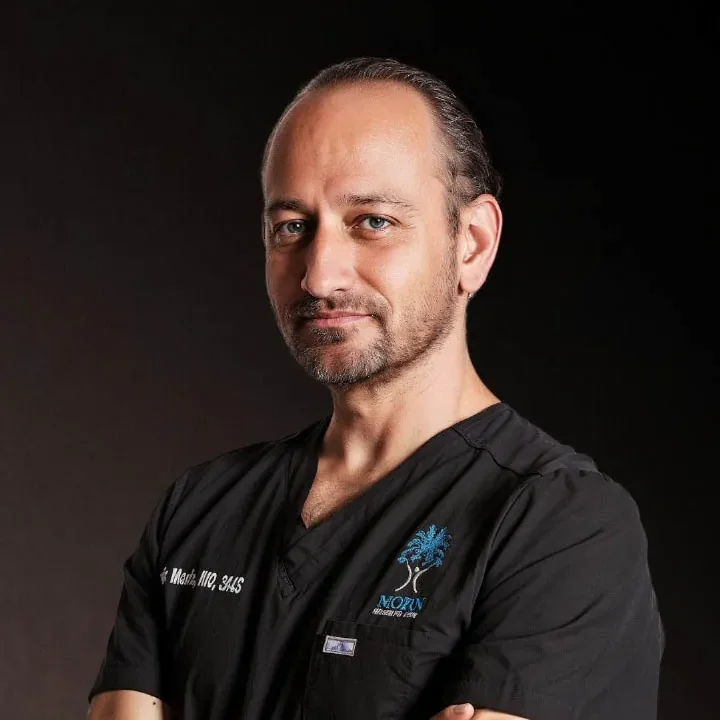
Dr.Babak Moeinolmolki
LA Cosmetic Surgeon Dr. Moein is board-certified by the American Board of General Surgery.