


Table of Contents
- Can thyroid problems cause gynecomastia?
- How does hyperthyroidism cause gynecomastia?
- What about an underactive thyroid?
- Which symptoms suggest the thyroid is involved?
- How is thyroid-related gynecomastia diagnosed?
- Does treating the thyroid make gynecomastia go away?
- When is surgery the right answer?
- What to do next
Thyroid disease is one of the less obvious medical causes of male breast tissue, and it is one of the few that can reverse on its own once the underlying problem is treated. An overactive thyroid changes the balance between estrogen and testosterone in a man’s bloodstream, and breast tissue responds to that ratio rather than to either hormone alone.
This matters practically. A man whose gynecomastia is driven by untreated thyroid disease is a man whose chest may partly correct itself with endocrine treatment, and who should not be scheduled for surgery until that has been sorted out.
Can thyroid problems cause gynecomastia?
Yes. An overactive thyroid, known as hyperthyroidism, is a recognized cause of gynecomastia in men. It raises the proportion of circulating testosterone that is bound and unavailable while leaving more estrogen active, which shifts the hormonal ratio that breast tissue responds to. Treating the thyroid condition often reduces the breast tissue.
Thyroid disease accounts for a small share of all gynecomastia cases. Medications, puberty, aging, obesity, and anabolic steroid use together explain far more of what walks into a consultation room. Thyroid disease earns attention anyway, because it is easy to test for and because missing it means operating on a man whose hormones were never addressed.
How does hyperthyroidism cause gynecomastia?
Hyperthyroidism raises sex hormone binding globulin, a protein that carries sex hormones in the blood. That protein binds testosterone more tightly than it binds estradiol, so more testosterone is taken out of circulation while estrogen stays comparatively free. Excess thyroid hormone also increases the peripheral conversion of androgens into estrogens.
Both effects push in the same direction. What the breast tissue experiences is a relative estrogen excess, even when total testosterone on a lab report looks acceptable. This is why a man can have a normal-looking testosterone number and still develop glandular tissue. The number that matters is the ratio of active estrogen to active testosterone, not either value read alone.
Graves disease is the most common cause of hyperthyroidism, and it is the thyroid diagnosis most often found in men who present with both thyroid symptoms and breast tissue. Toxic nodular disease and thyroiditis can produce the same hormonal picture.
What about an underactive thyroid?
An underactive thyroid does not directly cause gynecomastia the way an overactive one does. Severe untreated hypothyroidism can raise prolactin levels, and elevated prolactin is itself associated with breast tissue growth in men. The route is indirect, and it requires hypothyroidism significant enough to disturb the pituitary.
If prolactin is elevated on your bloodwork, the thyroid is one of several explanations that need to be excluded. The relationship between prolactin and gynecomastia deserves its own workup, because a prolactin-secreting pituitary tumor is on that differential and is not something to discover late.
Which symptoms suggest the thyroid is involved?
Thyroid-driven gynecomastia rarely arrives alone. Men usually have other symptoms of thyroid excess that they have been attributing to stress, overwork, or a change in training.
| System | Overactive thyroid | Underactive thyroid |
|---|---|---|
| Weight | Loss despite normal or increased appetite | Gain that resists diet change |
| Heart | Racing pulse, palpitations, tremor | Slow pulse |
| Temperature | Heat intolerance, sweating | Cold intolerance |
| Energy and mood | Anxiety, restlessness, poor sleep | Fatigue, low mood, slowed thinking |
| Bowel | Frequent loose stools | Constipation |
| Chest | Glandular tissue, tenderness | Tissue possible if prolactin is raised |
A man in his thirties who has lost weight without trying, cannot tolerate a warm room, feels his heart racing at rest, and has developed tender chest tissue is describing thyrotoxicosis until proven otherwise. That combination should send him to an endocrinologist before it sends him to a surgeon.
How is thyroid-related gynecomastia diagnosed?
Diagnosis begins with a thyroid panel measuring TSH and free T4, alongside the standard gynecomastia hormone workup covering testosterone, estradiol, LH, and prolactin. A suppressed TSH with an elevated free T4 confirms hyperthyroidism, and thyroid antibodies or imaging then identify the cause.
A proper evaluation looks beyond the thyroid in the same visit. Liver and kidney function influence hormone clearance, and a full medication review is essential because a long list of common drugs is associated with breast tissue growth. Our page on how gynecomastia is diagnosed sets out the sequence, and the review of medications that cause gynecomastia covers the drug side.
Timing of the bloodwork matters too. Thyroid hormone levels fluctuate during an acute illness, and a single abnormal TSH drawn while a man has the flu can mislead. Where results sit close to the reference range, repeating the panel several weeks later on a well day is more informative than acting on one reading.
Physical examination still carries weight. True glandular tissue sits as a firm, rubbery, sometimes tender disc directly beneath the areola. Soft tissue spread evenly across the chest without that central disc is more consistent with fat. The clinical evaluation of gynecomastia is built around that distinction, because the two respond to entirely different treatments.
Does treating the thyroid make gynecomastia go away?
Often it helps, and how much depends on how long the tissue has been present. Gynecomastia that developed recently is still in an active, cellular phase and can regress substantially once thyroid hormone levels normalize. Tissue present for more than about a year has usually become fibrotic, and fibrous tissue does not shrink in response to corrected hormones.
The practical implication is a waiting period rather than a decision. Most endocrinologists and surgeons will restore normal thyroid function and then reassess the chest after several months. What remains at that point is what surgery would address. Operating before the thyroid is controlled risks a recurrence driven by the same hormonal imbalance that caused the problem initially.
When is surgery the right answer?
Surgery becomes appropriate once the thyroid condition is treated and stable, and firm glandular tissue remains after several months of normal hormone levels. At that stage the tissue is fibrotic and will not resolve medically, and removing it addresses what is actually there rather than what caused it.
One practical caution applies to men who have been treated with radioactive iodine or thyroid surgery and are now on replacement therapy. Their thyroid status is only as stable as their dosing, so a recent dose change is a reason to delay an elective operation until levels have settled. Stability, rather than any particular number, is what the surgical decision rests on.
The operation itself does not change because the original cause was thyroid disease. What changes is the sequencing and the conversation beforehand. A man whose thyroid is well controlled and whose remaining tissue has been stable for months is in a good position for a durable result. Our overview of gynecomastia treatment options covers what that involves.
What to do next
If you have breast tissue alongside unexplained weight loss, heat intolerance, tremor, or a racing heart, ask your physician for a thyroid panel before you book a surgical consultation. Endocrine causes deserve to be excluded first, and thyroid testing is inexpensive and widely available.
If your thyroid has already been treated and the tissue has not gone, that is a straightforward surgical conversation. Dr. Babak Moeinolmolki, MD, FACS, is double board-certified through the American Board of General Surgery and the American Board of Cosmetic Surgery, and evaluates men for gynecomastia surgery in Los Angeles with the endocrine workup reviewed as part of the consultation. When comparing surgeons, verify certification independently through ABCS or ABPS, both of which are recognized certifying boards.
Contact the practice to arrange an evaluation.
* Illustrative images on this page are models, not actual patients. Real patient results are shown in our Before & After gallery.
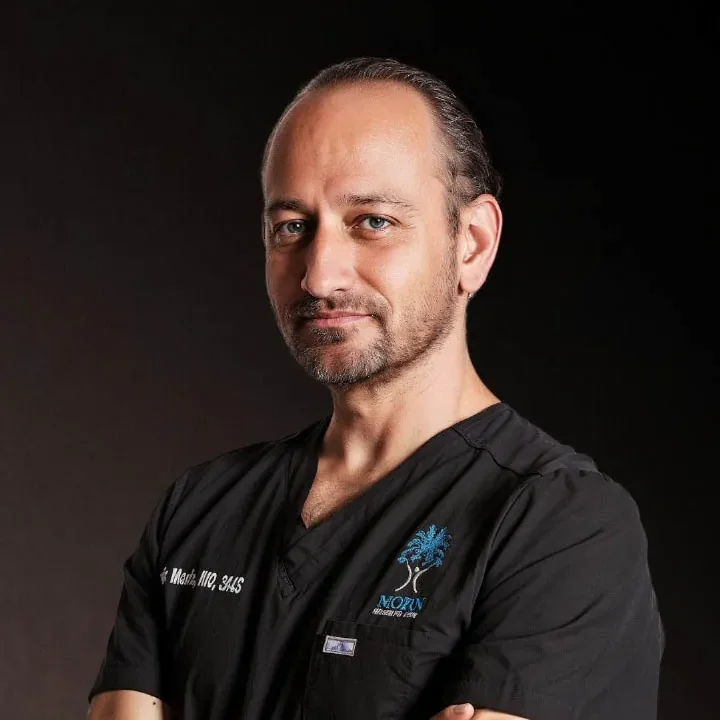
Dr.Babak Moeinolmolki
LA Cosmetic Surgeon Dr. Moein is board-certified by the American Board of General Surgery.