


Table of Contents
- What does an infection after gynecomastia surgery look like?
- How common is infection after gynecomastia surgery?
- Normal healing versus infection after gynecomastia surgery
- When should you call your surgeon?
- How is an infection after gynecomastia surgery treated?
- How is infection prevented?
- Can an infection affect your final result?
- What to do next
Infection after gynecomastia surgery is uncommon, and it is also the complication men most often misread. Redness right at the incision during the first few days is usually ordinary healing. Redness that spreads outward, feels hot, and arrives with a fever a week after surgery is a different problem, and it needs same-day attention.
Most men who have male breast reduction never develop one. Learning the difference between a chest that is healing and a chest that is infected takes about two minutes, and those two minutes are worth spending before your operation rather than after it.
What does an infection after gynecomastia surgery look like?
An infection after gynecomastia surgery usually appears between day three and day ten as redness spreading beyond the incision, skin that feels hot, pain that increases rather than settles, thick or foul-smelling drainage, and a fever above 101 degrees Fahrenheit. Normal healing redness stays close to the incision line and fades instead of expanding.
Timing carries as much information as appearance. The first 48 hours bring swelling, bruising, and a pink incision line. That is inflammation, which is the body beginning repair work. Bacteria need time to establish, so a true infection tends to declare itself later in the first week or early in the second, often just as a man has started to feel better.
The pattern worth watching is a reversal. You were improving, and then you were not. Pain that had been fading starts climbing. Drainage that had been thin and pink turns thick and yellow. That reversal tells you more than any single symptom does.
How common is infection after gynecomastia surgery?
Infection is one of the less frequent complications of gynecomastia correction. A systematic review of complication rates across surgical approaches reported infection well below the rates seen for hematoma and seroma, which are the more common problems after this operation.
Chest surgery in healthy adult men sits in a favorable category for wound healing. The incisions are small and the blood supply to the chest wall is generous. The procedure is also classified as clean rather than contaminated, which is the single biggest driver of surgical site infection risk across all of surgery.
Risk is not spread evenly across patients. Men who use nicotine in any form, men with poorly controlled diabetes, and men carrying significant excess weight heal less reliably than men who do not. Those are also the factors most open to modification in the weeks before a scheduled operation, which is why the pre-operative questionnaire asks about them in detail.
Normal healing versus infection after gynecomastia surgery
Almost every man calls at some point in the first two weeks unsure whether what he is seeing is normal. This comparison covers the findings that actually separate the two.
| Finding | Normal healing | Possible infection |
|---|---|---|
| Redness | Thin pink border at the incision, stable or fading | Spreading outward, deeper color, warm to the touch |
| Pain | Peaks around day two or three, then improves daily | Improves, then climbs again after day four |
| Drainage | Thin, pink or straw colored, decreasing | Thick, yellow or green, odor, increasing |
| Temperature | Up to roughly 100.4 F in the first 48 hours | Above 101 F, particularly after day three |
| Swelling | Symmetric and gradually settling | Focal firm tender area with redness over it |
| General feeling | Tired, but a little better each day | Chills, sweats, feeling unwell overall |
A low-grade temperature in the first day or two after any operation is common and usually reflects the body’s inflammatory response rather than bacteria. What changes the picture is a fever that appears after day three, or one that climbs past 101 degrees.
When should you call your surgeon?
Call the same day for a fever above 101 degrees Fahrenheit, redness that is spreading rather than shrinking, drainage that is thick, discolored, or foul-smelling, pain that increases after previously improving, or an incision edge that begins to separate. These findings need evaluation within hours rather than at the next scheduled visit.
Nobody at this practice minds an unnecessary call. An infection identified on day five is an oral antibiotic and a wound check. The same infection identified on day twelve can mean a drained collection, a longer recovery, and a scar that behaves differently than it should have. The cost of calling early is a few minutes. The cost of waiting can be your result.
Our aftercare instructions list the contact protocol for after-hours concerns. Patients are given that information before surgery, not after.
How is an infection after gynecomastia surgery treated?
Most infections after gynecomastia surgery are treated with oral antibiotics, close follow-up, and local wound care. Deeper infections or an organized fluid collection may require opening a portion of the incision to drain it, culturing the fluid to target the antibiotic, and packing or re-closing the wound once the infection has cleared.
The treatment ladder is straightforward. Superficial cellulitis, meaning redness in the skin without a pocket of fluid beneath it, generally responds to oral antibiotics within 48 to 72 hours. If redness continues to advance on appropriate antibiotics, the assumption changes to a collection underneath that needs to be released.
An infected fluid collection behaves differently from a sterile seroma or a hematoma, though all three can present as a firm swollen area. Distinguishing among them is a clinical judgment made in person, sometimes with ultrasound, and it determines whether the answer is observation, aspiration, or formal drainage.
How is infection prevented?
Prevention starts well before the incision. Sterile technique, appropriate pre-operative antibiotics, and an accredited operating environment do the majority of the work, and none of that is the patient’s job. What patients control sits mostly in the weeks on either side of the operation.
Stopping nicotine matters more than any other single modifiable factor, because nicotine constricts the small vessels that deliver oxygen and immune cells to a healing wound. Blood sugar control matters for the same reason. Keeping the incisions dry for the period your surgeon specifies, wearing the compression garment as directed, and resisting the urge to inspect and handle the wound repeatedly all reduce the opportunity for bacteria to enter.
Where the operation happens is not a small detail either. Accreditation standards govern sterilization, air handling, staffing, and emergency preparedness. Men researching where to have male chest surgery performed, including those comparing male-exclusive plastic surgery practices, should ask about facility accreditation directly. Our own patient safety standards are published rather than described on request.
Can an infection affect your final result?
An infection that is identified early and treated promptly usually heals without changing the long-term appearance of the chest. An infection that goes untreated can widen a scar, delay the resolution of swelling, and in some cases contribute to contour irregularity that requires revision later.
Scars are the most common lasting consequence. Inflamed tissue lays down collagen differently, so an incision that was infected during healing tends to end up thicker or wider than the matching incision on the other side. This is one of the reasons the recovery timeline emphasizes the first two weeks so heavily. Almost everything that determines a scar’s final character is decided early.
What to do next
If you are recovering now and something about your chest has changed direction, call rather than search. Send a photograph if your surgeon’s office accepts them, take your temperature, and note when the change started. Those three pieces of information let a surgeon triage you accurately over the phone.
If you are still deciding on surgery, ask your consulting surgeon what their infection protocol is, where they operate, and how they handle after-hours calls. Dr. Babak Moeinolmolki, MD, FACS, is double board-certified through the American Board of General Surgery and the American Board of Cosmetic Surgery, and performs gynecomastia surgery in Los Angeles with complication protocols discussed openly at consultation. Verification of any surgeon’s credentials is worth doing independently through ABCS or ABPS, both of which are recognized certifying boards.
To discuss your case, contact the practice to arrange a consultation.
* Illustrative images on this page are models, not actual patients. Real patient results are shown in our Before & After gallery.
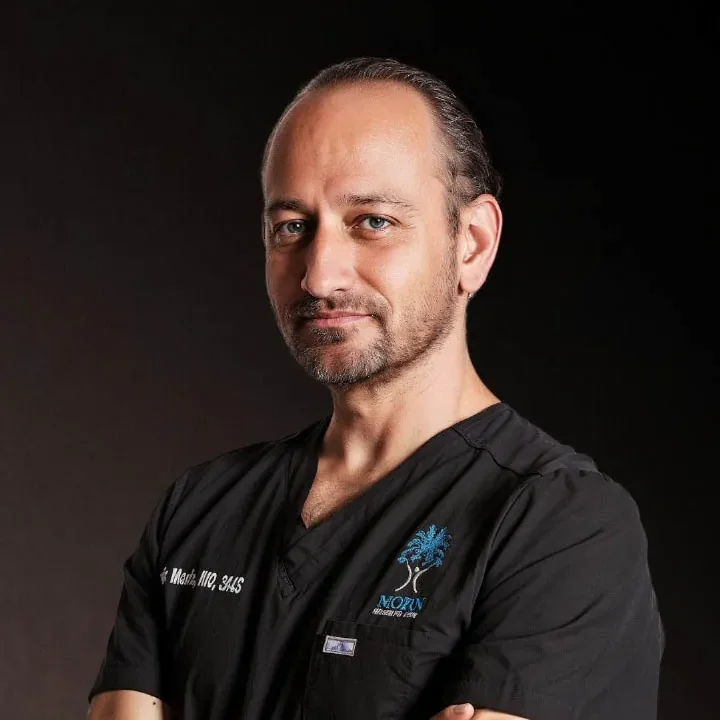
Dr.Babak Moeinolmolki
LA Cosmetic Surgeon Dr. Moein is board-certified by the American Board of General Surgery.