

Table of Contents
- How long does swelling last after gynecomastia surgery?
- Why does the chest swell after gynecomastia surgery?
- Is it normal for one side to be more swollen than the other?
- What does the compression vest actually do for swelling?
- How can I reduce swelling faster?
- When is swelling a sign of a problem?
- When will I see the final result?
- What to do next
Swelling after gynecomastia surgery peaks in the first three to five days, improves noticeably by the end of week two, and keeps settling for three to six months. The chest you see in the first week is not the result. It is the chest plus fluid, and the fluid takes time to leave.
Patients ask about swelling more than they ask about pain, and for good reason. Pain fades in days. Swelling changes what the chest looks like for months, and it is the main reason men second-guess their outcome too early.
How long does swelling last after gynecomastia surgery?
Swelling after gynecomastia surgery is most pronounced during days three to five, drops substantially over the first two weeks, and then resolves gradually over three to six months. Most men look presentable in a shirt by two weeks. The final contour, particularly around the areola and the lower chest border, is not reliable until at least three months.
The timeline is not identical from patient to patient. Larger glands, more liposuction, thicker skin, and any bleeding under the skin all extend it. Men who follow the compression and activity instructions closely tend to sit at the shorter end. The broader gynecomastia surgery recovery timeline places swelling alongside the other milestones, but swelling is the milestone that lags furthest behind the others.
| Timeframe | What the swelling is doing | What you should notice |
|---|---|---|
| Days 1 to 2 | Building. Tissue trauma triggers fluid leak into the operated area. | Chest feels tight and heavy. Bruising begins to show. |
| Days 3 to 5 | Peak. Inflammation is at its maximum. | Chest may look larger than before surgery. This is expected. |
| Week 2 | Falling. Roughly half or more of the acute swelling is gone. | Shape starts to emerge. Firmness under the skin is normal. |
| Weeks 3 to 6 | Residual. Deeper tissue swelling and firmness remain. | Chest may be uneven day to day, worse in the evening. |
| Months 3 to 6 | Resolving. Remaining fluid clears and scar tissue softens. | Contour flattens and settles. Near-final result. |
Why does the chest swell after gynecomastia surgery?
The chest swells after gynecomastia surgery because gland excision and liposuction disrupt blood vessels and lymphatic channels under the skin, and fluid leaks into the space where tissue was removed. The body responds with inflammation, which adds more fluid. That combination produces the tightness, puffiness, and heaviness men feel in the first week.
Liposuction contributes more than most people expect. The cannula passes through the fat layer repeatedly and leaves a network of small tunnels behind it. Those tunnels fill with fluid. VASER energy adds heat to that layer. Excision of the gland leaves a pocket directly under the areola that fluid finds easily. Our comparison of VASER liposuction versus gland excision explains why the two techniques are usually combined, and the combination is also why swelling is spread across the whole chest rather than confined to the nipple.
Lymphatic drainage is the slow part. Lymph vessels are fine and easily disrupted, and they re-route over weeks rather than days. Until they do, fluid that would normally drain out of the chest sits there. That is the reason swelling can linger long after bruising has vanished.
Is it normal for one side to be more swollen than the other?
Uneven swelling after gynecomastia surgery is normal in the first several weeks. One side may have had more gland, more liposuction, or a small amount of bleeding, and each of those produces more fluid on that side. Asymmetry during recovery does not predict asymmetry in the final result.
The pattern to pay attention to is change rather than difference. Two sides that are both slowly shrinking at different rates are fine. One side that is suddenly larger, tighter, more painful, or discolored is a different situation. Sudden one-sided enlargement in the first 48 hours can mean a hematoma after gynecomastia surgery, and a soft, sloshing collection that appears after the first week is more typical of a seroma. Both are treatable, and both are easier to manage early.
Men also notice that swelling is worse in the evening and better in the morning. Gravity and activity push fluid into the chest during the day, and lying flat overnight lets it drain. That daily rhythm is expected and fades as the lymphatics recover.
What does the compression vest actually do for swelling?
The compression vest reduces swelling after gynecomastia surgery by applying even pressure across the chest, which limits how much fluid can collect in the space left by the removed tissue and encourages the skin to adhere to the muscle underneath. It also reduces the sloshing and shearing that can reopen small vessels.
Most patients wear it around the clock for the first few weeks and then for part of the day for several more. The exact schedule depends on the amount of tissue removed and how the skin is contracting. The compression vest guide covers fit, wear time, and the mistakes that undo its benefit, the most common of which is taking it off early because the chest “looks fine.” The vest is doing its most important work precisely when the chest looks fine, because that is when the deep tissue is still settling.
How can I reduce swelling faster?
Swelling after gynecomastia surgery resolves faster with consistent compression, sleeping with the upper body elevated, walking daily, limiting salt, staying hydrated, and avoiding upper-body exertion, heat, and alcohol during the early weeks. None of these shortcuts the process, but together they keep it at the short end of the normal range.
Elevation matters more than people expect. Sleeping on the back with the head and chest propped up lets fluid drain overnight instead of pooling. Our guide on how to sleep after gynecomastia surgery covers positioning in detail. Walking moves lymph. Heavy lifting, chest workouts, and anything that raises blood pressure in the chest push fluid back in and can restart bleeding, which is why the return to training is staged rather than immediate. Read working out after gynecomastia surgery before touching a barbell.
Heat is worth calling out separately. Hot showers, saunas, and hot tubs dilate blood vessels and increase swelling. Warm rather than hot water is fine once the incisions are sealed. Ice on the chest is not recommended without guidance, because numb skin over the operated area cannot warn you of cold injury.
Lymphatic drainage massage is sometimes suggested after liposuction. It can help once the incisions are healed and any hematoma or seroma risk has passed, but it is not a first-week activity, and it should only be done by someone who understands post-surgical tissue. Vigorous massage on a fresh chest does harm.
When is swelling a sign of a problem?
Swelling after gynecomastia surgery needs prompt evaluation when it increases suddenly, involves only one side, is accompanied by rising pain, spreading redness, warmth, fever, or drainage from an incision, or when the skin becomes tense and shiny. These signs point to bleeding, fluid collection, or infection rather than normal healing.
Normal swelling is symmetric or mildly uneven, peaks by day five, and then trends downward. It is tender but not increasingly painful. Anything that reverses that trend after the first few days deserves a call the same day. Firm lumps that appear in the weeks afterward are usually organizing scar tissue after gynecomastia surgery, which softens over months, but a new lump is still worth having examined so that a seroma or a missed piece of gland is not mistaken for scar.
General post-operative warning signs are outlined by MedlinePlus, and the practice’s own gynecomastia aftercare instructions list the specific thresholds for calling the office.
When will I see the final result?
The final result after gynecomastia surgery is usually visible at three to six months, once swelling has cleared and the skin has contracted to the new contour. Men with thick skin, larger reductions, or a longer swelling course may continue to see refinement out to a year.
The mistake is judging the outcome at two or four weeks. At that point the chest is still carrying fluid, the areola may look puffy from residual swelling beneath it, and the lower chest fold may look fuller than it will. Nearly every man who worries at week three is reassured by month three. Comparing your own chest at intervals, in the same light and the same position, is far more useful than comparing week three to a photo of someone else’s month six. The before and after gallery shows results at the point where swelling has resolved, which is the fair comparison.
A published overview of gynecomastia management in the NCBI Bookshelf notes that surgical outcomes are assessed after healing is complete, not during the inflammatory phase, and that is the standard we use in the clinic.
What to do next
If you are in the first weeks after surgery and the chest looks bigger than you hoped, the most likely explanation is fluid, and the most useful action is to keep the compression on, keep walking, and keep the follow-up appointments. If swelling is increasing, one-sided, or painful, contact the office the same day rather than waiting for the next scheduled visit.
If you are still deciding on surgery and want to understand what recovery involves before committing, a consultation covers the expected swelling course for your particular chest and technique. Dr. Babak Moeinolmolki, MD, FACS, is double board-certified through the American Board of Cosmetic Surgery (ABCS) and the American Board of General Surgery, and has performed gynecomastia surgery in Los Angeles for many years. Any surgeon’s certification can be verified independently through the certifying board’s public directory.
Contact the practice to arrange a consultation.
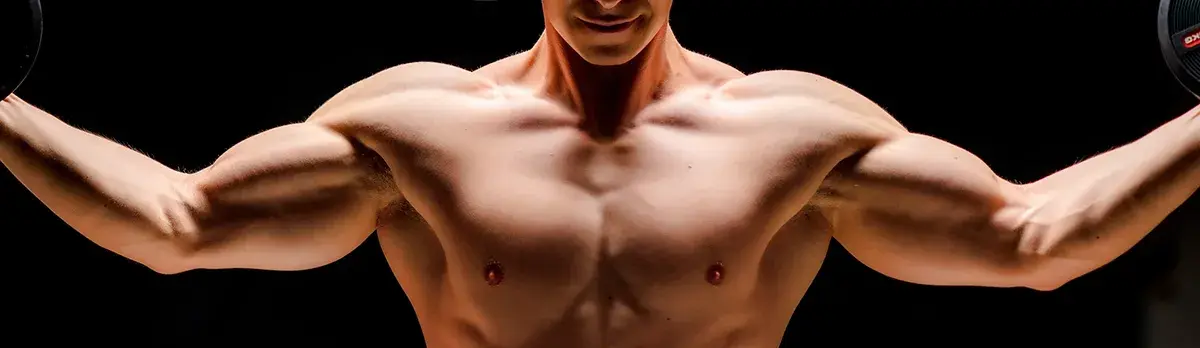
* Illustrative images on this page are models, not actual patients. Real patient results are shown in our Before & After gallery.
Dr.Babak Moeinolmolki
LA Cosmetic Surgeon Dr. Moein is board-certified by the American Board of General Surgery.