


Table of Contents
When men start researching how to fix a puffy or enlarged chest, two terms come up again and again: liposuction and gland excision. It is easy to assume they are competing options, as if you have to pick one. In reality they solve two different problems, and for most men with genuine gynecomastia the best result comes from using them together. Understanding what each technique actually does will help you make sense of your consultation and know what to ask.
Two different problems, two different tools
A male chest that looks enlarged is usually made of two ingredients in some combination: fat and glandular breast tissue. Fat is soft and spreads across the chest. Glandular tissue is firm and fibrous, and it tends to sit as a dense disc directly beneath the nipple and areola. Gynecomastia, the medical term for enlarged male breast tissue, involves that glandular component specifically. According to StatPearls from the National Library of Medicine, gynecomastia is a benign proliferation of the glandular tissue of the male breast, distinct from the fatty enlargement often called pseudogynecomastia (see the NIH StatPearls overview of gynecomastia).
This matters because fat and gland respond to entirely different tools. Liposuction is built to remove fat. It is not designed to cut out dense fibrous gland. Excision is built to remove that gland directly. Trying to treat one problem with the wrong tool is the single most common reason men end up unhappy or needing revision.
What VASER liposuction does
Liposuction removes fat through a thin tube called a cannula, inserted through tiny incisions. VASER liposuction of the chest adds an important refinement. VASER stands for a form of ultrasound-assisted liposuction, which uses sound energy to loosen and emulsify fat before it is suctioned out. For the male chest this offers a few real advantages:
- It targets fat more selectively while being gentler on surrounding tissue, blood vessels, and nerves.
- It handles the firmer, more fibrous fat of the male chest better than traditional liposuction alone.
- It allows finer sculpting around the borders of the chest, so the result blends into the natural contour rather than looking scooped or flat.
What liposuction cannot reliably do is remove true glandular tissue. Gland is simply too dense and fibrous to be broken up and suctioned the way fat is. If a chest that has real glandular gynecomastia is treated with liposuction alone, the soft fat comes off but the firm disc under the nipple often stays behind. That is how you end up with a chest that is flatter overall yet still has a stubborn puffy nipple.
What gland excision does
Gland excision is the direct surgical removal of the firm breast tissue. It is typically performed through a small incision placed along the lower edge of the areola, where the color change helps camouflage the scar. Through that access the surgeon removes the fibrous gland that liposuction leaves behind.
This is the step that truly addresses gynecomastia. Because glandular tissue does not respond to weight loss, exercise, or liposuction, excision is the only reliable way to eliminate it. A careful surgeon leaves a thin, even layer of tissue beneath the nipple rather than removing everything, which prevents a hollowed or unnaturally sunken look known as a saucer deformity. The goal is a flat, natural chest, not a scooped one.
Why most true gynecomastia needs both
Here is where the two techniques come together. Most men do not have pure fat or pure gland. They have a firm gland surrounded by a rim of softer fat. If you only remove the gland, the leftover fat can still leave the chest looking full. If you only remove the fat, the gland still projects as a puffy nipple. Combining excision and liposuction addresses both layers in one operation:
- Excision removes the dense gland that creates the puffy, protruding look.
- VASER liposuction removes and sculpts the surrounding fat so the chest transitions smoothly into the sides and lower border.
This combined approach is considered the standard for comprehensive correction, and it is a core part of modern gynecomastia surgery. The American Society of Plastic Surgeons notes that male breast reduction may use liposuction, tissue excision, or both depending on the makeup of the chest (see the ASPS overview of gynecomastia surgery). The right recipe is decided at your exam, based on how much of your chest is gland versus fat and on your skin quality.
What about scarring?
Scarring is one of the top concerns men raise, and it is a fair question because the two techniques differ here.
Liposuction incisions are tiny, often just a few millimeters, and are usually placed in hidden spots so they fade to near invisibility over time. Gland excision requires a slightly longer incision, but placing it at the border of the areola lets the natural change in skin color and texture disguise it. In experienced hands the mature scar is typically discreet.
How a scar heals also depends on you: your genetics, your skin type, whether you smoke, and how closely you follow aftercare. Wearing your compression garment, protecting the incisions, and avoiding activities that stress the healing tissue all help. If you want a fuller breakdown of incision placement and healing, our gynecomastia surgery scars guide walks through it in detail.
Recovery: what to expect
Recovery from a combined procedure is generally very manageable, and most men are pleasantly surprised by how quickly they feel like themselves. A typical timeline looks something like this, though your surgeon will give you instructions specific to your case:
- First week: Expect swelling, some bruising, and mild to moderate soreness that is usually well controlled with prescribed or over-the-counter medication. A compression vest is worn to reduce swelling and support the new contour.
- Weeks two to three: Many men return to desk work within several days and resume light daily activity. Bruising fades and the worst of the swelling settles.
- Weeks four to six: Most patients ease back into exercise, starting with lower body and cardio before progressing to chest work, once cleared.
- Months two to six: Residual swelling continues to resolve and the final contour reveals itself. Scars keep maturing and fading over this period and beyond.
The compression garment is not optional, it does real work: it limits fluid buildup and helps the skin redrape smoothly over the flatter chest. Following that guidance closely has a direct effect on how clean your result looks.
Results and how long they last
One of the reasons men are so satisfied with this surgery is that the results are durable. Once glandular tissue is removed, it does not grow back. The fat that is suctioned is gone as well. As long as your weight stays relatively stable and you avoid substances that can retrigger gynecomastia, such as certain anabolic steroids, the correction is generally permanent.
The quality of the result depends heavily on technique and judgment: how much gland to leave under the nipple, how to feather the liposuction into the natural chest, and how to keep both sides symmetric. This is why choosing an experienced surgeon matters more than any single tool or brand name. Your procedure is performed by Dr. Babak Moeinolmolki, MD, FACS, a double board-certified cosmetic surgeon certified by the American Board of Surgery and the American Board of Cosmetic Surgery.
Which approach is right for you?
The only way to know your exact plan is an in-person evaluation, because it comes down to what your chest is actually made of. A man whose fullness is almost entirely soft fat may do beautifully with VASER liposuction alone. A man with a firm disc under the nipple will need excision to truly correct it. Most fall in the middle and benefit from both.
Cost follows the plan. A combined excision and liposuction procedure differs from liposuction on its own, and factors like the complexity of your case and whether skin tightening is added all play a role. Rather than quote a number that may not fit your situation, we review everything at consultation and lay out financing options so the path forward is clear. If active weight reduction is still part of your goals, a supervised medical weight loss program can set the stage before contouring. And for men who want to refine the whole physique rather than just the chest, male-exclusive body sculpting offers a comprehensive plan.
Frequently Asked Questions
What is the difference between VASER liposuction and gland excision?
VASER liposuction uses ultrasound energy to loosen and remove fat and to sculpt the chest contour. Gland excision is the direct surgical removal of firm glandular breast tissue that liposuction cannot break down. Liposuction treats the fatty component, while excision treats the true gynecomastia.
Can gynecomastia be fixed with liposuction alone?
Only if the enlargement is caused almost entirely by fat. When firm glandular tissue is present, liposuction alone tends to leave the dense disc under the nipple behind, which can result in a persistent puffy nipple. Most men with true gynecomastia need excision in addition to liposuction.
Why do most men need both procedures?
Most enlarged male chests contain both a firm gland and surrounding soft fat. Excision removes the gland that creates projection, and liposuction removes and smooths the fat so the chest blends naturally. Using both in one operation addresses both layers for a flatter, more even result.
How noticeable are the scars?
Liposuction incisions are only a few millimeters and are placed in hidden areas. Gland excision uses a slightly longer incision at the edge of the areola, where the natural color change helps conceal it. With good technique and diligent aftercare, mature scars are usually discreet, though healing varies by individual.
How long is recovery after combined gynecomastia surgery?
Many men return to desk work within several days and to light activity within a week or two. Exercise typically resumes around four to six weeks, with chest work added last once cleared. Swelling continues to settle over the following months as the final contour appears. A compression garment is worn throughout the early phase.
Will the gynecomastia come back after excision?
Glandular tissue that is removed does not grow back, so the correction is generally permanent. Significant weight gain or the use of substances that can trigger gynecomastia, such as certain steroids, may cause new changes. Maintaining a stable weight helps protect your result.
Is VASER better than traditional liposuction for the chest?
VASER is well suited to the male chest because it handles firmer, fibrous fat and allows finer sculpting while being gentler on surrounding tissue. Whether it is the right choice for you depends on your anatomy and goals, which your surgeon will assess during your consultation.
How do I know whether I need excision, liposuction, or both?
It depends on how much of your chest is gland versus fat, which is determined by a physical exam. Firm tissue under the areola points toward excision, while soft, diffuse fullness points toward liposuction. Many men have a mix and benefit from a combined approach tailored at their evaluation.
* Illustrative images on this page are models, not actual patients. Real patient results are shown in our Before & After gallery.
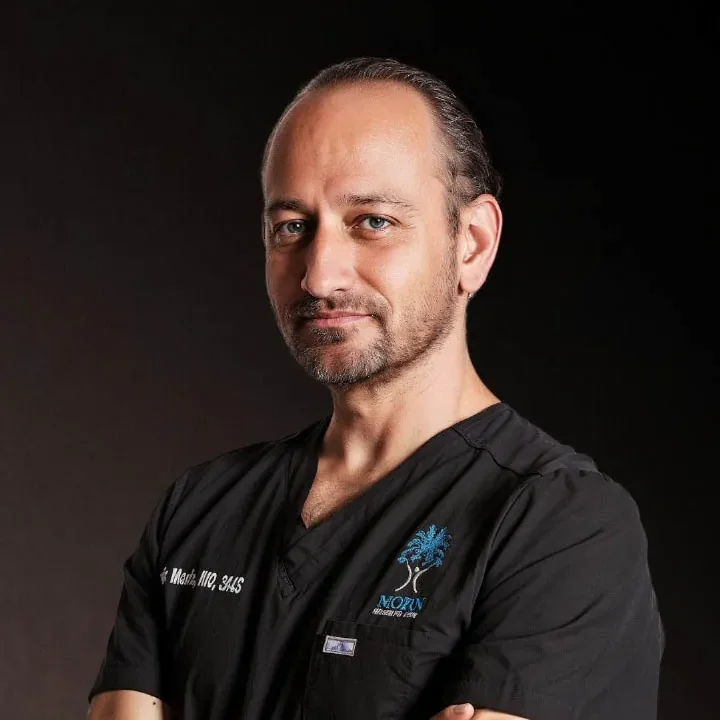
Dr.Babak Moeinolmolki
LA Cosmetic Surgeon Dr. Moein is board-certified by the American Board of General Surgery.