

Table of Contents
- Does Gynecomastia Go Away on Its Own?
- Pubertal Gynecomastia vs. Persistent Gynecomastia
- True Gland vs. Chest Fat: How to Tell the Difference
- Why Diet and Exercise Often Do Not Resolve True Gland
- What Causes Gynecomastia in the First Place
- What Actually Works
- When Surgery Is the Answer
- Frequently Asked Questions
- About Dr. Babak Moeinolmolki, MD
Does Gynecomastia Go Away on Its Own?
Sometimes, but not usually. Gynecomastia that appears during puberty often resolves on its own within six months to two years as hormones settle. Once the enlarged tissue has been present in an adult man for more than a year, it rarely disappears without treatment, because the glandular tissue becomes fibrous and permanent. Weight loss and exercise may help if the issue is chest fat, not true gland.
That short answer hides a lot of nuance, and the nuance is exactly what determines whether you should wait, change a habit, adjust a medication, or consider a procedure. Below is a plain, honest breakdown of what actually resolves, what does not, and how to tell the difference for your own chest.
Pubertal Gynecomastia vs. Persistent Gynecomastia
The single biggest factor in whether gynecomastia goes away is your age and how long the tissue has been there.
Why teenage gynecomastia often resolves
During puberty, a boy’s body produces a surge of hormones, and for a window of time estrogen activity can briefly outpace testosterone. That imbalance can stimulate a small amount of breast tissue, which is why many adolescent boys develop tender, firm swelling under one or both nipples. According to StatPearls, published by the National Library of Medicine, pubertal gynecomastia regresses on its own in the majority of cases as hormone levels normalize. For most boys this happens within about six months to two years.
So if you are a teenager and the swelling appeared recently, patience is often the right first move. A medical check is still worth it to rule out other causes, but surgery is usually not the first conversation.
When it becomes persistent
The problem is that the clock does not run forever. When gynecomastia has been present for roughly twelve months or more, the tissue tends to shift from soft and inflammatory to firm and fibrous. At that stage it behaves like a fixed structure rather than something your body is still actively adjusting. This is called persistent, or established, gynecomastia, and it is the version that most adult men are dealing with when they search for answers. Persistent gynecomastia does not reliably respond to waiting, weight loss, or hormonal changes, because the gland itself is now a permanent fixture.
True Gland vs. Chest Fat: How to Tell the Difference
Before you decide whether anything will “go away,” you have to know what you are actually dealing with. Two very different conditions look similar in a shirt.
- True gynecomastia is enlargement of the glandular breast tissue. You can often feel a firm, rubbery, disc-shaped button directly under the nipple and areola. It can be tender, and it does not shrink much with weight loss.
- Pseudogynecomastia is simply excess fat across the chest, with no significant glandular growth. It is soft and evenly distributed, and it tends to improve when you lose body fat overall.
A quick self-check: lie on your back and press down through the nipple with two fingers. If you feel a distinct firm knot of tissue beneath the areola, that points to true gland. If the chest feels uniformly soft and flattens out, that points more toward fat. Many men have a combination of both, which matters because fat and gland respond to completely different approaches. If you want a deeper look at what is driving your case, our guide to gynecomastia causes walks through each contributor in detail.
Why Diet and Exercise Often Do Not Resolve True Gland
This is the most common source of frustration, and it is worth being direct about. Diet and exercise reduce body fat. They do not remove glandular tissue. If your chest issue is mostly fat (pseudogynecomastia), then losing weight, building the chest, and lowering overall body fat can genuinely improve the look, and that is the right first step.
But if a firm glandular button sits under the nipple, no amount of bench pressing will dissolve it. In fact, two things can happen that make men feel worse after months of effort:
- As the surrounding fat shrinks, the firm gland can become more visible and more pointed, not less.
- Building the pectoral muscle underneath can push the gland forward, making the nipple area project more.
None of this means training is pointless. It means training treats the fat component, and true gland needs a different plan. For the non-surgical options that genuinely move the needle, including addressing an underlying cause, see our overview of gynecomastia treatment without surgery.
What Causes Gynecomastia in the First Place
Gynecomastia is almost always a signal of a shift in the balance between estrogen and testosterone activity. Common drivers include:
- Natural hormone shifts. Puberty and, later, the gradual decline of testosterone with age both change the estrogen-to-testosterone ratio.
- Anabolic steroids and SARMs. These are a frequent cause in gym and bodybuilding circles. Excess testosterone can convert to estrogen in the body, and the chest responds. This often appears during or after a cycle.
- Testosterone replacement therapy (TRT). Even medically supervised TRT can raise estrogen through aromatization if it is not managed carefully, and some men notice chest tenderness or swelling after starting treatment.
- Medications. A long list of drugs can contribute, including certain anti-anxiety medications, some heart and blood pressure drugs, ulcer medications, and a few others. Never stop a prescribed medication on your own, but it is worth reviewing your list with your physician.
- Significant weight gain. More body fat means more aromatase activity, the enzyme that converts testosterone to estrogen, which can both add chest fat and stimulate gland.
- Underlying medical conditions. Thyroid, liver, and kidney issues, and rarely certain tumors, can play a role, which is why a new or one-sided lump should always be evaluated.
The practical takeaway is that if a reversible cause is caught early, removing that cause can sometimes stop progression and, in very early cases, allow partial regression. The authoritative overview from the Cleveland Clinic reinforces that identifying and treating the trigger is the first clinical step.
What Actually Works
Here is the honest hierarchy, from least to most definitive.
1. Address the cause (works best early). If you are on a steroid cycle, SARMs, or poorly managed TRT, working with a physician to correct the hormonal picture is step one. In recent, soft, tender cases, this can reduce tissue or at least halt it before it becomes fibrous.
2. Lose fat if the problem is fat. For pseudogynecomastia, lowering overall body fat is genuinely effective and should be exhausted before considering any procedure.
3. Surgery for established true gland. Once glandular tissue has been present and firm for more than a year, surgery is the only reliable way to remove it. Modern male breast reduction is a refined, targeted procedure, not the aggressive operation many men imagine. Depending on your chest, the plan may combine gland excision through a small incision at the edge of the areola with VASER liposuction and Renuvion skin tightening to flatten the chest and help the skin re-drape smoothly. You can read the full process in our guide to gynecomastia surgery.
Cost is always individual, so rather than quoting a number, we provide a custom quote at your consultation, and financing is available for men who prefer to spread the investment over time.
When Surgery Is the Answer
Surgery tends to be the right call when:
- You can feel a firm glandular button under the nipple that has not changed in a year or more.
- You have already reached a stable, lean body weight and the chest shape still bothers you.
- The appearance affects your confidence, your posture, how you dress, or whether you take your shirt off.
- You have ruled out or corrected reversible causes and nothing has changed.
For men focused on a fully athletic, defined chest and torso after the gland is addressed, broader male body contouring is sometimes part of the conversation, which is where partner practices like Moein Surgical Arts and the men’s chest sculpting resources at XY Sculpt can be useful references.
The goal of a good consultation is not to push you toward an operating room. It is to tell you honestly which category you fall into, whether waiting or a lifestyle change is reasonable, and, if the gland is permanent, exactly what removing it would involve.
Frequently Asked Questions
Can gynecomastia go away without surgery?
Yes, in specific situations. Pubertal gynecomastia often resolves on its own within six months to two years. Recently developed, soft tissue linked to a reversible cause such as a medication or a steroid cycle can sometimes improve once the cause is removed. Established, firm glandular tissue that has been present for more than a year generally does not resolve without surgery.
How long should I wait to see if it goes away on its own?
For teenagers with recent swelling, a window of six months to two years of monitoring is reasonable, ideally with a physician tracking it. For adult men, if a firm gland has been present and unchanged for a year, continued waiting rarely helps and the tissue tends to become permanent.
Will losing weight get rid of my gynecomastia?
It depends on what you have. If your chest fullness is mostly fat (pseudogynecomastia), losing weight can make a real difference. If a firm glandular button sits under the nipple, weight loss will not remove it, and leaning out can sometimes make the gland look more prominent.
Does gynecomastia from steroids or TRT go away?
If caught very early, while the tissue is still soft, correcting the hormonal cause with a physician can sometimes reduce or halt it. Once the tissue has hardened into established gland, it usually requires surgical removal. Never adjust or stop prescribed therapy on your own.
How do I know if it is true gynecomastia or just chest fat?
Press down through the nipple with two fingers while lying down. A distinct firm, rubbery disc under the areola suggests true glandular tissue, while a uniformly soft chest that flattens out suggests fat. Many men have both, and an in-person exam is the most reliable way to confirm.
Is gynecomastia surgery permanent?
When the glandular tissue is removed, it does not grow back. Significant weight gain, new steroid or SARM use, or certain medications can still create new fat or stimulate any residual tissue, so maintaining a stable weight and avoiding known triggers helps keep the result lasting.
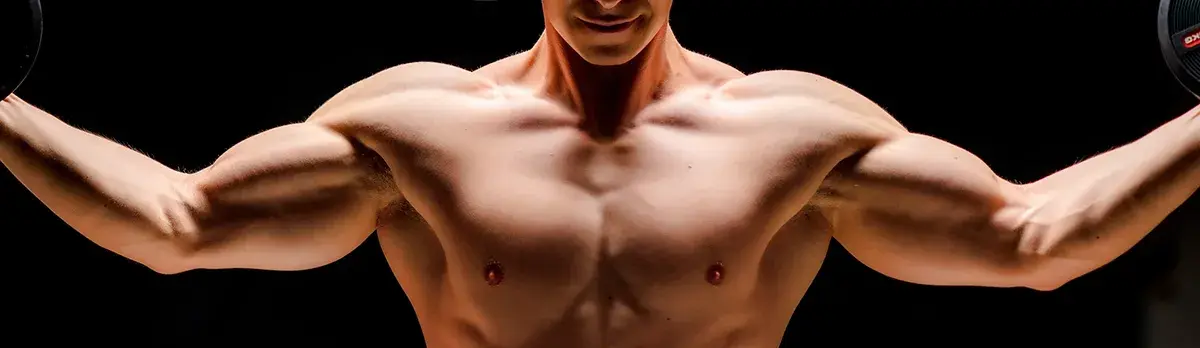
* Illustrative images on this page are models, not actual patients. Real patient results are shown in our Before & After gallery.
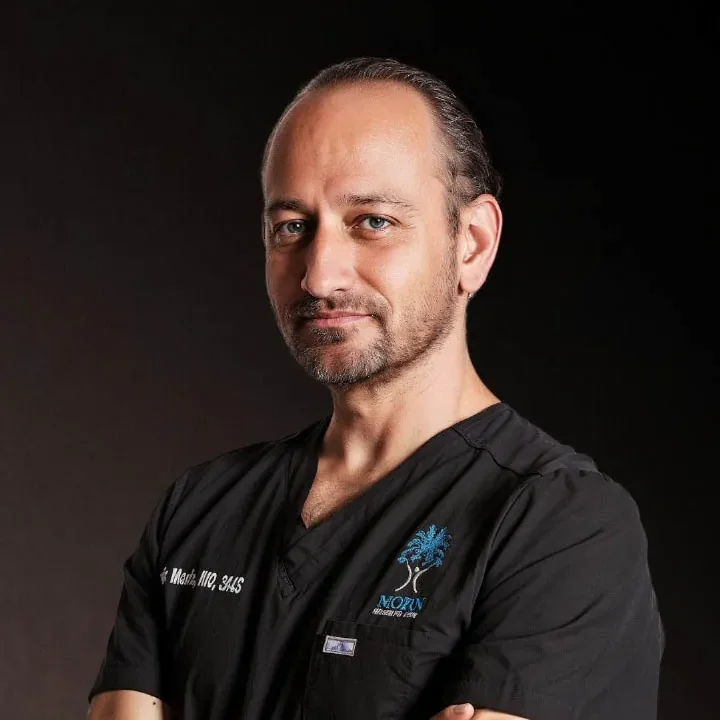
Dr.Babak Moeinolmolki
LA Cosmetic Surgeon Dr. Moein is board-certified by the American Board of General Surgery.