


Table of Contents
- Is Bruising Normal After Gynecomastia Surgery?
- How Long Does Bruising Last After Gynecomastia Surgery?
- Why Does the Bruise Move Down to My Stomach?
- Bruising or Hematoma: How to Tell the Difference
- How Can I Reduce Bruising Before Surgery?
- What Helps Bruising Heal After Surgery?
- When Should I Call My Surgeon About Bruising?
- Recovery With Realistic Expectations
- About the Author
Bruising after gynecomastia surgery is expected, and in most men it is gone within two to three weeks. It usually peaks in the first few days, spreads downward toward the belly and sides, and changes color as it fades. What matters is telling ordinary bruising apart from a collection of blood that needs attention.
Is Bruising Normal After Gynecomastia Surgery?
Bruising is a normal part of recovery after gynecomastia surgery. Liposuction and gland removal both disturb small blood vessels under the skin, and the blood that leaks out shows up as discoloration. Most men have some, the amount varies widely, and on its own it does not mean anything went wrong.
How much you bruise depends on how much tissue was treated, whether liposuction was used across the chest and sides, your skin type, and what was in your system before surgery. Two men with the same operation can look very different on day three. I tell patients to judge their recovery by how the chest feels and whether it is getting better each day, not by the color alone.
How Long Does Bruising Last After Gynecomastia Surgery?
Bruising after gynecomastia surgery usually peaks around days two to four and fades over two to three weeks. It moves through purple and blue to green and then yellow-brown as the body clears the blood. Men who had liposuction over a wider area, or who bruise easily, may see traces a little longer.
| Time after surgery | What bruising typically looks like | What to do |
|---|---|---|
| Days 1 to 4 | Red, purple, or dark blue; may still be spreading | Compression vest on, rest, short walks |
| Days 5 to 10 | Blue fading to green; lower edges may appear on the belly or sides | Keep compression, resume light daily activity |
| Days 10 to 21 | Yellow or brown, patchy, fading | Follow your surgeon’s activity plan |
| After 3 weeks | Faint traces at most | Mention anything persistent at follow-up |
These ranges describe a typical course, not a promise for any one person. The color sequence follows the normal breakdown of blood under the skin, described in the MedlinePlus overview of bruises. The same weeks also carry swelling, which lasts longer than bruising and is covered in swelling after gynecomastia surgery.
Why Does the Bruise Move Down to My Stomach?
Bruising moves down after gynecomastia surgery because gravity pulls the leaked blood through the tissue layers toward the lower chest, belly, and flanks. A bruise that shows up below the chest a few days later is usually old blood from the surgical area, not a new injury.
This surprises a lot of men. They see a clean chest on day two and a yellow patch near the waistband on day six, and they assume something new has happened. It has not. The same thing happens along the sides of the chest when the flanks or armpit area were treated with liposuction.
Bruising or Hematoma: How to Tell the Difference
A bruise is flat discoloration from blood spread thinly through the tissue. A hematoma is a pooled collection of blood that makes the chest swell, feel tight, and often look larger on one side. Bruising fades on its own. A hematoma that is growing needs to be seen by your surgeon the same day.
The signs I want patients to call about are one side of the chest becoming clearly bigger or firmer than the other, pain that is getting worse instead of better, a tense or shiny feel to the skin, or a sudden increase in drain output if you have drains. Hematoma is uncommon, and most occur in the first day or two, but it is the one bruising-related problem that should not wait. It is covered in full in hematoma after gynecomastia surgery.
Fever, spreading redness, warmth, or drainage that looks cloudy points toward infection rather than bruising. Those signs are covered in infection after gynecomastia surgery, and they also call for a same-day phone call.
How Can I Reduce Bruising Before Surgery?
The biggest thing you control is what is in your bloodstream on the day of surgery. Aspirin, ibuprofen and similar anti-inflammatory drugs, fish oil, vitamin E, ginkgo, and several other supplements can make you bleed and bruise more. Your surgeon will give you a list and a stop date.
Do not stop a prescribed blood thinner on your own. If you take one for a heart or clotting condition, that decision has to be made with the doctor who prescribed it. The same goes for anything you are unsure about. Bring the actual bottles to your pre-op visit if that is easier.
Alcohol in the days before surgery can also increase bleeding, and nicotine slows healing in ways that go well beyond bruising. The full preparation checklist is in how to prepare for gynecomastia surgery, and the nicotine question has its own post on nicotine before gynecomastia surgery.
In the operating room, surgeons use several methods to limit bleeding, such as the fluid injected before liposuction and, in some cases, medication given during surgery. Which of these fits your case is a surgical decision, and it is a fair question to ask at your consultation.
What Helps Bruising Heal After Surgery?
Consistent compression, gentle walking, and time do most of the work. The compression vest limits the space where blood and fluid can collect, and walking keeps circulation moving. Heavy lifting, hard workouts, and hot tubs should wait until your surgeon clears them.
Wear the vest as instructed, including at night during the early weeks. Why it matters and how long to wear it are covered in compression vests after gynecomastia surgery. Sleep with your upper body slightly raised in the first days.
Patients often ask about arnica and bromelain. A systematic review in facial plastic surgery found that arnica reduced bruising in many of the studies it examined, while the evidence for bromelain was limited, and dosing varied widely between studies. None of that research was in male chest surgery. If you want to use either, clear it with your surgeon first, because some supplements interact with other medications.
Skip heat on fresh bruises unless your surgeon tells you otherwise, and do not massage an area that is still tender and swollen in the first week. Scar and tissue massage has its place later in recovery, on your surgeon’s schedule.
When Should I Call My Surgeon About Bruising?
Call your surgeon the same day if one side of the chest is swelling, tight, or clearly larger than the other, if pain is increasing rather than easing, or if you have fever, spreading redness, or cloudy drainage. Bruising that is simply colorful but improving each day can wait for your scheduled follow-up.
A bruise that is still dark after three weeks, or a firm lump that stays after the color has faded, deserves a look at your next visit. Sometimes that is a small fluid pocket such as a seroma, and sometimes it is just slower healing. Either way it is easier to sort out in person than online.
Recovery With Realistic Expectations
Most men are surprised by how dramatic the bruising looks and then by how quickly it clears. By the time the color is gone, the chest shape underneath is usually starting to show. Swelling and firmness take longer to settle, which the week-by-week recovery timeline lays out, along with our aftercare instructions.
If you are planning surgery and want to know what your own recovery is likely to look like, book a consultation and we can go through it for your specific case.
About the Author
Dr. Babak Moeinolmolki, MD, FACS is double board-certified through the American Board of Cosmetic Surgery (ABCS) and the American Board of General Surgery, and focuses on male chest surgery in Los Angeles. This article is general education and not medical advice. Follow the recovery instructions from your own surgeon. Patients checking any surgeon’s credentials can confirm board status directly through the certifying board’s public directory.
* Illustrative images on this page are models, not actual patients. Real patient results are shown in our Before & After gallery.
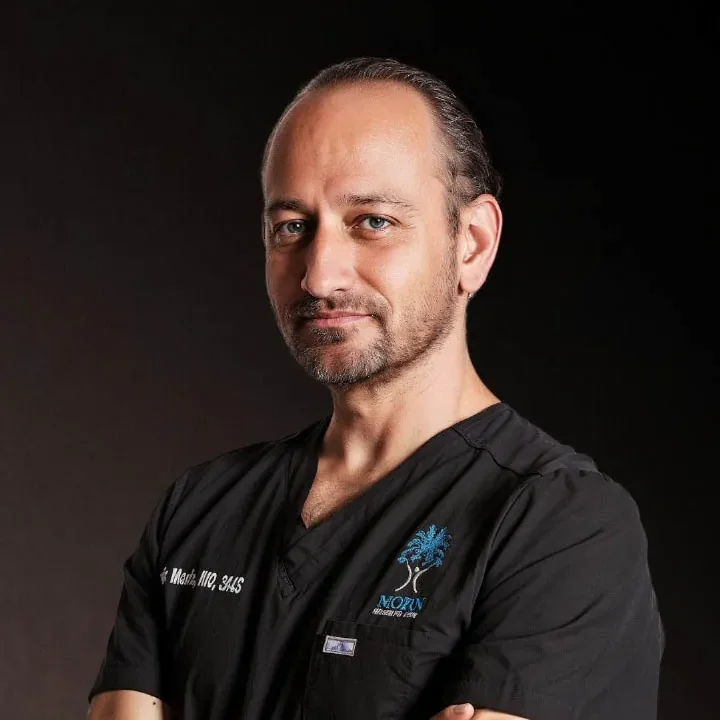
Dr.Babak Moeinolmolki
LA Cosmetic Surgeon Dr. Moein is board-certified by the American Board of General Surgery.