


Table of Contents
- What Is Clomid, and Why Do Men Take It?
- Does Clomid Help Gynecomastia?
- Can Clomid Cause Gynecomastia?
- Clomid Compared With Other Gyno Medications
- Is Clomid Worth Trying Before Surgery?
- Clomid After a Steroid Cycle
- What Side Effects Should Men Watch For?
- When Surgery Is the Answer
- Getting a Straight Assessment
- About the Author
Clomid can shrink gynecomastia in a minority of men, but it is one of the weaker medications for the job, and in some men it makes breast tenderness worse. It raises testosterone by raising the body’s own hormone signals, and estradiol usually climbs along with it. Whether it helps or hurts depends on why you have chest tissue in the first place.
What Is Clomid, and Why Do Men Take It?
Clomid is clomiphene citrate, a selective estrogen receptor modulator approved by the FDA to induce ovulation in women. Men take it off-label to raise testosterone while preserving sperm production, and many take it without any prescription as post-cycle therapy after a course of anabolic steroids.
When a physician prescribes it to a man, it is usually for low testosterone in someone who wants to protect fertility, because it raises testosterone without shutting down sperm production the way injected testosterone can. The MedlinePlus drug information for clomiphene lists the labeled use and side effects.
Clomiphene is a selective estrogen receptor modulator, the same drug family as tamoxifen and raloxifene. It blocks estrogen receptors in the brain. The pituitary reads that as low estrogen and releases more LH and FSH, the hormones that tell the testes to make testosterone. That upstream effect is the whole point of the drug, and it is also the source of the gynecomastia problem.
The other large group of men using it never saw a prescriber. Clomid is a common part of post-cycle therapy after anabolic steroids, usually bought from unregulated sources. I see a steady number of these men in consultation, and their tissue has almost always been growing long before the Clomid started.
Does Clomid Help Gynecomastia?
Clomid helps a small share of men with recent, tender gynecomastia, but results are modest and inconsistent. In the classic study of adolescent boys with persistent gynecomastia, breast size reduction ranged from none to about a third, and several boys still needed surgery. It does nothing for fat, loose skin, or tissue that has already turned fibrous.
That study, published in the Journal of Pediatrics, treated twelve boys for one to three months. Only five had a reduction greater than 20 percent, and five went on to surgical reduction anyway. That is not a result anyone would build a treatment plan around, and it explains why clomiphene sits below tamoxifen in most clinical reviews. The NIH StatPearls review of gynecomastia covers the broader medication picture.
Compare that with tamoxifen for gynecomastia, which blocks estrogen directly at the breast tissue and has a stronger track record in early disease. Clomid works mainly at the brain. Its effect at the breast is weaker and less predictable.
Can Clomid Cause Gynecomastia?
Clomid can trigger or worsen gynecomastia in some men. Because it raises testosterone, it also raises the raw material that aromatase converts into estradiol. Trials in men with low testosterone show estradiol rising on clomiphene, and breast tenderness or a new lump under the nipple is a recognized result.
A 2025 systematic review and meta-analysis of randomized trials in hypogonadal men found that estradiol went up on clomiphene or enclomiphene compared with control. For most men that rise stays in a range that causes no symptoms. For a man with a higher body fat percentage, which means more aromatase activity, or one who already has some glandular tissue, it can be enough to wake the tissue up.
So the same drug is sold online as a gyno fix and shows up in my office as a gyno cause. Both can be true in different men, which is why taking it without labs is a guess.
Clomid Compared With Other Gyno Medications
| Medication | Where it acts | Effect on estradiol | Evidence for gynecomastia |
|---|---|---|---|
| Tamoxifen | Blocks estrogen at breast tissue | May rise, but receptor is blocked | Most consistent, early tissue only |
| Raloxifene | Blocks estrogen at breast tissue | Little change at breast level | Small studies, early tissue only |
| Anastrozole | Reduces conversion to estrogen | Lowers it | Weaker than receptor blockers |
| Clomid (clomiphene) | Mainly at the brain and pituitary | Often rises | Limited and inconsistent |
This table summarizes a thin evidence base made up mostly of small studies. It is a way to understand the mechanisms, not a menu. I have written separately about raloxifene for gynecomastia and anastrozole in men if you want the detail on each.
Is Clomid Worth Trying Before Surgery?
Clomid is rarely the right first medication for gynecomastia. If a prescriber wants to try medication on recent, tender tissue, tamoxifen is the more common choice. If the tissue has been firm and stable for more than a year, no medication, including Clomid, is likely to shrink it.
The deciding factor is time. Gland tissue that appeared in the last few months is still active and hormone-sensitive. After about a year it is replaced by dense fibrous tissue that has no estrogen receptors left to act on. That timeline is explained in how long gynecomastia lasts, and it applies to every drug in the table above.
Where Clomid does make sense is when the real problem is low testosterone and a man wants to keep his fertility. In that setting it is a hormone treatment first, and any change in the chest is a side effect to watch rather than a goal.
Clomid After a Steroid Cycle
Most of the Clomid questions I get come from men finishing a cycle. The logic online goes like this: the cycle shut down natural testosterone, Clomid restarts it, and restarting it will reverse the gyno. The first two parts have some basis. The third usually does not.
By the time a man finishes a cycle and starts post-cycle therapy, gland tissue that grew during the cycle may already be months old. Clomid does not block estrogen at the chest the way the online forums imply, and raising testosterone again can push estradiol back up. The broader picture is covered on our gynecomastia from steroids page and in how to prevent gyno on cycle.
I will say plainly what I say in the exam room. Drugs bought outside a pharmacy may not contain what the label says, and taking a prescription hormone without bloodwork means no one is watching estradiol, blood counts, or vision. If you are in this situation, a real hormone workup is worth far more than another bottle.
What Side Effects Should Men Watch For?
Common side effects of clomiphene in men include breast tenderness, mood changes, headache, and hot flashes. Visual symptoms such as blurring, spots, or flashes of light are a reason to stop and call the prescriber right away. Any new breast lump, especially on one side, needs examination before anyone treats it as gynecomastia.
Men on clomiphene for low testosterone usually have testosterone and estradiol checked at intervals so the dose can be adjusted. If a man on Clomid develops a sore, swelling disc under one or both nipples, that is information for the prescriber, not a sign to add another drug on top. Men already on testosterone therapy face a related question, covered in gynecomastia surgery on TRT.
When Surgery Is the Answer
If gland tissue has been present for more than a year, is firm on examination, or is mixed with fat and stretched skin, medication will not remove it. Surgery removes the gland directly and uses liposuction to reshape the surrounding fat. What is removed does not grow back, although new tissue can still form if the hormonal driver continues, which is why the cause matters even after surgery.
The limits of the non-surgical route are set out in gynecomastia treatment without surgery. For most men I see after a failed trial of Clomid, the question is not whether to try another pill but whether they are ready to deal with the tissue itself.
Getting a Straight Assessment
Gland, fat, and fibrous tissue look alike in the mirror and respond to treatment in completely different ways. A physical exam and, when needed, hormone labs answer in one visit what months of trial and error cannot. If you have been on Clomid and your chest has not changed, or has gotten worse, that is worth a proper look.
You can book a consultation or read more about gynecomastia surgery in Los Angeles.
About the Author
Dr. Babak Moeinolmolki, MD, FACS is double board-certified through the American Board of Cosmetic Surgery (ABCS) and the American Board of General Surgery, and focuses on male chest surgery in Los Angeles. This article is general education and not medical advice. Prescription decisions belong with your treating physician. Patients checking any surgeon’s credentials can confirm board status directly through the certifying board’s public directory.
* Illustrative images on this page are models, not actual patients. Real patient results are shown in our Before & After gallery.
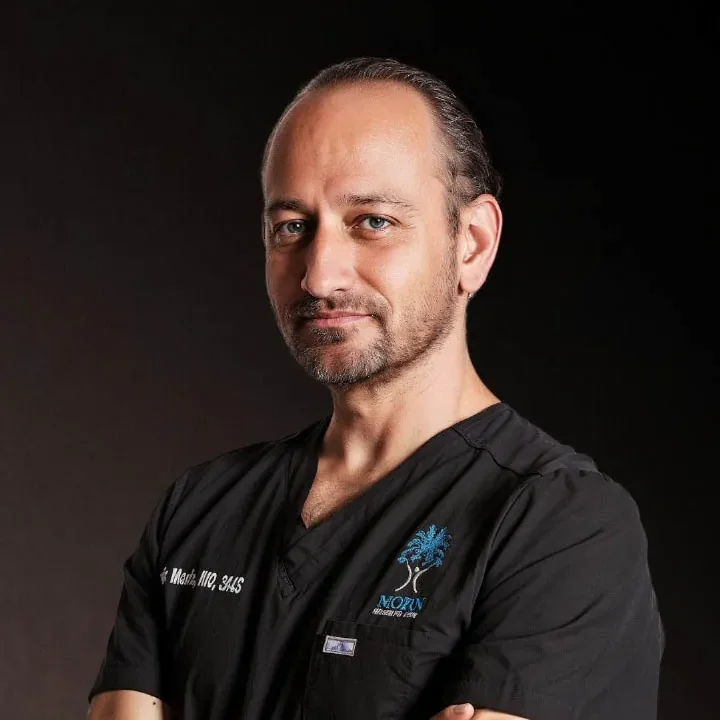
Dr.Babak Moeinolmolki
LA Cosmetic Surgeon Dr. Moein is board-certified by the American Board of General Surgery.