


Table of Contents
- Do you have to stop TRT before gynecomastia surgery?
- Why does TRT cause gynecomastia?
- Get estradiol controlled before you operate
- What should my surgeon know about my TRT protocol?
- Does TRT make gynecomastia come back after surgery?
- Should I wait for my hormones to settle before gynecomastia surgery?
- What surgery involves for a man on TRT
- Practical sequence
- About the surgeon
Most men do not have to come off testosterone replacement therapy to have gynecomastia surgery. TRT is not a contraindication to the operation, and stopping it abruptly creates its own problems. What matters far more is whether your estradiol is controlled, because uncontrolled estradiol is what put the gland there and what can bring it back.
This question comes up constantly in consultations with men on TRT, and the answer patients usually find online is either “stop three months before” or “it does not matter at all.” Neither is right. Here is the actual reasoning.
Do you have to stop TRT before gynecomastia surgery?
No. Testosterone replacement therapy is not a contraindication to gynecomastia surgery, and most men continue their protocol through the operation without modification. The relevant question is whether estradiol is well controlled beforehand, since elevated estradiol is what drives glandular tissue and raises the chance of regrowth after surgery.
Stopping TRT in the weeks before surgery is usually counterproductive. You get the symptoms of withdrawal, fatigue and mood changes and poor sleep, during exactly the window when you need to recover well. Abrupt cessation also does nothing to shrink established glandular tissue, which does not respond to hormonal changes once it has become fibrotic.
Why does TRT cause gynecomastia?
Testosterone converts to estradiol through the enzyme aromatase, which is present in fat and muscle tissue. Add exogenous testosterone and you raise the substrate available for that conversion. Some men aromatize more than others, and men carrying more body fat aromatize more because there is more aromatase-containing tissue to do it.
The StatPearls review of androgen replacement identifies hyperestrogenism as a recognized adverse effect of testosterone therapy and notes that estradiol should be monitored periodically. Gynecomastia is one of the ways that hyperestrogenism announces itself.
Dose and delivery both matter. Supraphysiologic dosing raises estradiol more. So does infrequent large-dose injection, which produces a peak that aromatizes heavily before the level falls. Men on daily or every-other-day protocols often see steadier estradiol than men injecting once weekly at the same total dose. This mechanism is the same one described in the discussion of steroid-induced gynecomastia, at lower doses and under medical supervision.
Get estradiol controlled before you operate
The pre-operative priority for a man on TRT is a sensible estradiol level on a sensitive assay, managed by whoever prescribes his testosterone. That may mean adjusting dose or injection frequency. In some cases it means a low-dose aromatase inhibitor, though these are frequently overused and can push estradiol too low, which carries its own consequences for bone density, libido, and lipids.
A review of aromatase inhibitor use in men on testosterone therapy with elevated estradiol examines how often these agents are prescribed and what the resulting estradiol changes look like. The relevant point for surgical patients is that estradiol should be in range, not floored. The specific agents and their tradeoffs are covered under anastrozole for men.
One thing worth saying plainly: optimizing testosterone does not reverse established gynecomastia. That expectation costs men months of delay. The reasoning is laid out in will increasing testosterone reduce gynecomastia.
What should my surgeon know about my TRT protocol?
Disclose the full protocol, including anything you would rather not mention. Dose, ester, frequency, hCG, aromatase inhibitors, SERMs such as tamoxifen or raloxifene, and any compounds beyond a prescribed TRT protocol. This is a surgical planning conversation, not a judgment.
| Factor | Why it matters surgically |
|---|---|
| Testosterone dose and frequency | Drives estradiol exposure and the recurrence conversation |
| Hematocrit | TRT can raise it. Elevated values may need addressing before an elective procedure. |
| Aromatase inhibitor use | Very low estradiol affects bone, mood, and tissue healing |
| SERM use | Tamoxifen and raloxifene have thromboembolic considerations around surgery |
| Blood pressure | Frequently elevated on TRT and relevant to bleeding risk |
| Sleep apnea | Can worsen on TRT and affects anesthetic planning |
Hematocrit is the item most often missed. Testosterone stimulates erythropoiesis, and a meaningfully elevated hematocrit is worth correcting before an elective operation rather than discovering on pre-operative labs a week out.
Does TRT make gynecomastia come back after surgery?
Surgical removal of glandular tissue is definitive for the tissue that is removed. Remaining breast tissue can respond to a future estrogenic stimulus, which is why recurrence is discussed as a possibility rather than dismissed. Continuing TRT with poorly controlled estradiol is the main way that stimulus persists.
Practically, this means two things. A thorough gland excision matters more in this population than in a man whose gynecomastia came from a one-time exposure. Estradiol management also has to continue after surgery, which is the part men most often let slide once the chest looks right. The tissue-versus-fat distinction that determines technique is explained in gynecomastia surgery in your 40s and beyond.
Should I wait for my hormones to settle before gynecomastia surgery?
Waiting makes sense in a narrow set of cases. If you started TRT within the last several months and the chest changes are recent and tender, some of that is glandular proliferation that may partially settle once estradiol is controlled. Give it three to six months of stable, well-managed hormones and reassess.
Waiting does not help once tissue is established. Gynecomastia that has been present longer than roughly a year tends to be fibrotic, and fibrotic tissue does not regress with hormonal correction. The Endotext chapter on gynecomastia etiology, diagnosis, and treatment describes this progression from a proliferative early phase to a fibrotic later one, and the treatment implication follows from it.
What surgery involves for a man on TRT
The operation itself is unchanged. Gland excision through a periareolar incision, usually combined with liposuction to blend the contour into the surrounding chest. Technique selection follows the tissue, not the hormone history, and the difference between the two components is covered in the recovery timeline.
Recovery expectations are the same as for any other patient. Compression vest for several weeks, desk work within about a week, gym clearance around week six. Lifting is worth flagging for this group specifically, because men on TRT are usually training and usually impatient to get back. Returning to heavy pressing early is a reliable way to provoke swelling.
Two adjustments are worth making around the operation itself. Hold heavy compound lifting for the full six weeks rather than testing the chest at week three, since the pectoral movement underneath the healing plane is what disturbs it. And keep protein and calories up during recovery, because men who cut aggressively while healing tend to have a rougher first month than men who maintain.
One question comes up often enough to answer directly: continuing your injections on schedule through the surgical period is standard unless your surgeon or prescriber says otherwise. There is no reason to skip a dose the week of surgery, and doing so introduces a hormonal trough into the recovery window for no benefit.
Practical sequence
Work with your prescribing physician on estradiol first. Bring recent labs to the surgical consultation, including total and free testosterone, sensitive estradiol, hematocrit, and a lipid panel. Plan roughly six weeks before you are back to full training. Preparation detail is on the how to prepare for gynecomastia surgery page.
Men managing testosterone optimization and body composition together may also want to review the male-focused surgical and vitality options at XY Sculpt.
About the surgeon
Dr. Babak Moeinolmolki, MD, FACS is double board-certified through the American Board of Surgery and the American Board of Cosmetic Surgery (ABCS), and practices in Los Angeles with a focus on male chest contouring. Nothing here is a substitute for individual medical advice, and decisions about testosterone therapy belong with the physician prescribing it. When evaluating any surgeon, verify certification directly with the board listed on their profile.
* Illustrative images on this page are models, not actual patients. Real patient results are shown in our Before & After gallery.
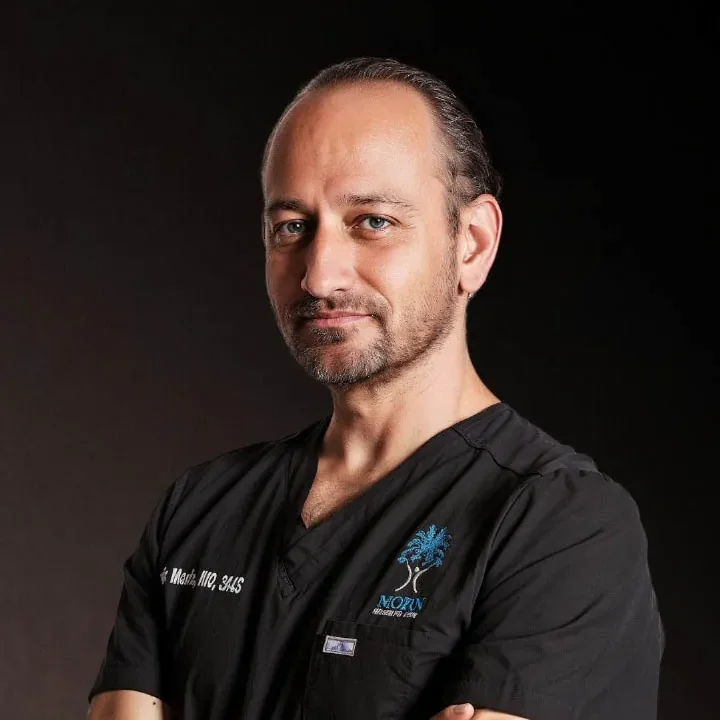
Dr.Babak Moeinolmolki
LA Cosmetic Surgeon Dr. Moein is board-certified by the American Board of General Surgery.