


Table of Contents
Half the men in my Los Angeles gynecomastia practice are over 40, and many of them arrive apologetic — as if chest surgery were something they should have handled at 25 or forfeited forever. Neither is true. Gynecomastia in your 40s, 50s, and 60s is common, has its own distinct set of causes worth investigating, and responds beautifully to surgery — provided the operation is planned for a 50-year-old chest rather than a 25-year-old one. Here’s what genuinely changes with age, and what doesn’t.
Why Gynecomastia Shows Up (or Comes Back) After 40
Male breast tissue answers to the estrogen-to-testosterone balance, and midlife tilts that ratio from several directions at once. Testosterone declines gradually — roughly 1 percent per year after 40 — while body fat, which converts testosterone to estrogen through the aromatase enzyme, tends to rise. The result: a hormonal environment progressively friendlier to gland growth, which is why the NIH’s StatPearls review of gynecomastia describes a second major incidence peak in older men. Stack on the midlife medication list — and several common prescriptions are known contributors — and it’s no mystery that a chest that behaved for four decades suddenly doesn’t. The practical upshot: gynecomastia appearing fresh after 40 deserves a cause hunt before a scalpel, not instead of one.
The Medication and Health Checklist Worth Running
Before we plan surgery, we look at what’s feeding the gland. The usual suspects I screen for: spironolactone (blood pressure), finasteride (prostate and hair loss), certain acid reducers and antidepressants, anabolic steroids and — increasingly relevant — testosterone replacement therapy itself, which can aromatize into estrogen and enlarge the gland it was supposed to defend against. Alcohol and liver health matter; so do thyroid and kidney function, and rarely a hormone-secreting tumor, which is why unexplained new gynecomastia in an older man gets labs, not a shrug. Two honest caveats temper the checklist: switching a culprit medication (with your prescriber’s blessing) helps most when the gynecomastia is young, because gland that has been present beyond roughly a year is typically fibrotic and no longer shrinks when the trigger is removed — and one-sided, firm, or nipple-discharging tissue in older men warrants a breast cancer workup first. Male breast cancer is rare but real, and distinguishing it is part of a specialist’s exam.
How Age Changes the Operation Itself
| What changes with age | Typical at 25 | Typical at 50+ | How I adapt the gynecomastia surgery |
|---|---|---|---|
| Skin elasticity | Excellent — snaps back | Reduced — redraping is slower, less complete | Renuvion skin tightening; excision patterns when needed |
| Tissue mix | Often gland-dominant | More mixed gland + fat, often fibrotic | VASER lipo + direct gland excision together |
| Health screening | Minimal | Cardiac, medication, and lab review | Pre-op clearance; anesthesia plan matched to health |
| Recovery pace | Fast | Modestly slower; swelling lingers longer | Same protocol, gentler timeline expectations |
| Result ceiling | High | Still high — with the right skin plan | Honest preview of skin outcomes at consult |
The single biggest difference is skin. A 25-year-old’s envelope shrink-wraps over the new contour almost automatically; a 55-year-old’s needs help. That’s why I lean on Renuvion skin tightening for borderline elasticity — plasma energy contracts the tissue from the inside during the same operation — and why men with significant laxity, especially after major weight loss, get a candid conversation about excision patterns and their scars up front. Planned honestly, older chests get results that stand next to anyone’s; planned like a young man’s chest, they get loose skin over a flat chest, which is a trade nobody asked for.
Safety, Anesthesia, and Recovery After 40
Age alone is not a contraindication — I operate on healthy men in their 60s and 70s — but the pre-op process earns its keep: medication review, cardiac history, labs, and clearance when indicated. Anesthesia choice flexes with health and anatomy: smaller corrections in healthy men do beautifully under local tumescent anesthesia via my awake protocol, while larger corrections with skin work run under general anesthesia at my AAAHC-accredited suite. Recovery runs the standard course — compression vest for several weeks, desk work within about a week, chest training cleared around week 6 — just with modestly longer swelling tails than younger patients see, per the same milestones in the American Society of Plastic Surgeons’ gynecomastia overview. The gynecomastia in older men page covers my full approach for this group.
Frequently Asked Questions
Am I too old for gynecomastia surgery at 50 or 60?
No. Health, not age, decides candidacy — I regularly operate on men in their 50s, 60s, and beyond after appropriate screening. The operation is adapted for skin elasticity and tissue quality, and results in properly planned older patients are excellent.
Can TRT (testosterone therapy) cause gynecomastia?
Yes — supplemental testosterone can convert to estrogen via aromatase and enlarge the gland. Managing the protocol with your prescriber sometimes helps early on, but established fibrotic gland typically needs excision regardless of hormone adjustments.
Will stopping the medication that caused it fix my gynecomastia?
Only if the tissue is young. Gland present for less than a year sometimes regresses after the trigger is removed; beyond that, it becomes fibrotic and permanent. That’s why long-standing gynecomastia is a surgical conversation even when the cause is found.
How do I know it’s gynecomastia and not something serious?
Gynecomastia is typically bilateral, centered under the areola, and rubbery. One-sided, hard, fixed tissue — or any nipple discharge or skin change — warrants a breast cancer workup first. A specialist exam distinguishes the two, and older men should never skip that step.
Will my skin tighten after surgery at my age?
Partially on its own, and substantially better with help. Renuvion tightening during surgery improves contraction in borderline skin; significant laxity may need excision for a crisp result. An honest elasticity assessment at consult predicts your outcome before anything is scheduled.
Is recovery harder for older men?
Modestly — swelling resolves more slowly and final contour takes a little longer to declare itself, but the milestones match younger patients: desk work in about a week, vest for several weeks, gym clearance around week 6. Health optimization before surgery smooths the whole curve.
The Bottom Line
Gynecomastia after 40 is common, explainable, and very fixable — the operation just has to respect what four or five decades do to hormones, medications, and skin. Investigate the cause, plan the skin, and the result belongs in anyone’s before-and-after book. If you’ve carried this since your 30s or watched it arrive with a new prescription, both stories end the same way — with an exam: book a confidential consultation or call (310) 455-8020.
—
**Connected:** [[20 Areas/Marketing/Blog Editorial Calendar/_README|Blog Editorial Calendar]] · [[10 Projects/Blog Publishing Pipeline — 2026/00 README|Blog Publishing Pipeline]]
* Illustrative images on this page are models, not actual patients. Real patient results are shown in our Before & After gallery.
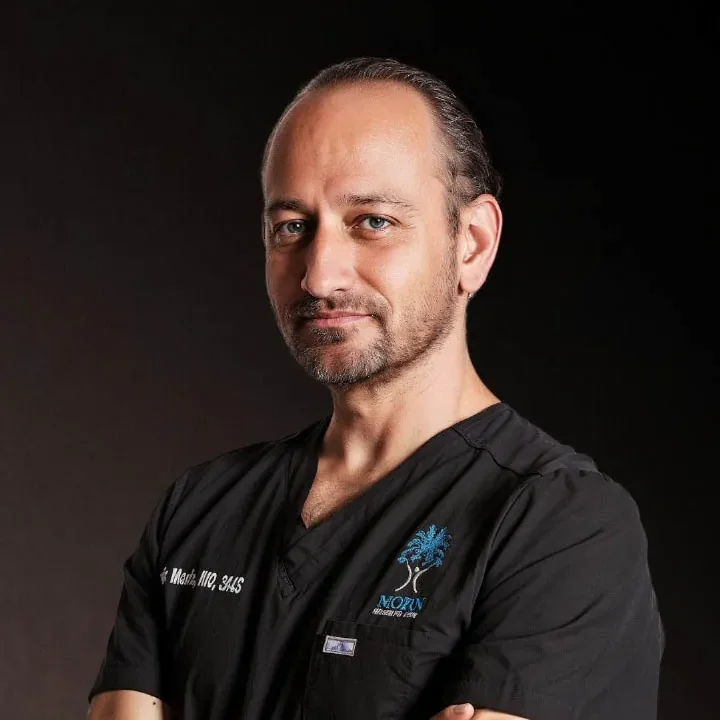
Dr.Babak Moeinolmolki
LA Cosmetic Surgeon Dr. Moein is board-certified by the American Board of General Surgery.