


Table of Contents
- Can HIV medication cause gynecomastia?
- Which HIV medications are linked to gynecomastia?
- Is it gynecomastia or lipodystrophy?
- How common is gynecomastia on efavirenz?
- Will gynecomastia go away if I switch HIV medications?
- Other causes to check in men living with HIV
- Can men with HIV have gynecomastia surgery?
- Timing surgery after a medication change
- What to do next
Yes, some HIV medications can cause gynecomastia, and efavirenz is the one most often linked to it. In most reported cases the breast tissue shrank after efavirenz was replaced with another drug. Not every full chest in a man on HIV treatment is gynecomastia, though. Fat redistribution from older drugs can look similar and needs a different plan.
I am Dr. Babak Moeinolmolki, a surgeon double board-certified by the American Board of General Surgery and the American Board of Cosmetic Surgery (ABCS), and I treat gynecomastia in Los Angeles. Men living with HIV often wait a long time before bringing up chest changes, sometimes because they worry about stopping treatment, sometimes because they do not want to discuss their status with another doctor. Your consultation is private, and the goal is to fix the chest without putting your HIV care at risk.
Can HIV medication cause gynecomastia?
HIV medication can cause true gynecomastia, which is growth of glandular breast tissue under the nipple. Efavirenz, a drug used in older first-line regimens, has the strongest link. The tissue usually appears within the first year or two of treatment and often improves after a switch, which is a decision you make with your HIV physician.
Gynecomastia happens when estrogen action in breast tissue outweighs androgen action (PubMed 25112235). A report of five men with efavirenz-associated gynecomastia proposed two possible mechanisms: an estrogen-like effect of the drug on breast tissue, and changes tied to immune recovery (PubMed 15125753). The exact cause is still not settled.
Which HIV medications are linked to gynecomastia?
Efavirenz has the most evidence behind it. A large evidence review of drug-induced gynecomastia listed efavirenz among medications probably associated with the condition. Other antiretrovirals appear in scattered case reports, but the evidence for them is weaker. Older nucleoside drugs are more often tied to fat redistribution than to true gland growth.
The review, from the endocrinology division at Cedars-Sinai, graded each reported drug by the quality of evidence and placed efavirenz in its “probable” group (PubMed 22862307). Many men have since been moved to newer regimens. In one published case, a man whose gynecomastia appeared on a tenofovir, efavirenz, and emtricitabine combination was switched to a dolutegravir-based regimen, and the breast tissue resolved within two months (PubMed 36120227). For the full list of medication causes, see my guide to medications that cause gynecomastia.
Is it gynecomastia or lipodystrophy?
Gynecomastia is firm gland tissue centered under the nipple. Lipodystrophy-related chest enlargement, sometimes called lipomastia, is fat that has shifted toward the chest and abdomen. The two can feel different on exam, and telling them apart matters because the medication change and the surgery are not the same.
Researchers reporting efavirenz cases stressed that true gynecomastia should be separated from the fat redistribution linked to nucleoside reverse transcriptase inhibitors, so that drugs are not swapped for the wrong reason (PubMed 23941256). I explain the general difference in my post on gynecomastia versus pseudogynecomastia.
| Feature | True gynecomastia | Lipodystrophy chest fat |
|---|---|---|
| What it is | Glandular breast tissue | Redistributed fat |
| How it feels | Firm or rubbery disc under the areola, sometimes tender | Soft, spread across the chest |
| Most associated drugs | Efavirenz | Older nucleoside drugs |
| Often seen with | Nipple sensitivity, puffy areola | Belly fat gain, thin arms, legs, or face |
| Response to a drug switch | Often improves if caught early | Slower and less predictable |
| Surgical approach | Gland excision, usually with liposuction | Liposuction, sometimes skin tightening |
How common is gynecomastia on efavirenz?
It is uncommon. In a clinic study of more than 1,400 men on efavirenz-based treatment in Zimbabwe, the rate was about 22 cases per 1,000 person-years, and three quarters of cases appeared within two years of starting the drug. Most men on efavirenz never develop it.
Those figures come from the Newlands Clinic cohort published in BMC Infectious Diseases (PubMed 31409277). A separate survey of about 1,000 men in Malawi, most of whom had taken efavirenz, confirmed gynecomastia in roughly 5.5 percent, and more than half of affected men said they were embarrassed by it (PubMed 29155891). One third had never mentioned it to a health care worker. If that sounds familiar, you are not unusual.
Will gynecomastia go away if I switch HIV medications?
Often, yes, if the tissue is recent. In the Zimbabwe cohort, gynecomastia resolved in most men after efavirenz was withdrawn, with a median time of about three months. Tissue that has been present a long time is more likely to become fibrous and stay. Never stop or change HIV medication without your HIV physician.
The resolution data come from the same study (PubMed 31409277). Stopping antiretrovirals on your own can lead to viral rebound and drug resistance, which is a much bigger problem than a chest contour. Ask your HIV doctor whether a switch is reasonable, give it a few months, and then reassess. My article on whether gyno goes away on its own explains why older tissue tends to stay.
Other causes to check in men living with HIV
An HIV medication is not always the explanation. Low testosterone is common in men living with HIV and can tip the hormone balance by itself. Liver disease from hepatitis B or C coinfection can also raise estrogen. Other prescriptions, such as spironolactone or the antifungal ketoconazole, are also known contributors (PubMed 22862307).
The American Family Physician review recommends looking for chronic illness, medications, and hormone problems in any adult man with new gynecomastia (PubMed 22534349). I describe the exam and labs in how gynecomastia is diagnosed. A hard, one-sided, or fixed lump needs prompt imaging, and my guide to a gynecomastia lump versus cancer lists the warning signs.
Can men with HIV have gynecomastia surgery?
Many men living with HIV are reasonable candidates for gynecomastia surgery when their infection is well controlled and their overall health is good. Planning includes recent labs and a conversation with your HIV physician about drug interactions with anesthesia and pain medication. Surgery makes sense once the tissue has stopped responding to medical changes.
From the surgical side, the operation is the same one I perform for any man with persistent gland: excision of the firm tissue, usually combined with liposuction to blend the chest. When lipodystrophy fat is part of the picture, the liposuction plan changes. Some patients prefer an awake gynecomastia surgery approach under local anesthesia, which can reduce the number of sedating drugs involved. My page on gynecomastia surgery candidates covers general criteria, and recovery is outlined in what to expect after surgery.
Timing surgery after a medication change
If your HIV doctor switches you off efavirenz, I usually suggest waiting several months before deciding on surgery. Recent, tender tissue has a fair chance of shrinking during that window, and there is no reason to remove gland that may regress. If the chest looks the same after that period, or the tissue was already there for a year or more before the switch, it is likely fibrous and will stay.
At that point we plan surgery around your schedule and your labs. Most men wear a compression vest for several weeks afterward and return to desk work within days, though the exact plan depends on how much tissue is removed. Your HIV regimen continues through the whole process without interruption.
What to do next
Start with your HIV physician. Ask whether your current regimen could be involved and whether a switch makes sense. If the tissue has been there more than a year, or it has not improved after a medication change, a surgical consultation is the next step.
You can book a private consultation, read about gynecomastia surgery in Los Angeles, or browse our before and after gallery. Results vary by patient, and cost varies by case.
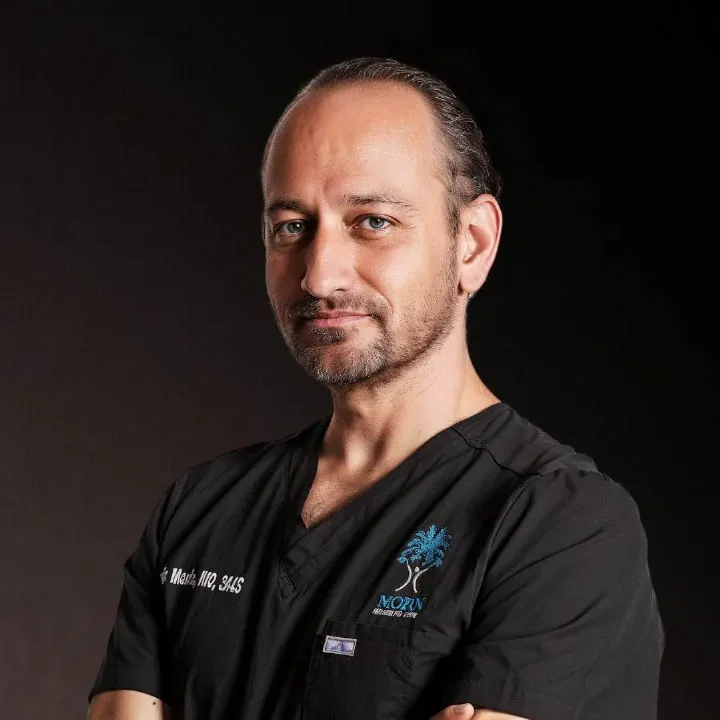
Dr.Babak Moeinolmolki
LA Cosmetic Surgeon Dr. Moein is board-certified by the American Board of General Surgery.