


Table of Contents
- Can liver disease cause gynecomastia?
- Why does a damaged liver raise estrogen in men?
- Does fatty liver cause man boobs?
- Liver medications that can cause gyno
- Gland, fat, or something else
- How is gynecomastia evaluated in a man with liver disease?
- Can you have gynecomastia surgery with liver disease?
- Will gynecomastia go away if the liver gets better?
- What to do next
Yes, liver disease can cause gynecomastia. When the liver is badly damaged, most often by cirrhosis, the balance between testosterone and estrogen shifts toward estrogen, and real glandular breast tissue can grow. The liver problem comes first, though. A man with liver disease and a new chest lump needs a medical workup before anyone talks about surgery.
I am Dr. Babak Moeinolmolki, a surgeon double board-certified by the American Board of General Surgery and the American Board of Cosmetic Surgery (ABCS), and I treat gynecomastia in Los Angeles. I see men with liver problems in consultation more often than people expect. Some have cirrhosis from alcohol or hepatitis. Many more have fatty liver and assume it explains their chest. This guide covers what the liver does to male hormones and when surgery makes sense.
Can liver disease cause gynecomastia?
Advanced liver disease is a recognized cause of gynecomastia in adult men. Cirrhosis lowers testosterone and raises estrogen, and that estrogen-heavy balance stimulates breast gland tissue. Mild liver enzyme changes rarely do this on their own, so the more severe the liver disease, the more likely it is part of the explanation.
Gynecomastia grows when estrogen action in the breast outweighs androgen action. That principle is laid out in the Nature Reviews Endocrinology review of the condition (PubMed 25112235). The American Family Physician review lists cirrhosis alongside kidney failure and low testosterone as chronic diseases that produce nonphysiologic gynecomastia (PubMed 22534349). For a broader list, see my overview of gynecomastia causes.
Why does a damaged liver raise estrogen in men?
A healthy liver clears hormones from the blood and makes the proteins that carry them. In cirrhosis, more androgen gets converted into estrogen in body tissues, more testosterone gets bound up and inactive, and testicular output often drops. The result is less usable testosterone and relatively more estrogen reaching breast tissue.
A review of sex hormones in cirrhosis described lower testosterone, higher estrogen, and a rising estrogen-to-testosterone ratio as liver function worsens, with gynecomastia and testicular atrophy among the clinical findings (PubMed 9396303). The same hormone pattern drives the condition in other settings, which I explain in my post on high estrogen in men.
Alcohol adds its own effect. Heavy drinking can suppress testosterone directly, separate from the damage it does to the liver. If drinking is part of your history, my article on whether alcohol causes gynecomastia goes into that side in more detail.
Does fatty liver cause man boobs?
Fatty liver is linked to lower testosterone in men, but it rarely causes true gynecomastia by itself. Most men with fatty liver who notice a fuller chest have excess chest fat that comes from the same weight gain and metabolic changes that put fat in the liver. An exam usually tells the two apart.
A meta-analysis of observational studies covering more than 13,000 men found lower total testosterone in men with nonalcoholic fatty liver disease than in men without it (PubMed 28425408). Those studies show an association. They do not show that fatty liver grows breast gland. In my consultations, the fatty liver patient with a soft, even chest usually has fat, and the one with a firm disc under the nipple has gland. My guide to pseudogynecomastia versus gynecomastia walks through the difference.
Liver medications that can cause gyno
Sometimes the drug used to treat the liver is the bigger problem. Spironolactone is commonly prescribed to control fluid buildup (ascites) in cirrhosis, and it is one of the medications most firmly linked to gynecomastia. An evidence-based review of drug-induced gynecomastia placed spironolactone in its strongest category of association (PubMed 22862307).
If you are on spironolactone for your liver, do not stop it on your own. Fluid control in cirrhosis matters, and your hepatologist may have alternatives. I cover this drug in its own post on spironolactone and gynecomastia, and other culprits appear in my list of medications that cause gynecomastia.
Gland, fat, or something else
Men with liver disease can have more than one thing going on in the chest. This is how I think about it at the first visit.
| Finding | What it usually feels like | Typical liver connection | Usual first step |
|---|---|---|---|
| True gynecomastia | Firm, rubbery disc under the nipple, sometimes tender | Cirrhosis, spironolactone, low testosterone | Hormone labs and review of medications with your liver doctor |
| Chest fat (pseudogynecomastia) | Soft, even fullness with no distinct disc | Fatty liver and weight gain from the same metabolic causes | Weight and metabolic care; liposuction if it persists |
| Mixed tissue | Firm center with soft fat around it | Either or both of the above | Medical workup first, then a combined surgical plan |
| Lump off to one side, hard, or fixed | Not centered under the nipple | Not typical of liver-related gyno | Prompt imaging to rule out other causes |
A firm, off-center, or fixed lump is not something to wait on. My article on a gynecomastia lump versus cancer explains the warning signs.
How is gynecomastia evaluated in a man with liver disease?
The evaluation starts with a chest exam to confirm gland versus fat, then a medication review and blood work. Labs often include testosterone, estradiol, and liver function tests, with other hormones added depending on the exam. Imaging is used when the lump is one-sided, hard, or unusual. Your liver doctor should know about the finding.
The StatPearls reference from the National Library of Medicine describes a similar stepwise workup for adult gynecomastia (NCBI Bookshelf NBK430812). I describe how I do it in practice in how gynecomastia is diagnosed. If you are still learning about the liver side, the NIH’s National Institute of Diabetes and Digestive and Kidney Diseases has a clear patient page on cirrhosis.
Can you have gynecomastia surgery with liver disease?
Some men with liver disease can safely have gynecomastia surgery, and some should not. The deciding factors are how well the liver works, whether blood clots normally, platelet counts, and whether the disease is stable. Gynecomastia surgery is elective, so it waits until the liver specialist agrees the timing is safe.
A man with well-controlled fatty liver and normal labs is often a reasonable candidate. A man with advanced cirrhosis, fluid buildup, or a bleeding tendency is a different situation, and in that case I would not operate for a cosmetic concern. The liver also processes many anesthesia and pain medications, which is one reason some patients do better with an awake gynecomastia surgery approach under local anesthesia, when their medical team agrees. My page on who is a candidate for gynecomastia surgery covers the general criteria.
Will gynecomastia go away if the liver gets better?
It can shrink if the liver improves early, while the breast tissue is still new and tender. Tissue that has been present for about a year or longer tends to become fibrous, and fibrous gland rarely goes away with medical treatment alone. In that case, surgical removal is usually the only reliable way to flatten the chest.
The Nature Reviews Endocrinology authors make the same point: treat the underlying cause first, and consider surgery when the tissue does not resolve (PubMed 25112235). If you are trying to decide whether to wait, my article on whether gyno goes away on its own covers timing.
What to do next
If you have liver disease and a new or growing chest lump, tell your liver doctor first and get the hormone and medication picture sorted out. If the tissue has been there for a while and your liver is stable, a surgical consultation is the next step. I will review your labs, examine the chest, and coordinate with your hepatologist before we make any plan.
You can book a consultation with my team, read more about gynecomastia surgery in Los Angeles, or look through our before and after gallery to see the range of results. Results vary by patient, and cost varies by case.
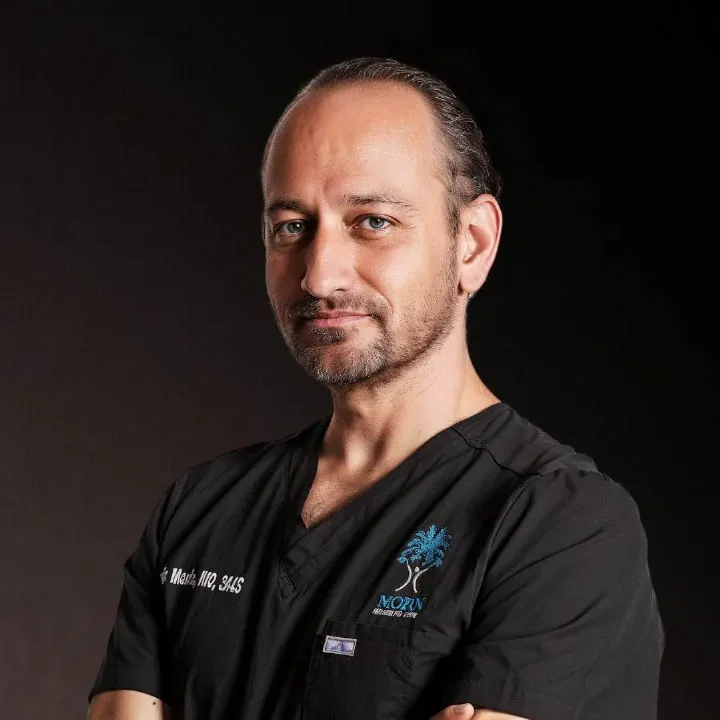
Dr.Babak Moeinolmolki
LA Cosmetic Surgeon Dr. Moein is board-certified by the American Board of General Surgery.