

Table of Contents
- What men mean by "Ozempic chest"
- Do GLP-1 medications actually cause gynecomastia?
- Glandular gynecomastia vs. a fatty chest
- Why the chest is often the last place to slim down
- Why weight loss alone will not fix true gynecomastia
- How male breast reduction corrects "Ozempic chest"
- Should you pause your GLP-1 before surgery?
- Timing surgery around your weight loss journey
- Frequently Asked Questions
- About Dr. Babak Moeinolmolki, MD
If you have lost a noticeable amount of weight on Ozempic, Wegovy, Mounjaro, or Zepbound, you may have expected your chest to shrink along with everything else. For a lot of men, it does not work out that way. The waist gets smaller, the face gets leaner, and yet the chest still looks full, puffy, or almost more prominent than before. Online, men have started calling this “Ozempic chest” or “Ozempic breasts,” and it has become one of the most common questions we hear from patients who are otherwise thrilled with their weight loss.
Here is the short version: GLP-1 medications are not creating breast tissue out of nowhere. What is usually happening is that fat loss is revealing something that was already there. Below, we explain what is really going on, how to tell glandular tissue from fat, and what actually corrects it.
What men mean by “Ozempic chest”
“Ozempic chest” is a nickname, not a medical diagnosis. It describes the frustration of dropping 20, 40, or 80 pounds and still being left with a chest that looks soft, rounded, or puffy under a shirt. Some men notice the nipple area seems to stick out more than it used to. Others feel a firm, coin-shaped lump right beneath the areola that never softens no matter how lean they get.
That combination points to a condition with a real medical name: gynecomastia, the enlargement of male breast tissue. Understanding what your chest is actually made of is the key to knowing why weight loss stalled there and what to do next.
Do GLP-1 medications actually cause gynecomastia?
This is the question that worries people, and the honest answer is reassuring. Current evidence does not show that semaglutide (Ozempic, Wegovy) or tirzepatide (Mounjaro, Zepbound) directly cause gynecomastia. These drugs work mainly by curbing appetite, slowing how quickly the stomach empties, and improving how the body handles blood sugar. They do not carry the hormonal effects that classic gynecomastia triggers do, such as certain steroids, some prostate medications, or conditions that shift the balance of estrogen and testosterone.
So the medication is not the villain here. What GLP-1 therapy does is strip away the surrounding fat that used to camouflage firmer tissue underneath. When a layer of soft chest fat disappears, whatever glandular tissue was hiding beneath it suddenly has nowhere to blend in. The result can look like the chest got worse, when in reality the weight loss simply pulled back the curtain.
Glandular gynecomastia vs. a fatty chest
Not every full-looking male chest is the same, and this distinction decides everything about treatment.
- True gynecomastia is the growth of actual breast gland tissue. It feels firm or rubbery, often like a flat disc centered under the nipple and areola. You can sometimes pinch it between two fingers. This tissue is fibrous and dense, and it does not melt away with diet or cardio.
- Pseudogynecomastia is a fatty chest with little or no extra gland. It feels soft and diffuse, blends into the rest of the chest, and tends to respond well to overall weight loss.
Many men have a mix of both. That is exactly why some of the chest shrinks with weight loss while a stubborn core stays put. The fatty portion responded to the GLP-1 medication. The glandular portion did not, because gland tissue does not behave like fat. The Mayo Clinic describes gynecomastia as an increase in the amount of breast gland tissue driven by a hormonal imbalance, which is a different biological process from simply storing fat (see Mayo Clinic on gynecomastia).
Why the chest is often the last place to slim down
Even when the tissue is mostly fat, the chest can behave like a plateau zone. Fat does not leave the body evenly. Genetics, hormones, and long-standing distribution patterns mean some men hold onto chest and flank fat far longer than they hold onto belly or facial fat. You can be at a lower weight than you have seen in years and still catch your reflection and wonder why your chest has not caught up.
This is not a willpower problem, and it is rarely a sign that you need to push the medication harder. It is simply how targeted fat loss works, which is to say it does not really exist. The body decides the order, not you.
Why weight loss alone will not fix true gynecomastia
If firm glandular tissue is the issue, no amount of additional weight loss will remove it. You cannot diet away a gland, and you cannot exercise it off either. Building the pectoral muscles underneath can sometimes make the overlying gland look more obvious, not less, because a broader chest pushes the tissue forward.
This is the part that surprises men who have worked incredibly hard for their results. They did everything right, the scale moved, and the chest still needs help. That is not a failure. It is a structural reality of what glandular gynecomastia is, and it is precisely the situation surgery was designed to correct.
How male breast reduction corrects “Ozempic chest”
The definitive treatment for true gynecomastia is surgery, and modern gynecomastia surgery is far more refined than the aggressive procedures of decades past. The American Society of Plastic Surgeons notes that male breast reduction may use liposuction, direct tissue excision, or both, depending on what the chest is made of (see the ASPS overview of gynecomastia surgery). For most men who have lost significant weight, the correction has two parts working together:
- Gland excision. The firm, fibrous breast tissue that will not respond to weight loss is removed directly, usually through a small incision at the edge of the areola. This is the step that addresses the true gynecomastia and prevents the puffy nipple from coming back.
- Liposuction of the surrounding fat. The softer fat that frames the gland is sculpted with liposuction to blend the chest into a flat, masculine contour. Using VASER liposuction of the chest, energy is used to loosen and emulsify fat precisely, which helps refine the borders and definition rather than just deflating the area.
After major weight loss, skin quality matters too. Men who dropped a large amount quickly may have some looseness that will not snap back on its own. In selected cases, Renuvion skin tightening can be added to help the skin redrape over the newly contoured chest. Whether you need it depends on your skin elasticity and how much tissue is removed, which is something best assessed in person.
Should you pause your GLP-1 before surgery?
Yes, in most cases, and here is why it matters for your safety. Because GLP-1 medications slow how quickly the stomach empties, food and liquid can linger longer than expected. Under anesthesia, that raises the risk of stomach contents coming back up and being inhaled into the lungs, a serious complication called aspiration. For that reason, patients are commonly advised to pause GLP-1 medication roughly two weeks before a procedure with anesthesia.
The exact timing is not one-size-fits-all. It depends on your specific drug, your dose, whether it is dosed weekly or daily, and your overall health. The final instruction always comes from your surgeon and the anesthesia team, so never stop or change a prescription on your own. Bring your full medication list to your consultation, and tell us about every weight loss, diabetes, and hormone medication you take. That single conversation keeps your surgery safe and your results on track.
Timing surgery around your weight loss journey
Many men ask whether they should finish losing weight before addressing the chest. As a general rule, it helps to be at or near a stable weight you can realistically maintain, because dramatic fluctuations afterward can affect your contour. That said, there is no need to wait for some imagined perfect number if the glandular tissue is clearly the holdup, since that portion will never leave regardless of the scale.
Cost depends on the specifics of your case, including whether liposuction and skin tightening are part of the plan and the complexity of the correction. Rather than quote a figure that may not fit your situation, we review the full picture at consultation and explain financing options so the investment is clear and manageable. If your primary goal is still active weight reduction under medical supervision, a program like medical weight loss can be the right first step before a contouring procedure. And for men focused on total physique refinement beyond the chest, male-exclusive body sculpting takes a whole-body approach.
Your surgery is performed by Dr. Babak Moeinolmolki, MD, FACS, a double board-certified cosmetic surgeon certified by the American Board of Surgery and the American Board of Cosmetic Surgery. Male breast reduction is one of the most consistently satisfying procedures in men’s aesthetics, and after significant weight loss it is often the finishing touch that finally lets the hard work show.
Frequently Asked Questions
Does Ozempic cause gynecomastia?
No, current evidence does not show that Ozempic, Wegovy, Mounjaro, or Zepbound directly cause gynecomastia. These medications reduce appetite and body fat. When surrounding chest fat is lost, underlying glandular tissue that was already present can simply become more visible, which is why the chest can look puffier even as you get leaner.
Why does my chest look worse after losing weight?
Losing fat removes the soft padding that used to blend the chest together. If firm glandular tissue sits under the nipple, it stands out once that padding is gone. Building chest muscle can push the gland forward and make it look even more obvious, so more gym time does not solve it.
Can I get rid of glandular gynecomastia with diet and exercise?
No. Diet and exercise reduce fat, but glandular breast tissue is fibrous and does not respond to weight loss or training. When true gynecomastia is present, surgical removal of the gland is the only reliable way to eliminate it.
How do I know if my chest is fat or gland?
Glandular tissue usually feels firm or rubbery, like a flat disc directly under the areola, and may be tender. Fatty tissue feels soft and spreads more evenly across the chest. Many men have both. A physical exam is the most accurate way to tell, and it determines whether you need gland excision, liposuction, or a combination.
Do I need to stop taking my GLP-1 medication before gynecomastia surgery?
Usually yes. Because GLP-1 drugs slow stomach emptying, they can raise the risk of aspiration under anesthesia. Patients are commonly advised to pause the medication about two weeks before surgery, but the exact timing must be set by your surgeon and anesthesia team based on your drug, dose, and health. Never adjust a prescription on your own.
Will the puffy nipple come back after surgery?
When the glandular tissue is properly removed, the corrected result is generally long-lasting. Significant future weight gain or the use of substances that trigger gynecomastia, such as certain anabolic steroids, can cause new changes, so maintaining a stable weight helps protect your outcome.
How soon after major weight loss should I have surgery?
It is best to be at or near a weight you can maintain, since large fluctuations afterward can affect the contour. However, glandular tissue will not disappear no matter how much more you lose, so there is no reason to keep waiting if the gland is the issue. Your surgeon can help you decide the right timing.
What does gynecomastia surgery cost, and can it be financed?
Cost varies with the details of your case, such as whether liposuction and skin tightening are included and how complex the correction is. We review the specifics at your consultation and explain financing options so you have a clear, personalized estimate rather than a generic price.
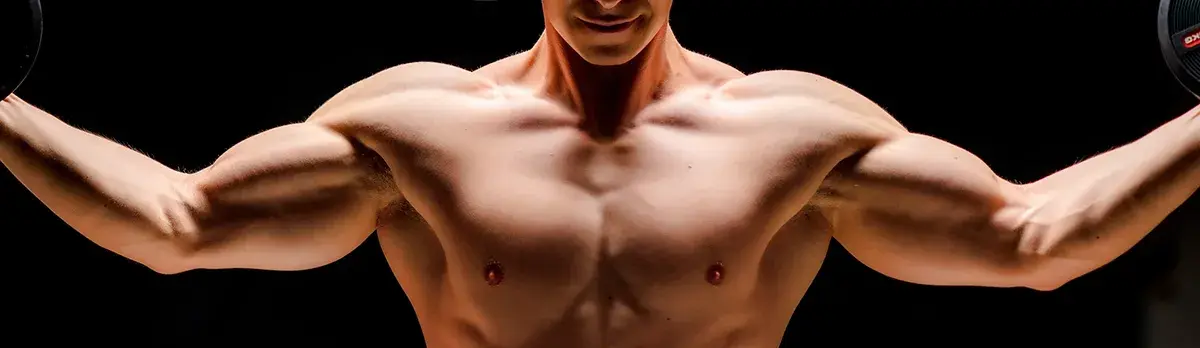
* Illustrative images on this page are models, not actual patients. Real patient results are shown in our Before & After gallery.
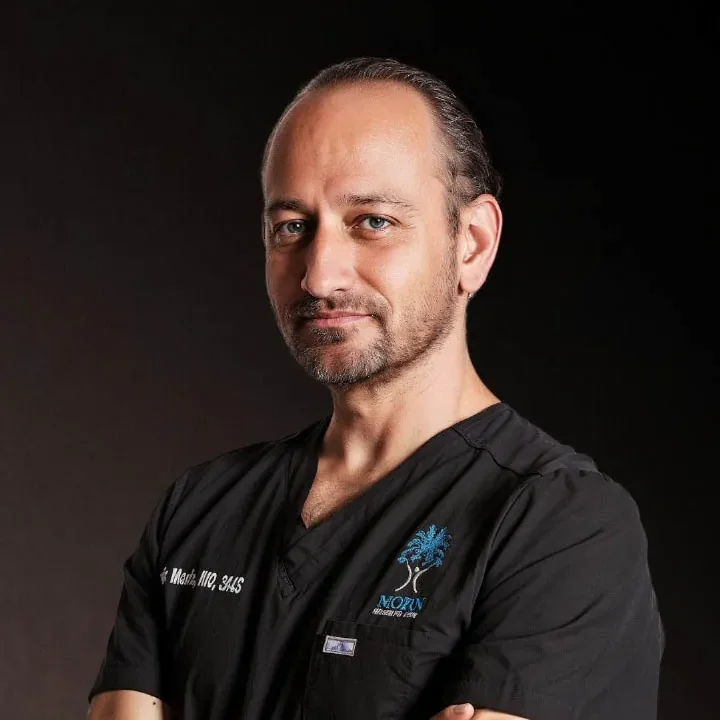
Dr.Babak Moeinolmolki
LA Cosmetic Surgeon Dr. Moein is board-certified by the American Board of General Surgery.