


Table of Contents
A meaningful share of my gynecomastia patients don’t live in Los Angeles. They fly in from smaller cities where nobody performs this operation weekly, from states away, sometimes from other countries — because for a procedure this specialized, they’d rather travel to a surgeon who does it constantly than default to whoever is nearby. Traveling for surgery is entirely workable when it’s structured properly and genuinely risky when it’s improvised. This is the playbook my out-of-town patients actually follow, stage by stage.
Why Men Travel for This Operation in Particular
Gynecomastia surgery punishes inexperience more than most cosmetic procedures. It’s a judgment operation: how much gland to leave so the nipple doesn’t crater, how to feather liposuction so the chest borders blend, when skin needs tightening versus excision — decisions made by feel and repetition, not from a textbook. A surgeon who treats a handful of cases per year and a surgeon who treats them weekly are practicing different crafts, and my revision caseload is full of the difference. That’s the honest math behind traveling: for a once-in-a-lifetime operation, the marginal cost of a flight is small against the cost of doing it twice. The candidacy fundamentals — what the operation involves and who it suits — are on my gynecomastia surgery page and in the American Society of Plastic Surgeons’ overview.
The Trip, Stage by Stage
| Stage | Where you are | What happens |
|---|---|---|
| Weeks before | Home | Virtual consultation with photos; grade and plan set; labs done locally; questions answered |
| Day 1 (arrival) | Los Angeles | Fly in; in-person exam confirms the virtual assessment; final consent and markings plan |
| Day 2 | Los Angeles | Surgery at my AAAHC-accredited suite; recover at your hotel with your companion |
| Days 3–5 | Los Angeles | First follow-up exam; incisions checked; vest fit verified; walking tourist-lite allowed |
| Days 5–7 | Fly home | Cleared to fly for most standard cases; travel protocol below |
| Weeks 2–12 | Home | Photo-based virtual follow-ups on a set schedule; local physician loop-in if ever needed |
The Virtual Consultation: Where the Plan Gets Built
The trip works because the thinking happens before you book a flight. Through a virtual consultation, standardized photos and a detailed history let me grade your gynecomastia, distinguish likely gland from fat, flag skin-laxity questions, and give you a surgical plan with an all-inclusive quote — before you’ve spent a dollar on travel. Two honest disclaimers come with every virtual assessment. First, the in-person exam on arrival is confirmatory, not ceremonial: roughly once in a while, palpating the chest changes the plan, which is why surgery is scheduled a day after arrival, never the same afternoon. Second, virtual consults screen candidacy — men with major skin excess after massive weight loss, or complex revision cases, sometimes need a staged approach that changes trip math, and it’s better to know that from your living room.
Flights, Hotels, and the Companion Rule
The practical details that actually matter: Stay 5 to 7 days for a standard case — long enough for surgery, the first follow-up, and early-problem surveillance, since the complications worth catching (hematoma chief among them) declare themselves in the first 72 hours, per the risk profile in the NIH’s StatPearls review. Bring a companion for surgery day and the first night — non-negotiable after anesthesia. Hotel near the practice, not near the attractions; my coordinator keeps a list of recovery-friendly options at several price points. Flying home: most patients are cleared at days 5 to 7 — wear the compression vest in flight, choose an aisle seat, walk the cabin every 45 minutes and hydrate (routine clot prevention after any surgery), and have someone handle your bags; lifting limits don’t pause for baggage claim. Driving home instead? Fine at the same timepoint, with hourly stretch stops. The complete checklist lives on my out-of-town patients page.
Follow-Up From 1,500 Miles Away
Aftercare is where traveling for surgery earns its skeptics, so here’s how mine works: a structured photo-based virtual schedule at weeks 2, 6, and 12 (and month 6 for skin-tightening cases), with direct messaging access for anything odd in between — I would far rather review ten unnecessary photos than miss one seroma. The compression vest protocol, gym progression, and scar care run identically to local patients’; distance changes the camera, not the plan. And the honest safety net: genuine early complications are managed before you fly home — that’s the entire point of the 5-to-7-day stay — while late questions are almost always resolvable by photo review, with a local physician looped in on the rare occasion hands are needed. In a decade of operating on fly-in patients, that structure has held.
Frequently Asked Questions
How long do I need to stay in Los Angeles for gynecomastia surgery?
Plan 5 to 7 days for a standard case: arrival exam, surgery the next day, a follow-up around day 3 to 5, and clearance to travel at days 5 to 7. Larger corrections with skin excision may warrant a few extra days.
Can my consultation really be done virtually?
Yes — standardized photos and a detailed history allow grading, a surgical plan, and an all-inclusive quote before you travel. The in-person exam on arrival confirms everything; occasionally it refines the plan, which is why surgery is never scheduled same-day.
Is it safe to fly a week after gynecomastia surgery?
For most standard cases, yes, with the protocol: compression vest on, aisle seat, cabin walks every 45 minutes, hydration, and no lifting your own luggage. The highest-risk complication window is the first 72 hours — which you spend here, monitored.
What happens if I have a problem after I’ve flown home?
You send photos immediately — most late concerns resolve by photo review and guidance. For the rare issue needing hands-on care, I coordinate with a physician near you. Early complications, the ones that matter most, are caught during your LA stay by design.
Does traveling make the surgery more expensive?
The surgical quote is identical for local and fly-in patients — all-inclusive, covering the accredited facility, anesthesia, and follow-ups. Your added costs are the flight, 5 to 7 hotel nights, and meals; my coordinator’s hotel list covers several budgets.
Do I need someone to travel with me?
For surgery day and the first night, yes — anesthesia rules, not preference. Many patients’ companions fly home after day 2 while the patient finishes the stay solo; by then you’re walking, eating normally, and managing the vest independently.
The Bottom Line
Traveling for gynecomastia surgery is a solved problem: a virtual consult that builds the plan, a 5-to-7-day stay that covers the risk window, a flight protocol, and follow-up built for distance. What it buys is the thing that matters — a specialist’s hands on a specialist’s operation. Start where every fly-in patient starts: book a confidential virtual consultation or call (310) 455-8020.
—
**Connected:** [[20 Areas/Marketing/Blog Editorial Calendar/_README|Blog Editorial Calendar]] · [[10 Projects/Blog Publishing Pipeline — 2026/00 README|Blog Publishing Pipeline]]
* Illustrative images on this page are models, not actual patients. Real patient results are shown in our Before & After gallery.
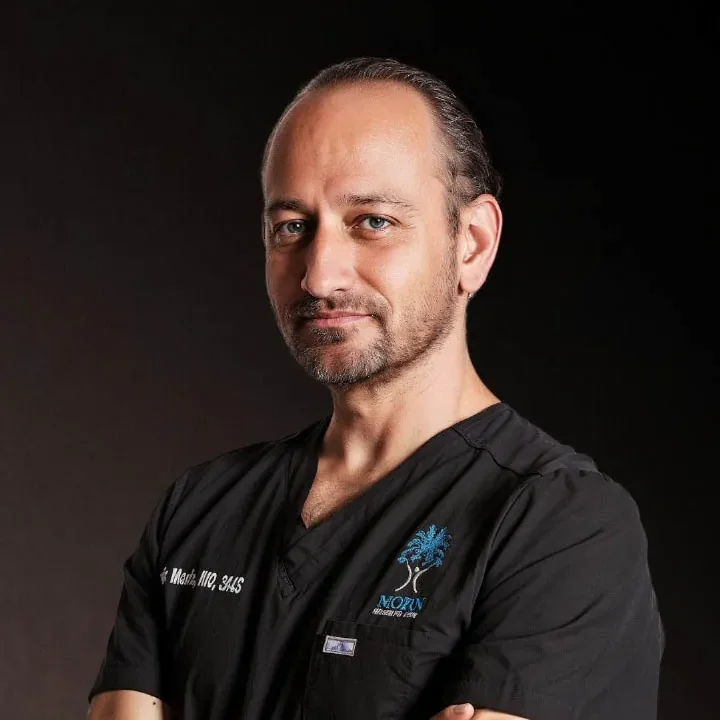
Dr.Babak Moeinolmolki
LA Cosmetic Surgeon Dr. Moein is board-certified by the American Board of General Surgery.