

Table of Contents
- Puffy Nipples, Gynecomastia, and Pseudogynecomastia Are Not the Same Thing
- How to Tell Which One You Have at Home
- What Causes Puffy Nipples and Gynecomastia
- Why Puffy Nipples Often Signal Tissue That Diet Cannot Fix
- What Actually Fixes It
- What Results Look Like
- When to See a Specialist
- Frequently Asked Questions
- About Dr. Babak Moeinolmolki, MD
If you have caught your reflection sideways and noticed the tips of your nipples pushing out through a shirt, you are not imagining it, and you are far from alone. Puffy nipples are one of the most searched male chest concerns, and the confusion around them is understandable. Some men have a little extra fat. Some have firm tissue that will not budge no matter how lean they get. And some have a mix of both. Sorting out which one you have is the whole game, because the answer decides what actually works.
Here is the short version before we get into detail: puffy or pointy nipples, true gynecomastia, and pseudogynecomastia are three different situations that can look similar in the mirror but respond very differently to diet, training, and surgery. Knowing the difference saves you months of frustration in the gym and points you toward the fix that will hold.
Puffy Nipples, Gynecomastia, and Pseudogynecomastia Are Not the Same Thing
The male chest can change shape for several reasons, and the words people use online tend to blur together. Separating them makes everything else clearer.
Puffy or pointy nipples
Puffy nipples describe the look, not the cause. When the nipple and areola dome outward or point forward instead of lying flat, it is usually because a small pad of firm tissue sits directly under the areola and lifts it. That underlying tissue is often glandular, which is why puffy nipples so frequently overlap with the next category.
True gynecomastia
Gynecomastia is the benign growth of actual breast gland tissue in men. It is driven by a shift in the balance between estrogen activity and testosterone activity, and it is common at every life stage. The gland feels firm, rubbery, and disc-shaped, and it tends to concentrate right beneath the areola. This is real breast tissue, not fat, which matters enormously when you start thinking about treatment. According to the Cleveland Clinic, gynecomastia is one of the most common male breast conditions and is usually harmless.
Pseudogynecomastia
Pseudogynecomastia is a fatty chest with no meaningful gland growth. The chest looks fuller and softer, but the tissue underneath is ordinary fat that happens to collect in the chest. This version tends to shrink with overall weight loss, which is exactly why it behaves so differently from true gynecomastia.
How to Tell Which One You Have at Home
You cannot get a final diagnosis from your bathroom mirror, but a simple self-check gets you surprisingly close and tells you whether it is time to see a specialist.
Gently pinch the tissue behind the nipple between your thumb and forefinger and pay attention to what you feel:
- A firm, rubbery disc centered under the areola points toward glandular tissue, which is the signature of true gynecomastia. It may feel slightly tender and is often clearly bordered, like a coin or a button.
- Soft, even, doughy tissue that feels the same as fat elsewhere on your body points toward pseudogynecomastia, the fatty chest.
- A nipple that points or puffs out while the rest of the chest is fairly flat usually means a small glandular pad is tenting the areola forward.
A few findings deserve a prompt professional look rather than watchful waiting: a lump that is hard, fixed, or off to one side, a chest that is enlarging quickly, tissue that is genuinely painful, or any discharge from the nipple. These are usually benign, but they are worth ruling out properly.
What Causes Puffy Nipples and Gynecomastia
The chest reflects your hormones, your weight, and sometimes your medicine cabinet. The most common drivers include:
- Puberty. Hormonal swings in adolescence cause temporary glandular growth in a large share of teenage boys. It often settles on its own within a year or two, which is why patience is reasonable in younger patients.
- Aging. Testosterone gradually declines with age while body fat tends to rise, and both shifts nudge the estrogen-to-testosterone balance toward breast tissue growth.
- Anabolic steroids. Steroids and certain performance compounds convert to estrogen in the body, and that surge is a classic trigger for stubborn glandular gyno in athletes and lifters.
- Weight gain. Extra body fat both adds volume to the chest and raises estrogen activity, so weight is often tangled up with both the fatty and glandular components.
- Medications and substances. Some blood pressure drugs, anti-androgens, certain antidepressants and antacids, heavy alcohol use, and marijuana have all been linked to breast tissue changes in men.
The National Library of Medicine notes that gynecomastia results from an imbalance between estrogen and androgen action on breast tissue, and that a long list of medications and health conditions can tip that balance (StatPearls, NIH). Occasionally, thyroid, liver, or kidney conditions play a role, which is another reason a real evaluation beats guesswork.
Why Puffy Nipples Often Signal Tissue That Diet Cannot Fix
This is the part that trips up disciplined guys. If your puffy nipples come from a fatty chest, losing body fat genuinely helps, because you are shrinking the exact tissue that is causing the problem. Medical weight loss can be a smart first step here, and a program like medical weight loss at Healthy Life Bariatrics can address the fatty component before you ever consider surgery.
Glandular tissue is a different animal. It is fibrous breast gland, not fat, so it does not respond to calorie deficits or chest presses the way fat does. You can get genuinely lean, drop your body fat into single digits, and still see that firm disc holding the nipple forward. That is not a willpower problem. It is simply that dieting cannot dissolve a structure that is not made of fat in the first place. When puffy nipples survive a serious cut, that is your strongest real-world clue that glandular tissue is involved.
What Actually Fixes It
Because the two components behave differently, the durable fix is matched to what is actually under the skin. Mayo Clinic points out that most cases need no treatment at all and some resolve on their own, but that surgery is the definitive option when the tissue persists and bothers you (Mayo Clinic). Understanding the difference between VASER liposuction and gland excision is the key to setting realistic expectations.
VASER liposuction for the fatty component
VASER is an ultrasound-assisted form of liposuction that loosens and removes fat through tiny incisions while helping to define the chest contour. For a chest that is mostly fatty, or for the fatty layer that surrounds a gland, VASER does excellent work and leaves very small entry points. What it cannot do reliably is remove dense glandular tissue, since that firm disc is not fat.
Gland excision for the glandular tissue
When there is a firm disc under the areola, it usually has to be removed directly. Gland excision is typically performed through a small incision hidden at the lower border of the areola, which lets the surgeon take out the glandular tissue that is tenting the nipple forward. This is the step that actually flattens a puffy nipple caused by glandular growth, and it is why puffy nipple correction so often involves excision rather than liposuction alone.
The combination approach
Most real chests are a blend, and the best results usually come from combining both steps in a single procedure: VASER to sculpt the surrounding fat and blend the edges, plus targeted excision to remove the gland. Doing both in one operation gives a flat, natural contour rather than a divot where a gland was pulled out of an otherwise untouched chest. This combined philosophy is the foundation of male breast reduction in Los Angeles.
What Results Look Like
A well-done procedure gives a chest that is flatter, firmer, and more masculine in profile, with a nipple that finally sits flush instead of pointing out. Because the incisions are small and placed along the natural edge of the areola, scars are usually discreet and fade over time. Most men wear a compression vest for several weeks, see swelling settle over the following months, and get back to normal activity fairly quickly, with strenuous chest training reintroduced on their surgeon’s timeline. For men who also want tighter definition and overall torso contouring, focused male body sculpting can complement the chest result.
The most important expectation to set is permanence. Once glandular tissue is removed, it does not grow back, provided you avoid the triggers that caused it, such as anabolic steroids. That is what makes surgery a genuine reset rather than a temporary patch.
When to See a Specialist
Consider a consultation if your puffy nipples or chest fullness have stuck around for more than a year, if they have not improved with real weight loss, if you can feel a firm disc under the areola, or if the change is simply affecting how you feel in your own skin. A specialist can confirm whether you are dealing with fat, gland, or both, and can lay out a plan that matches your specific anatomy. You do not have to keep hiding in loose shirts or skipping the pool while you wait to figure it out on your own.
Frequently Asked Questions
Are puffy nipples the same as gynecomastia?
Not exactly. Puffy nipples describe how the chest looks, while gynecomastia describes a cause, namely the growth of glandular breast tissue. Many puffy nipples are caused by a small glandular pad under the areola, but some are caused by fat alone. The self-check and a professional exam tell you which one you have.
How do I know if my chest is fat or gland?
Gently pinch the tissue behind the nipple. A firm, rubbery, disc-shaped mass centered under the areola suggests glandular tissue, while soft and even tissue that feels like fat elsewhere on your body suggests a fatty chest. A firm disc that survives serious weight loss is a strong sign of true gynecomastia.
Can I get rid of puffy nipples with diet and exercise?
If the cause is fat, losing overall body weight helps because you are shrinking the tissue responsible. If the cause is glandular tissue, diet and exercise will not remove it, because gland is not fat. That is why some very lean men still have puffy or pointy nipples.
Does gynecomastia go away on its own?
Sometimes. Gynecomastia that appears during puberty often resolves within one to two years. Gynecomastia that has been present for longer, or that follows steroid use or medication changes, is much less likely to disappear without treatment and may need surgery to correct.
Will the puffy nipple come back after surgery?
Once the glandular tissue is removed, it does not regenerate. Results are considered permanent as long as you avoid the triggers that can create new tissue or fat gain, such as anabolic steroids and significant weight gain.
Is gynecomastia surgery painful?
Most men describe the recovery as manageable soreness rather than sharp pain, similar to a hard chest workout, and it is well controlled with the plan your surgeon provides. A compression vest supports the chest and helps swelling settle during the first weeks.
What causes puffy nipples in men who are not overweight?
In lean men, puffy or pointy nipples are usually glandular rather than fatty. Hormonal shifts during puberty, aging, anabolic steroid use, and certain medications can all trigger glandular growth that tents the areola forward even at a low body fat percentage.
Do I need to treat the fat and the gland separately?
Often the best outcome combines both in one procedure. VASER liposuction addresses the surrounding fat and blends the contour, while direct excision removes the firm gland. Combining them in a single operation tends to produce a flatter, more natural chest than treating either part alone.
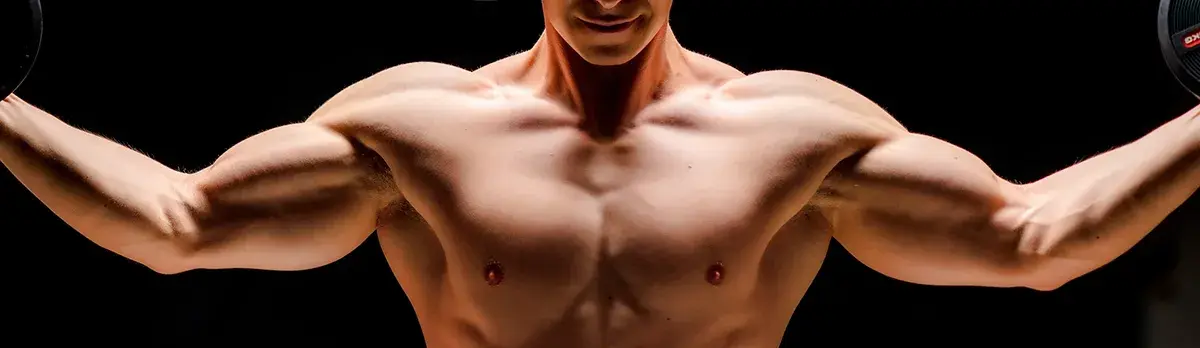
* Illustrative images on this page are models, not actual patients. Real patient results are shown in our Before & After gallery.
Dr.Babak Moeinolmolki
LA Cosmetic Surgeon Dr. Moein is board-certified by the American Board of General Surgery.